Your phone number just left the building
A WhatsApp dataset release exposes the architectural condition where phone-based identity is treated as authentication. What failed and what must now be true.
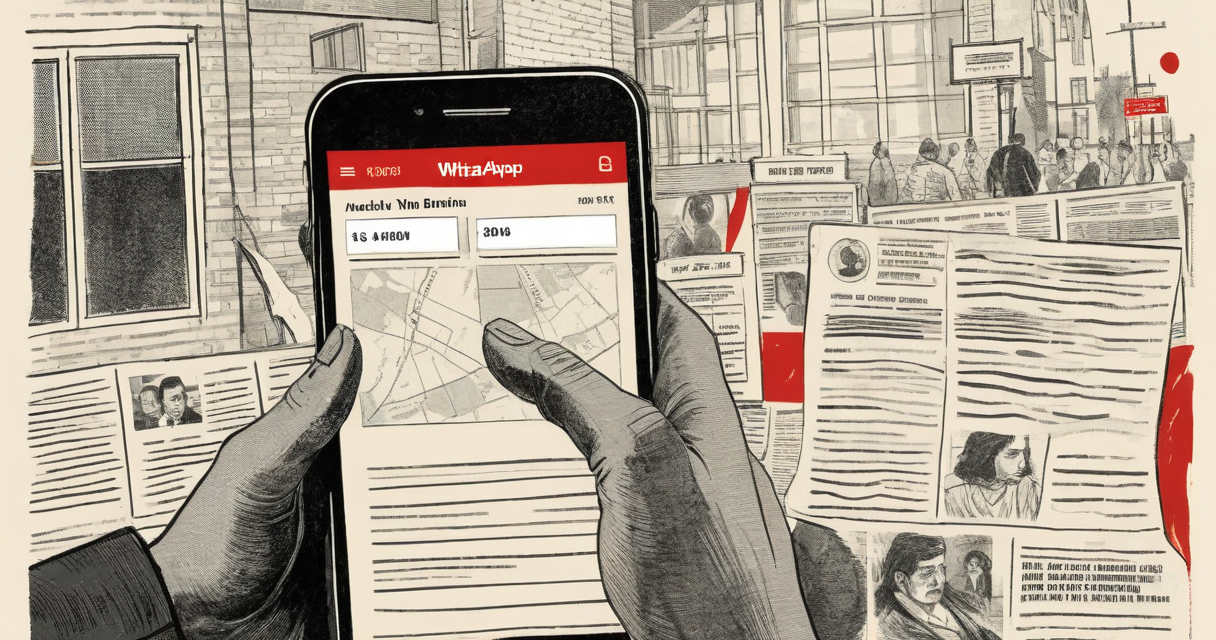
A hacker has released a dataset attributed to WhatsApp users. Scale is described as massive. The contents, collection method, source actor, and distribution path are not confirmed. The release itself is the event. Everything beyond the release is positioned as downstream consequence.
The relevant boundary in this incident is identity. A WhatsApp account is anchored to a phone number. That number functions as the directory entry, the account identifier, and the primary recovery channel. When an identifier of that role is placed into a hostile dataset at volume, the exposure is not limited to the application it was registered against.
Users in the dataset are exposed by the existence of the dataset in distribution. They do not need to be targeted individually for the exposure to be real. The condition has already changed for every record in the file. Whether each record is acted on is a separate question and not relevant to the control posture that now applies.
The operating assumption for most users, and for many systems that rely on phone-based identity, is that a number tied to a messaging account is a low-sensitivity identifier. It is shared with contacts. It is printed on business cards. It is treated as routine telemetry of daily life. That assumption only holds while the identifier remains outside hostile aggregation. Once it appears in a dataset, the assumption is invalid.
The second assumption is that account enumeration at scale is bounded by platform controls. Whether such enumeration was performed against WhatsApp’s infrastructure to produce this dataset is not confirmed. The collection mechanism is not stated in the available facts. What is confirmed is that a dataset of this character now exists outside the platform’s control boundary, regardless of how it was assembled.
The third assumption is that the identifier and the account are separable risks. They are not. A phone number that maps to a WhatsApp account also maps to SMS recovery flows for unrelated services, two-factor codes delivered by SMS, identity verification at the telecom layer, and SIM-targeted takeover paths. The identifier carries access weight far beyond the application it was originally registered against. Treating it as application-local was always a design assumption, not a property of the identifier.
The identifier is now in circulation at volume. Volume is the condition that changes risk. A single exposed number is a targeting opportunity. A dataset is a list. Lists feed automation. Automation operates against every record in parallel and does not require selection. The cost of acting on any individual record approaches zero once the list exists.
Identity boundaries that depended on the obscurity of the phone number no longer hold for any user in the dataset. This includes SMS-based authentication on unrelated platforms, account recovery flows that treat phone possession as proof of identity, and any control that assumes the attacker does not already know the number associated with a given account. The control was never enforcement. The control was friction created by lack of knowledge. That friction is gone for records in this file.
Whether WhatsApp’s controls failed in the production of this dataset is not confirmed. The mechanism of collection is not stated. What is confirmed is that downstream systems relying on the same identifier now operate against a public list. The trust relationship between phone number and account, on this platform and elsewhere, no longer carries the implicit assumption of limited exposure. That shift is the operative change, independent of how the dataset was built.
The failure pattern in this incident is not a single control breaking. It is a category error in how phone-based identity is treated across the systems that consume it. The phone number was designed to route calls. It was repurposed as an account identifier, then repurposed again as a recovery channel, then repurposed again as a second-factor delivery path. Each repurposing added weight to the identifier without changing its properties. The identifier remained widely shared by design while the access it gated grew in sensitivity. The dataset release exposes that drift at scale. Whether the dataset was assembled through platform enumeration, third-party scraping, or aggregation of prior leaks is not confirmed. The mechanism that matters is downstream. The identifier is now in a hostile list, and every system that treats possession of, or knowledge of, that identifier as a trust signal now operates against a public input.
The drift compounds because the identifier is non-rotatable in practice. Passwords can be reset. Tokens can be revoked. Session bindings can be invalidated. A phone number is tied to a SIM, a carrier contract, and the user’s external identity. Replacing it requires effort at the telecom layer and breaks every account that uses it as a recovery anchor. This means the identifier behaves as a long-lived secret in the threat model while being treated as a public handle in the user experience. Those two roles are incompatible. When a dataset places the identifier in distribution, the systems that assumed the secret role do not adjust. They continue to grant access weight to the value as if its exposure had not occurred.
The failure is not that a list exists. The failure is that the architectural decision to anchor identity to the phone number assumed the identifier would remain low-signal at population scale. That assumption was a design choice, not a control. No enforcement point validates whether the identifier presented to a recovery flow originated from the legitimate holder. The system validates only that the presenter can receive a message at the number. Receipt is not authentication. It is reachability. The dataset converts reachability targets into a finite, enumerable set. The mechanism of failure is the conflation of reachability with proof.
The same mechanism applies to every identifier that crossed the boundary from contact channel to access control without being re-evaluated. Email addresses followed this path first. They were directory entries, then login handles, then recovery channels, then federation anchors. Each step increased the access weight of a value that was still printed on business cards and shared with strangers. The pattern in the WhatsApp dataset release is the phone-number instance of the same condition. The identifier is wide. The access it gates is narrow and high-value. The gap between those two states is the exposure surface, and it does not close until the identifier stops carrying access weight.
The pattern extends to any system where possession of a channel is treated as proof of identity. SMS-delivered codes assume the channel is held only by the legitimate user. Carrier-layer SIM control sits below that assumption and is not visible to the application enforcing it. Voice-call verification carries the same property with a different delivery surface. Push notifications to a number-bound app inherit the binding. In each case, the control point validates the channel, not the holder. When the identifier of the channel is in a hostile dataset, the population of candidates for channel takeover is enumerated. The control still functions as designed. The design is the exposure.
The pattern also extends to identity layered on top of the identifier by third parties. Marketing platforms, loyalty systems, delivery services, and rideshare accounts use the phone number as a primary or secondary identifier. They inherit the trust assumptions of the platforms that established the binding, without inheriting the platforms’ security investment. A dataset of phone numbers attributed to active WhatsApp users is, by extension, a dataset of likely active accounts on every adjacent service that uses the same identifier. The mechanism is identifier reuse across trust boundaries. The boundaries were never separate. They shared the same anchor.
Phone-based identity is not a control. It is a routing decision that the industry treated as authentication because it was available. The WhatsApp dataset release does not introduce a new condition. It surfaces a condition that already existed for any user whose number is associated with accounts that rely on SMS, voice, or number-bound app channels for recovery or second-factor flows. The release narrows the gap between latent exposure and active exposure. For records in the file, that gap is now zero. For records not in the file, the gap is narrower than it was, because the existence of one dataset of this character confirms that aggregation at this scale is achievable, independent of the specific mechanism used here.
Identity is the boundary. If the boundary is anchored to a value that is shared by design, the boundary is a convenience, not an enforcement point. Continuous validation is required at the level above the identifier. That means authentication factors that are not delivered through the phone number, recovery flows that do not treat phone possession as proof, and account systems that do not accept the identifier as the primary key for high-impact actions. Any control that does not meet this bar is not effective against an attacker with the dataset. State that plainly. Do not negotiate it.
The operator position is fixed. Treat any account anchored to a phone number as anchored to a public value. Treat SMS and voice as delivery channels, not authentication factors. Treat recovery flows that depend on phone possession as the weakest link in the identity chain and design around them. The dataset is the event. The architectural condition it exposes is the work. Controls that depend on the obscurity of the identifier have already failed. The only question is whether the systems that depend on them are reconfigured before that failure is operationalised against the records in this file, or after.
Keep Reading
 iPhone Duo
iPhone Duo is not a convenience feature
iPhone Duo's shared access and multi-device authentication expand who can authenticate and access, collapsing resource security to the weakest device and party.
 credential theft
CVE-2026-44843 turns one chat message into credential theft
CVE-2026-44843 turns a single chat message into credential loss. An operator breakdown of the one-hop path from unauthenticated input to identity material.
 drone security
The US bought a cheaper way to keep losing
Iran's destruction of $1B in Reapers exposes predictable targeting as a static-trust failure. A cheaper drone with the same pattern is engaged at the same rate.
Stay in the loop
New writing delivered when it's ready. No schedule, no spam.