Sandia's 8085 ran with the door unlocked
Sandia's SA3000 8085 CPU granted access on reachability, not identity. An unenforced boundary on a high-value resource is an open resource.
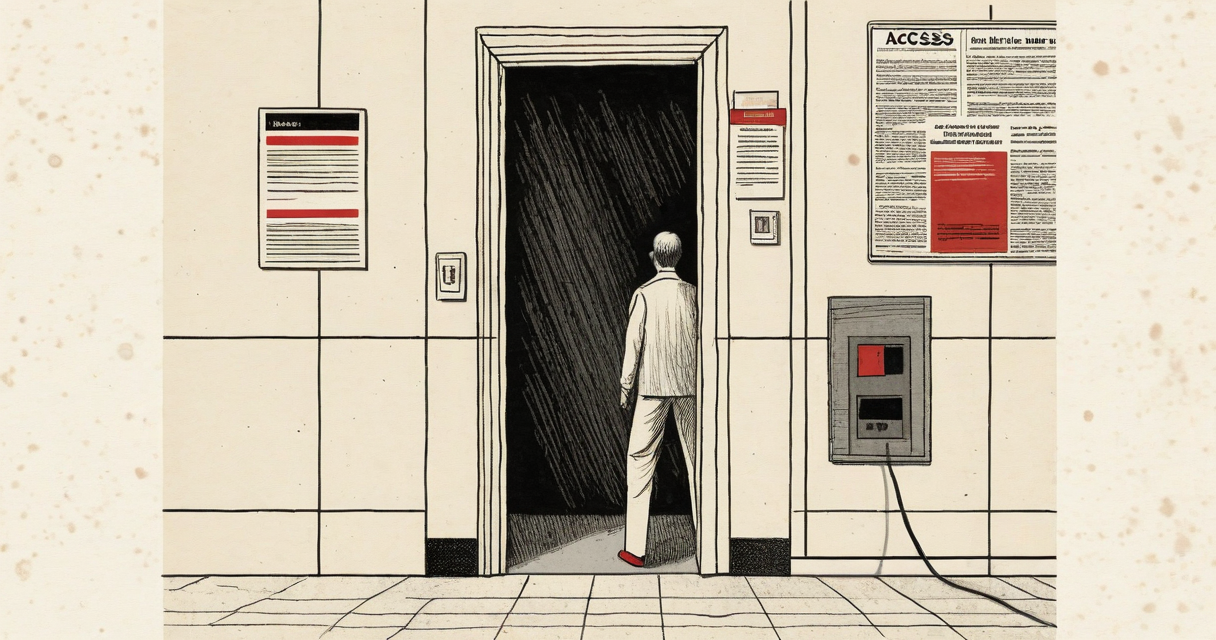
Sandia National Labs ran the SA3000 8085 CPU as a high-value compute resource with no enforced access controls. That is the finding. Everything else is detail.
The relevant exposure is not a flaw in the 8085, a published exploit, or a single technique. It is the absence of enforcement at the access boundary of a sensitive resource. The question that matters is not how access was obtained. It is that access did not require authorization to obtain. Who reached the resource, and what they could do once there, is the incident. The mechanism used to reach it is secondary.
State it plainly. A control that is not enforced is not a control. Where access to a compute resource is not gated against identity, the resource is open to anyone who can reach it. That is the condition described here. It does not require an attacker to become a problem. It requires only reachability, and a resource worth reaching.
The observable failure is that access to the SA3000’s data and processing capabilities was possible without an enforced access decision. Nothing in the observed behaviour distinguished an authorized request from an unauthorized one, because no enforcement point evaluated the difference. The resource granted access and processing on the basis of reachability.
This is an access boundary failure, not an exploitation failure. The processing capability of the CPU was reachable, and reaching it was sufficient to use it. access to sensitive data and to the compute resource itself was the result. The value of what sat behind the boundary is what makes this material. The boundary did not hold because there was nothing enforcing it.
What is not established should be stated as such. The identity of who gained access is not confirmed. The path used to reach the resource is not confirmed. Dwell time, number of identities involved, persistence, and sequence are not confirmed. None of that is required to characterize the failure. The failure is that access did not depend on authorization. Scope of impact beyond access to data and processing capability is not confirmed and is not assumed here.
It failed because access control was not enforced at the resource. When there is no enforcement point between a requester and a high-value resource, every requester is treated identically, and authorization is never a factor in whether access is granted. The boundary that should have separated authorized from unauthorized use was not present in the path to the resource.
Calling this a misconfiguration understates it. A misconfiguration implies a control that exists and was set wrong. What the facts describe is the lack of enforced access controls on the resource. The defined failure is specific. The control that should have gated identity against the SA3000 was not enforced. The boundary that broke was the access boundary at the compute resource. Access was enabled by the absence of any enforcement at that boundary. That is not a tuning error. That is an unenforced boundary on a resource that warranted one.
Whether a control was designed for this resource and left unenforced, or never placed at all, is not confirmed. Control existence is not assumed. What is confirmed is the outcome of its absence. A high-value compute resource granted access and processing on the basis of reachability rather than authorization. In that state, the system does not need to be attacked to be misused. If it allows it, it will happen.
The mechanism is narrow. Access to the SA3000 was decided by reachability, and reachability alone was sufficient to obtain data and processing. The observable behaviour is a resource that responded on arrival. A request that reached the CPU received access and processing. No observable property of the request changed that outcome, because no enforcement point in the path evaluated one.
What converts reachability into capability is the absence of an access decision between the requester and the resource. With no enforcement point present, the resource does not separate one requester from another. It grants on the same terms to every request that reaches it. The capability behind the boundary, processing and the data it touched, was therefore available to the reachability surface of the resource and to nothing narrower. The size and composition of that surface is not confirmed.
This is the full mechanism. It does not depend on a technique, a flaw in the 8085, or attacker behaviour of any kind. It depends only on two conditions being true at once. The resource holds value. The path to the resource contains no enforcement. Where both hold, the resource is used by whoever reaches it, and the act of reaching is the act of authorizing. Nothing else is required, and nothing in the observed behaviour adds to it.
The pattern derived from this mechanism is direct. Where access is gated by reachability rather than identity, the boundary of the resource is its reachability surface, not its authorization model. The resource has no authorization model in effect. Whatever can reach it holds it. This is true independent of the resource type. The SA3000 is a CPU. The mechanism would read identically for any high-value resource placed behind no enforced access decision.
The same mechanism produces the same result wherever it appears. A compute resource that runs what reaches it is indistinguishable, in observable behaviour, from an open resource. The value of what sits behind the boundary does not change the mechanism. It changes the consequence of the mechanism. High value behind an unenforced boundary means high consequence available on reachability. The boundary did not fail under pressure. It was never in the path to fail.
Control existence is the part that misleads. A control that is present but not enforced sits in the same observable state as a control that was never placed. In both cases the path to the resource contains no access decision, and the resource grants on reachability. Whether a control was designed for the SA3000 and left unenforced, or never placed, is not confirmed. The distinction does not change the pattern. An unenforced control and an absent control produce the same access outcome. Identity is the boundary. Where identity is not evaluated, there is no boundary, only reach.
The operator position is fixed. A high-value compute resource must not grant access or processing on the basis of reachability. An enforcement point must sit in the path between any requester and the resource, and it must evaluate identity before access or processing is granted. Until that enforcement point exists and is enforced, the resource is open to its reachability surface regardless of who reaches it.
What is not confirmed stays not confirmed, and it does not change the required end state. The identity of who reached the resource, the path, dwell time, persistence, and the number of identities involved are all unconfirmed. None of them are inputs to the decision. The decision is that an unenforced access boundary on a valued resource is an open resource. The remediation is not tuning. It is the placement and enforcement of an access decision that does not currently gate the resource.
State the condition without softening. If a system grants access on reachability, it will be accessed on reachability. That is not a risk to be rated. It is the current behaviour of the resource as described. The control that should have separated authorized from unauthorized use of the SA3000 was not enforced, and an unenforced control is not a control. The resource is open until identity gates it. Everything else is detail.
Keep Reading
 DNS security
The record is the authority
A for-sale DNS record sells naming authority itself, and every control above DNS keeps validating the name for whoever now holds the record.
 credential theft
CVE-2026-44843 turns one chat message into credential theft
CVE-2026-44843 turns a single chat message into credential loss. An operator breakdown of the one-hop path from unauthenticated input to identity material.
 IoT security
The camera on your shelf handed out your GPS
A TP-Link Kasa camera returned home GPS over unauthenticated UDP for six years. The mechanism, the pattern it exposes, and what must now be true.
Stay in the loop
New writing delivered when it's ready. No schedule, no spam.