The US bought a cheaper way to keep losing
Iran's destruction of $1B in Reapers exposes predictable targeting as a static-trust failure. A cheaper drone with the same pattern is engaged at the same rate.
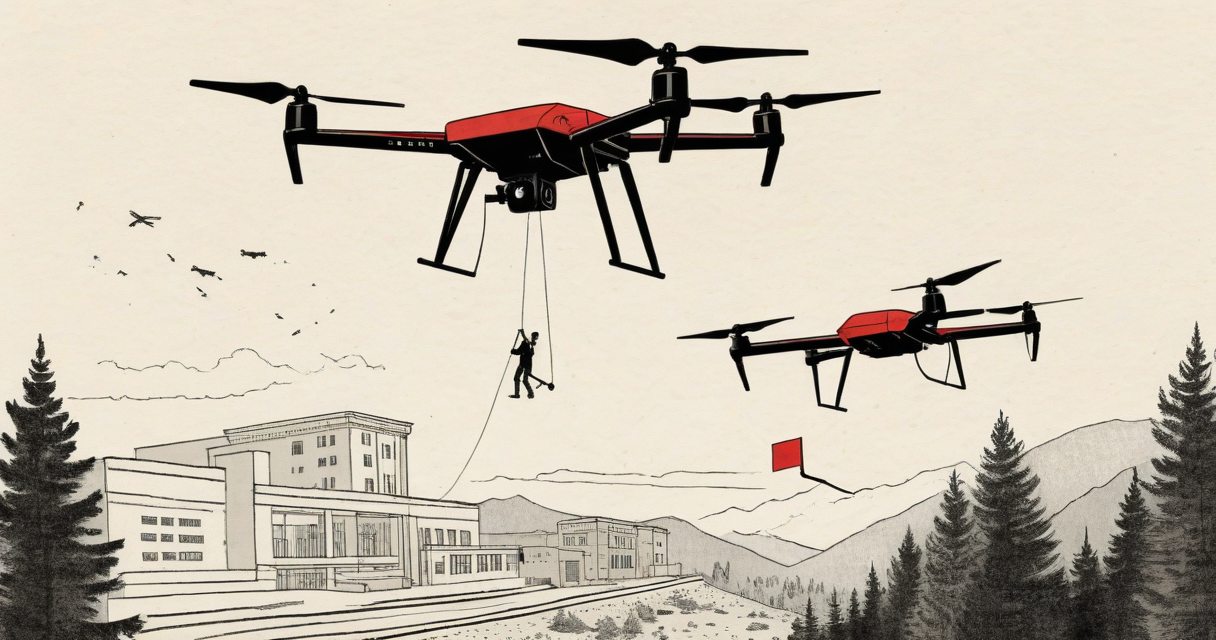
The US is seeking cheaper hunter-killer drones after Iran destroyed one billion dollars worth of Reapers. The stated response reframes the loss as a cost problem. Buy the same capability for less, absorb the attrition, keep flying. That framing is the first failure, because it treats the price of the asset as the thing that broke. The price of the asset is not the boundary that was crossed.
The vulnerability named in this loss is predictable targeting. Cost has no relationship to predictability. A cheaper platform that presents the same anticipatable pattern is engaged at the same rate for a lower unit price. That is not a control improvement. That is a cheaper way to keep losing. Reducing the value of the target does not change whether the target can be found.
The loss is described as a failure to integrate resilient identity management and continuous trust validation into drone operations. That is a controls statement, not a hardware statement. Identity is the boundary. The one billion dollar figure measures what the failed boundary cost, not what caused it. The procurement response on the table addresses the invoice. It does not address the boundary.
What is observable is bounded and specific. One billion dollars in Reapers was destroyed. Targeting against those platforms was predictable. The organisation is now moving to acquire cheaper units. Those are the confirmed conditions. The number of airframes represented in that figure is not confirmed. Whether the loss occurred in one engagement or across several is not confirmed. The method used to locate and destroy the platforms is not confirmed.
The externally observable behaviour of the system is that high value platforms were engaged and destroyed reliably enough to accumulate a one billion dollar loss. Reliable engagement requires a target that can be resolved. Predictable targeting states that the platform presented a pattern consistent enough to be anticipated. That consistency is the observable defect. What that pattern consisted of, and what signal exposed it, is not confirmed and will not be assumed here.
The response itself is observable behaviour and it is diagnostic. Moving to cheaper drones defines the loss as unit expense. That definition is a decision about what the organisation believes failed. It believes the asset was too expensive to lose. The facts state the asset was too predictable to survive. Those are different failures and only one of them is being funded.
The stated cause is the absence of resilient identity management and continuous trust validation in drone operations. Predictable targeting is the observable symptom of that absence. A platform whose behaviour can be anticipated is a platform whose operating pattern is stable and not revalidated against a changing adversary. Stable and unrevalidated is the exact condition a continuous trust model exists to prevent.
Continuous trust validation means trust is re-established against current conditions rather than held as a fixed state. If the platform was predictable, the trust relationship governing its operation was static. A static trust relationship produces a fixed target. The adversary did not need to defeat a moving boundary because the boundary did not move. Identity that is asserted once and never re-checked is not a control. It is a coordinate.
The limits of this conclusion are firm. Whether a cyber vector was involved is not confirmed. Dwell time is not confirmed. The sequence of the engagement is not confirmed. What is logically necessary from predictable targeting combined with a stated failure of continuous trust validation is that the platform’s operating identity was legible and unchanging to the party that destroyed it. Cost did not cause that condition, and a cheaper platform does not remove it.
The failure mechanism resolves to one condition. A platform that can be anticipated has an operating identity that was asserted once and treated as valid for every cycle after. Predictable targeting is the external signature of that condition. The destroying party did not have to defeat a moving boundary. It had to read a pattern that held still. Whether that pattern was emissions, route, timing, or another signal is not confirmed. What is logically necessary is that the signal was consistent enough to support reliable resolution of the target.
Reliable engagement of a high value platform requires the target to be resolvable at the moment of engagement. The one billion dollar loss confirms the resolution succeeded at a rate high enough to accumulate that figure. Resolution at that rate against a platform described as predictable means the platform’s operating identity was legible to the adversary and did not change in response to being read. Legible and static is the operable definition of a coordinate. The adversary was engaging a coordinate, not chasing a target.
Continuous trust validation is the control whose function is to break that stability. It re-establishes the trust governing the platform’s operation against current conditions rather than holding it as a fixed state. The facts state this control was absent from drone operations. Absent that control, the trust relationship is set once and held as a fixed state. A trust relationship that never re-checks produces the same operating pattern every cycle, and the same pattern every cycle is the exact input the adversary needs. The mechanism did not require a cyber vector, and none is confirmed. It required only that identity be asserted and never revalidated.
The pattern is not specific to aircraft. Any asset whose operating identity is asserted once and never revalidated presents a fixed boundary, and a fixed boundary is a target that does not have to be chased. The value of the asset does not enter the mechanism. A one billion dollar platform and a low cost platform that present the same stable identity are resolved with equal reliability by whatever method reads that identity. Cost sits on the invoice. The boundary sits in the identity. The two do not touch.
This is why the procurement response reproduces the exposure instead of removing it. Buying cheaper units does not alter whether a unit presents a predictable pattern. It changes what each loss costs. Applied at volume, a cheaper predictable platform reproduces the same legible identity across every unit fielded. The mechanism is per platform. Multiplying the platforms multiplies the coordinate. Automation and scale do not discriminate between a control and a defect. Whatever the pattern is, scale prints more copies of it.
The pattern holds wherever trust is a state that is set and then assumed. A boundary that is validated once is a boundary that stops moving, and a boundary that stops moving is located. The adversary does not need superior capability against a static identity. It needs only to observe it long enough to resolve it, and a static identity supplies that observation for free. The mechanism rewards patience, not sophistication, because the target is doing the work of holding still.
State the position plainly. The asset was not too expensive to lose. It was too predictable to survive. The procurement decision on the table funds the first claim and leaves the second intact. A cheaper hunter-killer drone that presents the same static identity is engaged at the same rate for less money per loss. That is the loss reframed as a budget line, not the boundary repaired.
What must now be true is narrow and non-negotiable. The operating identity of the platform must be revalidated against current conditions rather than asserted once and assumed. If the trust governing the platform cannot be re-established continuously, the platform remains a coordinate regardless of its unit price. Continuous trust validation is named as the missing control. Until it exists in drone operations, predictable targeting is not mitigated, it is repriced. Identity is the boundary, and this boundary did not move.
Controls that are not enforced are not controls. A trust relationship that is set once and never checked is not a control, it is a fixed pattern the adversary reads at leisure. The facts confirm one billion dollars in Reapers destroyed, targeting that was predictable, and a move to cheaper units. They do not confirm the number of airframes, the sequence, the method, or any cyber vector, and nothing here assumes them. What they confirm is sufficient to define the failure. If a system presents a static identity, that identity will be found and engaged. Buying it cheaper only sets the price of finding out again.
Keep Reading
 iPhone Duo
iPhone Duo is not a convenience feature
iPhone Duo's shared access and multi-device authentication expand who can authenticate and access, collapsing resource security to the weakest device and party.
 credential theft
CVE-2026-44843 turns one chat message into credential theft
CVE-2026-44843 turns a single chat message into credential loss. An operator breakdown of the one-hop path from unauthenticated input to identity material.
 access control
Sandia's 8085 ran with the door unlocked
Sandia's SA3000 8085 CPU granted access on reachability, not identity. An unenforced boundary on a high-value resource is an open resource.
Stay in the loop
New writing delivered when it's ready. No schedule, no spam.