Your hosting panel is your attack surface
Active cPanel exploitation is a control plane compromise. The boundary failed before the login form. Operator briefing on what that means.
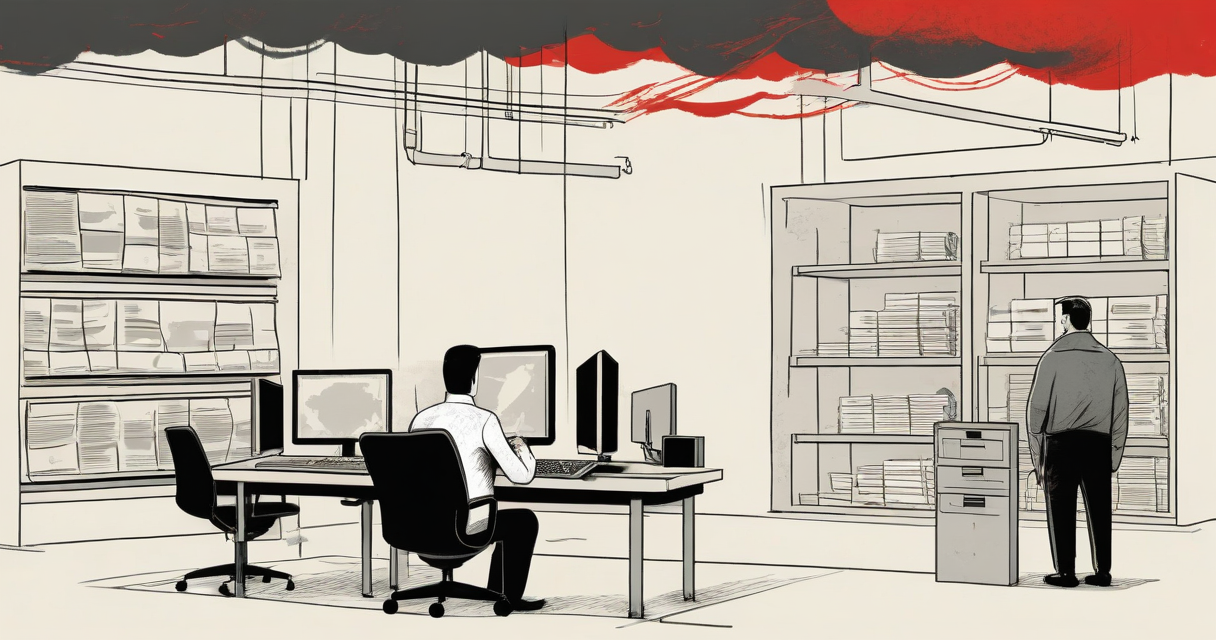
A vulnerability in cPanel is under active exploitation. cPanel sits in front of a large share of the shared and managed hosting market, which means the affected population is measured in websites, not servers. The specific CVE identifier, affected version range, patched build, and exploitation primitive are not confirmed in the source material. What is confirmed is that exploitation is occurring in the wild and the deployed footprint is large.
The exposure is not the website. The exposure is the control plane in front of the website. cPanel is the administrative interface for files, databases, mail, DNS, SSL, cron, and account provisioning. Anything an account owner can do through that interface, an attacker who reaches that interface can do as well. The blast radius of a control plane bug is therefore not the bug itself. It is every capability the control plane exposes.
For the operator, the framing is simple. A panel that manages production infrastructure is production infrastructure. It does not become less critical because it is provided by a hosting vendor. If cPanel is in the path between an attacker and your filesystem, mail flow, or DNS records, then a cPanel exploit is a path to all of those at once. Treat it as such.
The operating assumption for most site owners has been that cPanel is part of the hosting environment, not part of their attack surface. Patching, hardening, and monitoring of the panel were assumed to be the host’s responsibility. The customer’s job stopped at the application: WordPress, the CMS, the plugins, the theme. Anything below that line was someone else’s control.
The second assumption was that authenticated administrative interfaces are protected by authentication. Strong password, maybe two factor, and the surface is considered closed. Under that model, an unpatched panel is a risk only if credentials leak. The panel itself is not modelled as a primary entry point. It is modelled as a door with a lock.
The third assumption was scope containment. Each cPanel account is presented as an isolated tenant on shared hosting. Site owners assumed that a compromise of one account, or a flaw in the panel, would be bounded by that tenancy. The panel was treated as a thin management layer over an otherwise segmented system. Whether that segmentation actually holds under exploitation of the panel itself is not confirmed by the source material and should not be assumed.
Active exploitation removes the first assumption. The control plane is being attacked directly, at scale, by parties who have already done the work of weaponising the bug. The economics for the attacker are favourable because one working exploit applies to a large installed base with consistent surface. The economics for the defender are unfavourable for the same reason. The specific exploitation technique, whether it requires authentication, and whether it is pre-auth or post-auth are not confirmed.
The second assumption collapses if the vulnerability does not require valid credentials, or if it bypasses the authentication layer entirely. Whether either condition applies here is not confirmed. What is confirmed is that exploitation is occurring without the cooperation of the legitimate account holder. From the site owner’s position, that means password strength and account hygiene are not the controlling variables for this specific exposure. The controlling variable is the patch state of the panel, which in most hosting arrangements the customer does not own.
The third assumption is the one operators should stop relying on immediately. Tenant isolation on shared hosting is a property of the platform, not a property of the customer’s configuration. If the panel is the layer being exploited, isolation between accounts depends on whether the exploit grants access at the account level, the panel process level, or the host level. The source material does not confirm which. In the absence of that confirmation, the safe operating position is that any account on an affected, unpatched host is reachable until the host states otherwise. Identity is the boundary. If the panel is the identity layer and the panel is broken, the boundary is broken with it.
The failure is not in cPanel as a product. The failure is in how the control plane is classified by the parties who depend on it. Site owners model cPanel as a vendor utility. The vendor models cPanel as a customer-facing application. Between those two positions there is a layer of responsibility that neither side actively owns. Patch state, network exposure of the panel, IP allowlisting, and authentication enforcement on the management interface fall into that gap. The current exploitation is using that gap. The specific primitive is not confirmed. The structural condition that makes the primitive useful is.
Drift accumulates because the panel is operationally invisible to the customer. The customer interacts with the panel as a UI for tasks they want to perform, not as a process running on a host with a version number, a CVE feed, and an exposure profile. There is no dashboard the site owner consults to confirm panel build, panel patch level, or panel-facing firewall rules. In the absence of that visibility, the panel is assumed to be current. Active exploitation at scale is direct evidence that the assumption is wrong across a meaningful share of the installed base. Whether any specific host is current is a question the customer cannot answer from inside their own tenancy.
The deeper drift is in the identity model. Authentication on the panel was treated as the boundary. If the exploitation path does not require valid authentication, the boundary was never where it was assumed to be. The actual boundary was the panel process itself, the request parser in front of it, and whatever pre-authentication code paths are reachable over the network. None of those are surfaces the customer can audit, harden, or monitor. The control they believed they had over access to their account was a control over the login form, not a control over the panel. When the exploitable surface sits before the login form, the customer’s controls are out of scope by construction. Whether that is the case for this specific vulnerability is not confirmed. The general condition holds regardless.
The pattern is delegated control planes with undefined patch ownership. cPanel is one instance. The same mechanism is present in any administrative layer that sits between a customer and their workload, where the customer consumes the layer as a service but the layer itself is a network-reachable application with its own vulnerabilities, its own authentication, and its own exposure to the internet. Managed database consoles, hosting provider portals, MSP remote management agents, shared CI runners, and SaaS admin interfaces all share this shape. The customer owns the data and the consequences. The provider owns the patch cycle. Neither owns the joint failure mode that occurs when the management layer itself is the target.
The condition that makes this pattern dangerous is consistency of surface across tenants. A single working exploit against a multi-tenant control plane returns access proportional to the size of the tenant base, not the effort of the attack. This is the same economic asymmetry that drove the cPanel campaign and that recurs every time a shared management layer is found to have a remote primitive. The defender’s cost is per tenant. The attacker’s cost is per platform. Any system with that ratio will be attacked first and patched second, because the attacker only needs the vulnerability to exist briefly across a large estate to extract value, while the defender needs it to be absent across the entire estate to be safe.
The pattern also exposes a reporting failure. When a control plane is compromised, the affected parties are often informed by the provider, on the provider’s timeline, with the provider’s framing. The customer learns about the breach of their own systems through a third party’s notification process. Detection, scoping, and containment are bounded by what the provider chooses to share and when. For a workload owner whose obligations include breach notification, audit, or regulated data handling, the dependency on third-party disclosure becomes a control gap of its own. The mechanism is the same one cPanel exposes here. A management layer the customer cannot patch is also a management layer the customer cannot independently confirm clean.
A control plane is part of the attack surface of every system it controls. Ownership of the patch cycle does not transfer ownership of the impact. If cPanel is the layer that provisions accounts, manages files, controls DNS, and issues certificates for a site, then a compromise of cPanel is a compromise of the site, regardless of which party is responsible for keeping the panel current. The accountability for outcomes does not split along the lines of operational responsibility. It stays with the party that holds the data and faces the consequences.
Delegated operation is not delegated risk. The current exploitation makes that explicit at scale. Site owners on affected, unpatched hosts are exposed through a layer they do not control, via a vulnerability they cannot fix, on a timeline they do not set. The remediation path runs through the provider. The exposure window, the scope of access granted by the exploit, and the persistence left behind after a patch are all properties of the provider’s response, not the customer’s. Whether that response is fast, complete, and transparent is a property of the provider relationship, established before the incident or not at all.
Identity is the boundary. When the identity layer is a shared, internet-reachable, third-party-operated application, the boundary is shared, internet-reachable, and third-party-operated. Any security posture built on top of that layer inherits its weaknesses. The cPanel campaign is not an isolated event. It is a demonstration of what happens, and will continue to happen, every time a control plane with a large installed base develops a remote primitive. The position to hold is that the management interface is production. Treat it accordingly, or accept that its failures are yours.
See also: NordVPN for tunneled traffic when operating outside controlled networks.
#ad Contains an affiliate link.
Keep Reading
 forgejo
Your defenses are now executing for the attacker.
Forgejo 16.0.3 and earlier carry a critical RCE. The vulnerable version is the exposure, and running a build above the range is the only confirmed mitigation.
 vulnerability-management
The copy runs past the allocation, again
Recurring dystopian tech vulnerabilities persist because defenders patch the CVE instance and never hunt the underlying mechanism. The inaction is the vuln.
 vulnerability-management
The patch opens the attack window.
The Coming Loop is the collapsing gap between vulnerability disclosure and mass exploitation of internet-facing appliances - and why edge telemetry stays blind.
Latest on the Wire
Full wire →- 12 Zigbee Sensors Put to the Accuracy TestHacker News
- ChatGPT mimics signatures of New Yorker cartoonists without permissionHacker News
- ClickFix Attack Exploits Browser Cache to Evasion Windows Run LimitsThe Hacker News
- Common Lisp Shines in the Age of AI Code GenerationHacker News
New signal daily · RSS
Stay in the loop
New writing delivered when it's ready. No schedule, no spam.