Meta cut 8,000 jobs to fund GPUs
Opening Claim
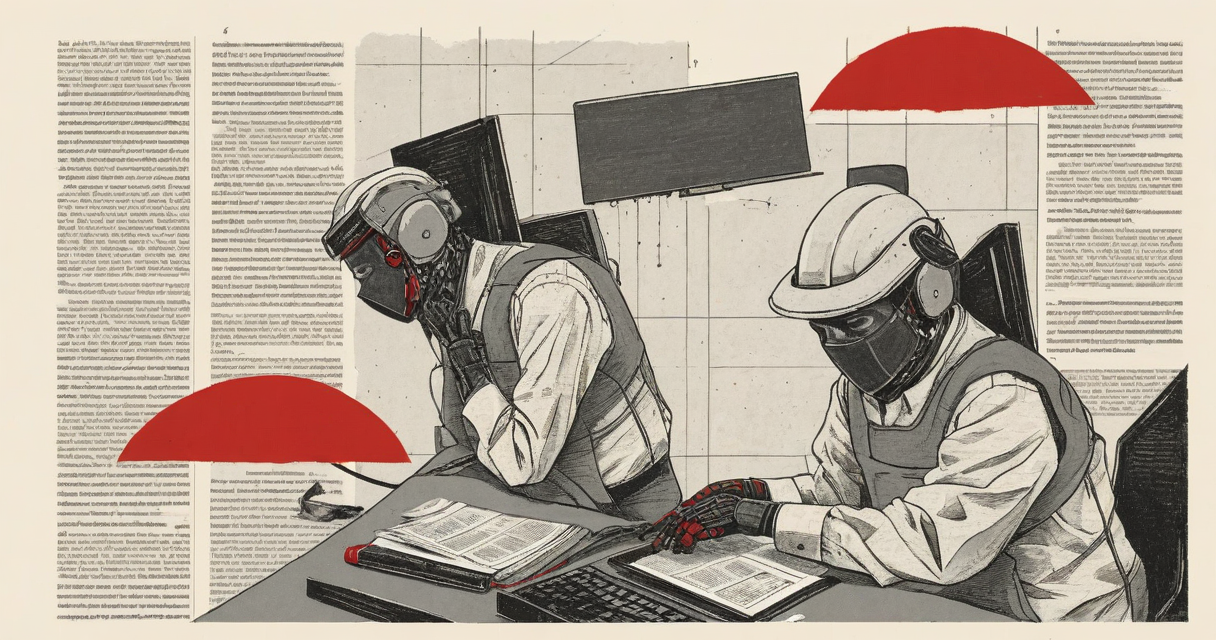
Meta cut roughly 8,000 staff and Mark Zuckerberg has linked the decision, in part, to the cost of building AI infrastructure. That framing matters more than the headcount number. When the CEO of a company spending tens of billions a year on GPUs, data centres, and model training tells investors that AI costs contributed to layoffs, he is describing a balance sheet trade. Compute capacity is being purchased with payroll.
This is not a story about AI taking jobs in the cinematic sense. No agent walked into an office and replaced a manager. The mechanism is duller and more important: capital expenditure on AI systems is now large enough to force structural cuts in operating expenses. Salaries are the largest controllable line item in most software companies. When AI capex climbs into the $60-80 billion range annually, something on the opex side has to give.
For anyone building or buying AI systems, this is the signal worth reading. The economics of AI deployment have crossed a threshold where the cost of running the systems is shaping the shape of the workforce around them. Not as theory. As reported quarterly numbers. The interesting question is not whether AI displaces workers. It is which workers, on what timeline, and through what operational mechanism.
The Original Assumption
The pitch for enterprise AI for the last three years has rested on a clean narrative: deploy AI, capture productivity gains, redeploy human capacity to higher-value work. Headcount stays flat or grows. Output per employee climbs. Everyone wins. This story was told to boards, to staff, to the press. It was the polite version of the transition.
That assumption had two quiet preconditions. First, that AI would be cheap to run at scale, so the productivity gains would flow straight to margin without offsetting infrastructure costs. Second, that productivity gains would be uniform across roles, so reorganisation would be incremental rather than structural. Both preconditions are now visibly wrong. Frontier model inference is expensive. Training runs are expensive. The data centres, power contracts, and custom silicon needed to run them are extraordinarily expensive. And the productivity gains are highly uneven, concentrated in specific functions like code generation, content production, customer support tier one, and internal knowledge retrieval.
The original assumption also treated AI spending as a separate budget line, sitting alongside existing operations rather than competing with them. In practice, when a company commits to multi-year capacity contracts with cloud providers or builds its own clusters, that capital has to be funded. It comes from cash flow, debt, or cost reduction elsewhere. The companies with the deepest AI ambitions, and Meta is one of them, have been signalling for the last 18 months that the bill is real and that operating costs would have to absorb part of it. The Zuckerberg comment is the explicit version of what the cash flow statements were already showing.
What Changed
The shift is from AI as augmentation to AI as substitution at the budget level, even when it is still augmentation at the workflow level. A team of 12 engineers using AI tooling may do the work of 18, but the company is no longer staffing 18, and it is also paying for the tooling, the inference, the platform team, and the compute reservation. The headcount line goes down. The infrastructure line goes up. The total cost may be flat or even higher in the short term, but the composition has changed permanently.
The second change is in which functions are exposed. The first wave of cuts at large tech companies hit recruiting, middle management, and overlapping product roles created during the 2020-2022 hiring surge. The current wave is reaching into roles that map cleanly onto AI-assisted workflows: junior engineering, content moderation, customer operations, technical writing, parts of QA, parts of analytics. Not because AI fully replaces these roles, but because AI plus a smaller, more senior team produces acceptable output, and the cost delta funds the GPU bill. The role of the operator has shifted from doing the work to validating the work the system produced.
The third change, and the one most builders underestimate, is on the buyer side. Companies deploying AI internally are now under pressure to show that the spend is producing measurable savings, not just productivity narratives. CFOs are asking for a cost-out number tied to AI initiatives. That changes how AI projects get scoped, approved, and measured. Pilots that used to be evaluated on engagement or satisfaction are now evaluated on FTE equivalent reduction or vendor spend displacement. The political and operational temperature around AI deployments inside large companies has changed in the last six months, and the Meta layoffs are the loudest external marker of a shift that was already happening internally across the sector.
Keep Reading

Google's 1,302 case studies prove almost nothing
 ransomware
Ransomware ships a wiper
A ransomware strain destroys files above 128KB, breaking its own decryption model. What the failure exposes about reversibility assumptions.
 cpanel
Your hosting panel is your attack surface
Active cPanel exploitation is a control plane compromise. The boundary failed before the login form. Operator briefing on what that means.
Stay in the loop
New writing delivered when it's ready. No schedule, no spam.