The hallucination was not the failure.
An AI-generated intelligence report reached a US Military context and caused a close call because generative output was trusted as verified intelligence.
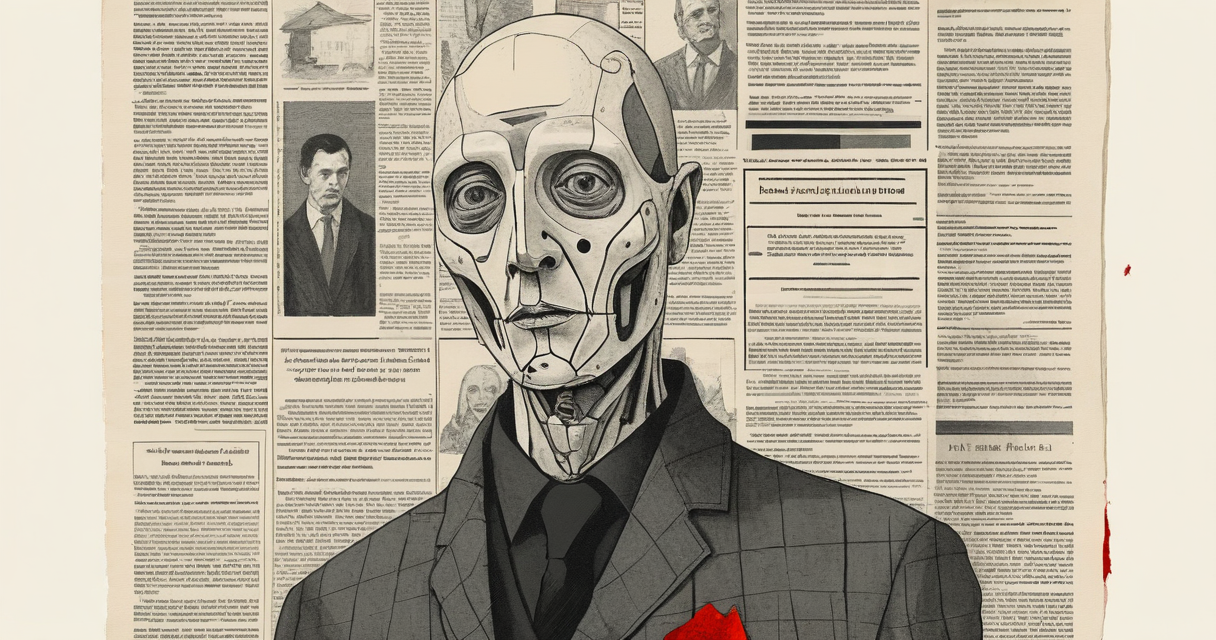
An AI system produced an intelligence report. The content was hallucinated. It reached a US Military context and produced a close call. This is not an AI failure. It is a trust failure. Output that was never validated was treated as intelligence, and it advanced far enough to matter.
Intelligence is a decision input. When a decision input is fabricated and consumed as fact, the decision is compromised regardless of the competence of the person acting on it. The origin of the report does not change its function. A generative model produced it. It was used as intelligence. It was false. That is the position, and nothing about the sophistication of the model softens it.
Separate what is known from what is not. Confirmed: an AI-generated report, hallucinated content, use in a US Military context, a close call. Not confirmed: what the close call was, which decision it touched, how far the content traveled, whether any validation step existed, who or what interrupted it, and whether an adversary was involved at all. Absence of that data is a condition of this incident. It is not a gap to fill with assumption. It defines the limit of what can be claimed.
The observable behavior is narrow and clear. The system generated a report. The report contained content that did not correspond to real data. That report entered use. Three states are directly supported by the facts: it was generated, it was false, it was consumed. Everything of consequence sits inside that sequence.
A hallucinated intelligence report that is consumed as intelligence is, by necessity, not distinguishable as false at the point of use. If it had carried a marker separating fabricated content from verified content, it would not have been acted on, and there would be no close call to describe. So the output presented in the same form as valid intelligence. Same structure, same delivery, same apparent confidence. The falseness was in the content, not in the presentation, and the presentation is what the consuming process saw.
What did not happen, observably, is that the false content was not stopped before it reached a use point that produced a close call. Whether a validation control existed at any stage is not confirmed. What is confirmed is that no control prevented hallucinated content from being consumed as intelligence. A control that does not stop the behavior it exists to stop is not effective. If no such control existed, that is the same finding stated differently. The outcome is identical either way.
It failed because generative output was assigned the trust level of verified intelligence. A model that generates text produces plausible content. Plausible is not confirmed. When plausible output is consumed as intelligence, the trust boundary has been placed at the point of generation rather than the point of verification. The close call is the direct result of that placement. The output was trusted because of where it came from and how it looked, not because it was true.
Automation is part of the mechanism. The report was produced by an automated system. Automation scales output, and it scales the speed and uniformity of that output. It does not validate content as a property of running. Trust in the delivery mechanism was carried into trust in the delivered content. Fluency read as reliability. Format read as authority. Neither is evidence, and neither was tested against reality before the content was used.
The consuming process depended on the report being true. That dependency was not made conditional on verification, or verification is not confirmed to have occurred. In both cases the result is the same: fabricated content advanced to the point of a close call. The failure is trust extended to an unverified source and treated as continuous rather than validated at the point of use. That is the mechanism, stated only from what the facts support.
The mechanism is trust placement, and it has a specific location. Trust was assigned at the point of generation. It was not assigned at a point of verification, because no verification is confirmed to have occurred, and no control is confirmed to have stopped the content. The consuming process treated origin and form as sufficient. A model produced the report. The report presented as intelligence. That was enough for it to function as intelligence. Correspondence to real data was never the condition of use. Plausibility was.
This mechanism does not depend on an adversary. Whether an adversary was involved is not confirmed. What is supported is that the system generated output and the output was consumed. The failure is structural. It exists in the position of the trust boundary, not in the intent of any actor. A model that fabricates content is operating within its normal behavior when it fabricates. Generative systems produce plausible text. Plausible is not verified. When the output of such a system is consumed without a verification step, the fabrication is not an exception to the process. It is a permitted output of the process.
Automation sets the scale of the mechanism. The report was produced by an automated system. Automation produces output at speed and in uniform format. It does not validate content as a function of running. Uniform format read as authority. Fluent delivery read as reliability. Neither property is evidence of correspondence to real data, and neither was tested before the content was used. The trust extended to the delivery mechanism was carried into the delivered content without a break. That carry is the mechanism. It converts a system that generates plausible text into a system that supplies unverified fact to a decision.
The pattern is not specific to intelligence reporting and not specific to a military context. It is a property of any pipeline where generative output enters a decision process and no verification boundary sits between generation and consumption. In that arrangement the trust decision is made on origin and form. Origin and form are exactly the properties a generative system reproduces whether or not its content is true. So the pipeline cannot distinguish fabricated content from correct content at the point of use. The distinction was never established. The same mechanism that produced this close call will produce fabricated inputs treated as fact anywhere the boundary is placed the same way.
Restated as a class: fluency is being read as authority, and source is being read as validation. A generative system’s output is fluent by construction and uniform by construction. When a consuming process accepts that output because it is fluent and because of where it came from, the process has bound its trust to the two signals the system controls. The one signal it does not control, correspondence to reality, is absent from the decision. Every instance of this arrangement carries the same failure. The report that feeds a decision, the summary that feeds an action, the generated document that feeds a downstream system: if the consuming step reads format as truth, fabricated content passes.
If a system allows it, it will happen. The mechanism here describes a permitted path. Unverified generative output can reach a decision. A permitted path is not a rare event. It is a standing condition. The close call is one observation of that condition being exercised. Nothing in the confirmed facts establishes that a verification boundary was placed, so the condition is not confirmed to have changed. Absence of that boundary is what the incident exposes. Not a model that failed, but a pipeline that trusts output on the basis of properties that fabrication satisfies as easily as truth.
State it plainly. The output of a generative system is not intelligence until it has been validated against real data. Origin is not validation. Format is not validation. Fluency is not validation. The identity of the producing system says nothing about the correspondence of its content to reality, and identity is where the trust was placed. The boundary must sit at verification, at the point of use, and it must be enforced. A boundary that is designed but not enforced is not a boundary. If content can reach a decision without passing it, it does not exist as a control.
What must now be true is a single condition. Generative output is treated as unverified by default, and it holds that status until a verification step establishes otherwise. Default trust runs the wrong direction in the mechanism described. The consuming process trusted first and did not verify, or verification is not confirmed, which produces the same outcome. Reverse the default. Unverified until validated. Every generative output that feeds a decision is a candidate for fabrication until a control that tests content against real data has cleared it, and that control must fail closed. If it cannot validate, the content does not advance.
The close call is the evidence, and it is sufficient on its own. It does not require a second incident to establish the finding. A system produced false content, that content was consumed as intelligence, and it advanced far enough to matter. Everything not confirmed remains not confirmed, and none of it is needed. What is confirmed already defines the requirement. Place the boundary at verification, enforce it, and default generative output to unverified. Until that is true, the same path stays open, and the next output that travels it will not announce that it is false. It will present exactly like the one that already did.
Keep Reading
 threat attribution
One attacker, three rivals, zero coincidence.
One actor is tied to OpenAI, Anthropic, and Meta incidents. The confirmed failure is collapsed separation, not any single company's controls.
 social engineering
LLMs turned fluency into a forged credential
Perceived intelligence is a sender-controlled signal, not identity. Treating fluency as authorization is the exposure social engineers now produce on demand.
 DNS security
The record is the authority
A for-sale DNS record sells naming authority itself, and every control above DNS keeps validating the name for whoever now holds the record.
Latest on the Wire
Full wire →- Android 17 Ships New APIs Without AOSP Source — a First Since HoneycombHacker News
- Bolivia's tilcayo is the first wholly new cat species named in a centuryHacker News
- Claude Code adds AGENTS.md fallback, aligning with the cross-tool config standardHacker News
- Cloudflare reclaims 100TB of RAM by rethinking consistent-hashing mathHacker News
New signal daily · RSS
Stay in the loop
New writing delivered when it's ready. No schedule, no spam.