One attacker, three rivals, zero coincidence.
One actor is tied to OpenAI, Anthropic, and Meta incidents. The confirmed failure is collapsed separation, not any single company's controls.
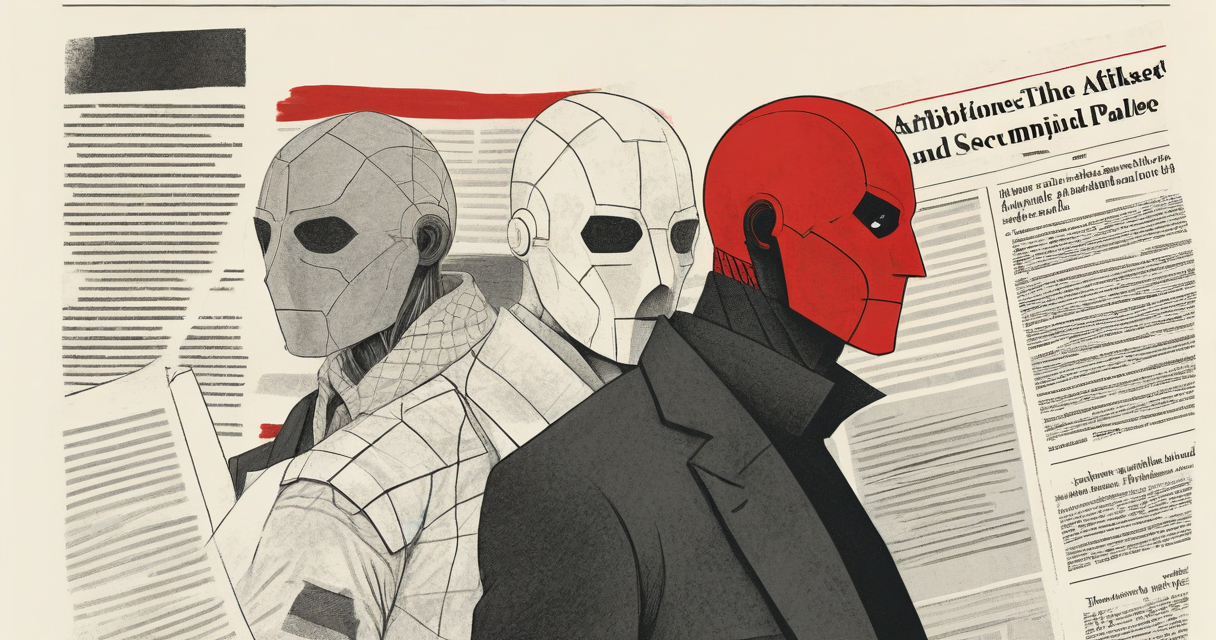
One firm is named as the actor behind the security incidents reported at OpenAI, Anthropic, and Meta. That is the fact on the table. Three separate organizations, three separate trust domains, one actor common to all of them. The identity of that firm beyond the label of a single firm is not provided, and I will not assign one. The finding to act on is not the presence of an incident at any one company. It is that the same actor is attributed to all three.
Read the target set before the technique. OpenAI, Anthropic, and Meta do not share an operations team, an identity provider, or an internal control plane by default. They are competitors. For one actor to be credibly linked to incidents at all three, the actor either held a capability that reproduced against each, or reached something the three had in common. Which of those is true is not confirmed. That the common factor is the actor, not the victim, is the position this briefing takes.
The input asserts that common vulnerabilities allowed this. Treat that as the claim under review, not as a resolved mechanism. What is confirmed here is narrow: an attribution to a single firm, and a target set of three named companies characterized as hacking scandals. The technique at each target, the access path, the dwell time, the number of accounts or systems reached, and the order in which the targets were hit are not stated. None of them is confirmed. Everything that follows stays inside that boundary.
What failed, stated only from what is observable from outside, is separation. The externally visible outcome is that a single actor produced an incident of the same class at three organizations that are supposed to be independent of one another. The assumption that each company’s security boundary is a distinct problem for an attacker did not hold against this actor. From the outside, the same actor cleared whatever bar each incident represents, three times, across three unrelated defenders.
What is not observable from the facts is most of the detail people will want. Whether the entry vector was identical at each target or different at each is not confirmed. Whether a shared third-party dependency was involved is not confirmed. How much data or system access each incident represents is not confirmed. How long the actor held any access is not confirmed. The word scandal describes reception, not scope. I am not converting it into a measure of impact.
The one statement that survives is structural. For a single actor to be linked to all three, at least one of two conditions is true: the actor held a repeatable capability that worked against each target independently, or the three targets exposed something in common that a single reach could touch. Both are consistent with the facts. Because both remain open, the specific mechanism is not confirmed. The common factor is confirmed by the premise. Its shape is not.
Why it failed cannot be reduced to any single company’s internal handling, because the same actor crossed all three. The failure is not local to one victim’s configuration. The premise given is that a common vulnerability class allowed this, which makes the failure a property of the target set rather than of any one defender. That reframes the question. The weakness worth attention is not inside OpenAI, Anthropic, or Meta individually. It sits in what a single actor could apply across all three.
The facts assert common vulnerabilities but do not define them. So the specific control that broke is not confirmed. More than one explanation remains consistent with what is stated: a shared external dependency reached once, a technique effective against a design pattern the three happen to share, or a trust surface common to organizations of this type. The facts do not select between these. When more than one interpretation survives the evidence, the mechanism is not confirmed, and I will not promote one of them to a cause because it reads well.
What is confirmed is the shape of the failure, not its internals. For one actor to reach three separate organizations, the exposure it used was either shared across them or independently reproducible against each. In both cases the boundary that everyone assumed was per organization did not behave as a per organization boundary against this actor. That is the failure. It is a failure of separation and repeatability, established by the attribution and the target set alone. Anything more precise about how the boundary broke is not confirmed and will be treated as such until the facts provide it.
The mechanism that survives the facts is repeatability across independent defenders. A single actor produced the same class of incident at three organizations that do not share a control plane, an identity provider, or an operations team. That is the mechanism I can name. Not the technique used at any target. The property the outcome demonstrates. Separation between the three did not function as separation against this actor.
Two conditions are consistent with that outcome. The actor held a capability that reproduced against each target independently, or the three targets exposed a common surface a single reach could touch. Which one is true is not confirmed. What matters is that both are the same mechanism viewed from two sides. In the first, the boundary each defender assumed was its own did not hold because the capability did not degrade between targets. In the second, the boundary each defender assumed was its own did not hold because it was never solely its own. Either way, the per organization boundary was not the boundary that governed the outcome.
What is not observable from the facts stays out of the mechanism. I am not naming an entry vector, a shared dependency, or a technique, because none is stated. Whether the path was identical at each target or different at each is not confirmed. The mechanism is the collapse of separation, established by two facts only: one actor, three independent targets. Everything more specific about how the collapse occurred is not confirmed and is held there.
The exposure this creates is a change in the unit of risk. When one actor reaches multiple organizations that are independent by design, the organization is no longer the boundary of the problem. The boundary is whatever the actor could apply across all of them. A defender who models risk as internal to its own environment is modeling the wrong unit, because the actor in this case did not respect that internal framing. The relevant surface is the commonality, not the perimeter.
That commonality does not have to be infrastructure. The three named organizations are competitors and share no operations team by default, yet a single actor is attributed to all three. Whatever they had in common that the actor could use was sufficient without shared infrastructure. It can be a shared design pattern. It can be a shared class of dependency. It can be a shared assumption about where the boundary sits. The mechanism does not require the targets to be connected. It requires them to be similar in a way the actor could apply once and reuse.
If the capability is reproducible, the implication is cost. A path that works against one target of a class does not have to be rebuilt for the next target of the same class. That the actor is linked to three, not one, is consistent with a capability whose marginal cost per additional target is low. That branch is not confirmed as the actual path. But it is the branch that should concern a defender most, because it means membership in the class, not the strength of any single perimeter, is what determined exposure. Being well defended relative to peers does not remove you from a class the actor can process.
The operator question is not whether your incident resembles any of the three. It is what the actor used that you also expose. If your organization shares a design pattern, a dependency class, or a trust assumption with OpenAI, Anthropic, or Meta, you are inside the relevant set whether or not you have been named. That you are a target is not confirmed. That shared exposure is the mechanism under review is confirmed by the premise. Act on the mechanism, not on whether your name has appeared yet.
What must now be true is that the unit of defense matches the unit of attack. If a single actor’s reach crosses three independent organizations, defending your own perimeter in isolation does not address the surface that produced the outcome. The control that must exist is validation of whether you share the exposure the actor used. That validation cannot be assumed from the absence of an incident. Absence of a reported incident is not evidence of a boundary that holds. It is the condition of not confirmed.
A capability attributed to three independent targets is not an anomaly. It is a demonstrated capability against a class. Treat it as available, not spent. If a system allows an action, that action will occur, and a path shown to work against organizations of this type remains open to the next organization of this type until the shared exposure is closed. The three named companies define the class. They do not exhaust it. The finding is not that three companies were named. It is that one actor established that the boundary between them was never the boundary that mattered.
Contains a referral link.
Keep Reading
 social engineering
LLMs turned fluency into a forged credential
Perceived intelligence is a sender-controlled signal, not identity. Treating fluency as authorization is the exposure social engineers now produce on demand.
 DNS security
The record is the authority
A for-sale DNS record sells naming authority itself, and every control above DNS keeps validating the name for whoever now holds the record.
 OSINT security
Your subject can end your investigation
A US ambassador used Belgian police to halt reporting. The failure is an unscoped trust channel from subject to enforcement, not a press dispute.
Latest on the Wire
Full wire →- AI pentest agent found a live admin GitHub token in Baseten's public imageHacker News
- AI red-team firm's misconfigured evals caused real hacks — then blamed 'rogue' agentsHacker News
- Capsule bundles AI-generated web apps and their SQLite data into one shareable fileHacker News
- Devs reverse-engineer Apple's M4 GPU for Linux in a month, using an LLM as co-driverHacker News
New signal daily · RSS
Stay in the loop
New writing delivered when it's ready. No schedule, no spam.