The door was unlocked, not picked
Federal concern over fable 5 was a trust boundary failure, not a jailbreak. Fix this code targets content, not access enforcement.
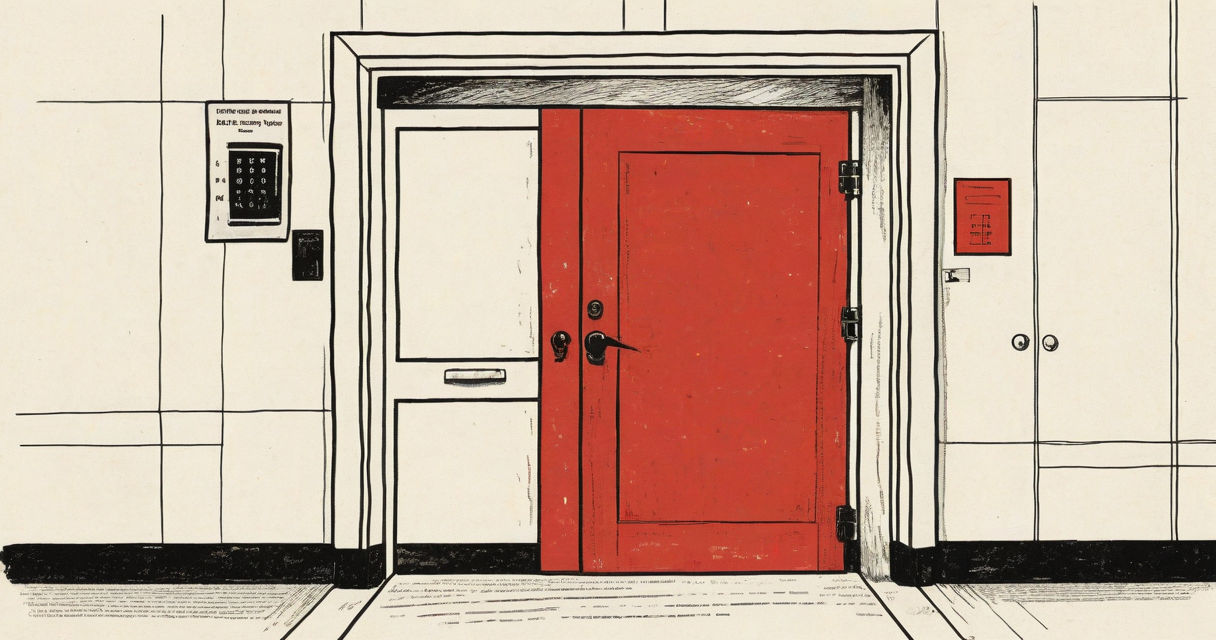
This was not a jailbreak. The reported concern around “fable 5” centers on proprietary code being accessible, and that is a different class of failure. A jailbreak is behavior pulled out of a system through its intended interface. Accessible proprietary code is a boundary that did not hold. The researchers’ position is confirmed by the topic: the issue is “fix this code,” not a model jailbreak. Reporting these as the same problem is the first error, and it is the error Microsoft’s response repeats.
The confirmed facts are narrow, and they should be stated as such. Confirmed: there was federal concern over “fable 5.” Confirmed: researchers characterize the issue as a code problem rather than a jailbreak. Confirmed: Microsoft’s response was “fix this code.” Confirmed: the framing places the failure at the trust boundary around proprietary code. Everything past that is not confirmed. The access path is not confirmed. The scale of exposure is not confirmed. The duration of exposure is not confirmed. The technique used to reach the code is not confirmed. The number of parties who reached it is not confirmed. Absence of that data is a condition, not a space to be filled with plausible attacker behavior.
The position is direct. If proprietary code was easily accessible, the control that was supposed to keep it unreachable did not enforce. The presence of an exploitation step is secondary to the fact that the code was reachable at all. Whether someone walked through the door is a smaller question than why the door was open. That is the finding, and it does not depend on knowing who walked through. Controls that are not enforced are not controls. If the code was reachable, the boundary was not enforced, and that is what must be addressed before anything labeled “exploit” is discussed.
The assumption under review is that proprietary code is protected by being proprietary. Internal ownership is treated as a boundary. It is not. Ownership describes who controls an asset. It does not describe what enforces access to that asset. The topic states the failure occurred at the trust boundary around proprietary code, which means the boundary was assumed to exist and was being relied upon. A boundary that is assumed and not verified is not a boundary. It is an expectation.
The second assumption is the one carried by the “fix this code” response. That phrasing treats the problem as a defect inside a unit of code rather than a question of who could reach that code and under what trust relationship. The topic itself names this as shifting blame. From an access standpoint, the assumption is that correcting the code closes the exposure. It does not, because the exposure described is reachability, not logic. If the same access path remains open, the next unit of code behind it carries the same risk regardless of how clean it is. Fixing a file does not change who can read it.
The third assumption is that an exploit is the event worth understanding. The topic rejects this and asks why the code was so easily accessible. That reframing is the correct one. Identity is the boundary, and trust must be continuously validated rather than granted once and assumed forward. The original model here appears to grant trust by location: code that lives inside is treated as protected because of where it lives. Whether that trust was ever validated at the point of access is not confirmed, and unconfirmed enforcement should be read as no enforcement until shown otherwise. An assumption of protection is not protection.
What changed is the characterization, and the characterization determines the response. The researchers moved the problem from “a model was jailbroken” to “proprietary code was accessible and must be fixed.” That is a move from behavior at the interface to access at the boundary. The two require different owners and different fixes. A behavioral issue is tuned. An access issue is enforced. Treating an access issue as a behavioral one sends the work to the wrong place and leaves the boundary in the same state it was in before.
Microsoft’s “fix this code” response did not change the boundary. It changed the subject. The topic states this as shifting blame, and from a control standpoint it is observable as a response that addresses the contents behind the boundary while leaving the question of access unanswered. If a control did not stop the behavior, that control is ineffective, and instructing someone to fix the code is not a control over access. The accessibility is what the federal concern and the researchers both point at. The response points elsewhere. That gap between what failed and what was addressed is the change worth recording.
What has not changed is the set of unknowns, and they should not be quietly resolved by the new framing. The access path remains not confirmed. The scale remains not confirmed. The duration remains not confirmed. Whether the boundary has since been enforced is not confirmed. The reframing tells us where to look. It does not tell us the boundary is closed. The condition as it stands: proprietary code was reachable, the response targeted the code rather than the access, and enforcement at the boundary is not confirmed. That is the state that carries forward until evidence says otherwise.
The mechanism is trust granted by location. The proprietary code was treated as protected because of where it lived, not because access to it was validated at the point it was reached. The confirmed condition is that the code was accessible. Accessibility is an observable outcome. It states that the boundary did not enforce. It does not state how the boundary was crossed, and the access path is not confirmed. What can be stated within the facts is the form of the failure: trust was assigned by ownership and position, and enforcement at access is not confirmed. Position is not enforcement. An asset reachable by virtue of where it sits is reachable by default.
The drift sits in the response. “Fix this code” moves the problem from the boundary to the contents behind the boundary. That is a relocation of the question, not an answer to it. The observable failure is reachability. The response addresses logic. A defect inside a unit of code and the reachability of that unit are two separate conditions. Correcting the first does not alter the second. If the access path remains, the corrected code sits behind the same boundary as the original, in the same reachable state. The mechanism of drift is substitution: a question about access is answered with work on content, and the boundary is left where it was.
Both failures share one property. Neither is governed by an enforced control confirmed to be present. The facts do not state that an access control existed and failed open. They state the code was accessible and the response was to fix the code. Control presence is not confirmed. Under operating discipline, unconfirmed enforcement is read as no enforcement until shown otherwise. The mechanism, held strictly to the facts: an asset assumed protected by its location was reachable, and the response treated the asset’s contents rather than the asset’s reachability. The contents can be made correct. Correct contents behind an unenforced boundary remain reachable.
The pattern derived from this mechanism is direct. Anywhere trust is granted by location and not validated at access, the asset is reachable by default and protected only by assumption. The protection is positional. The asset stays reachable until something at the point of access denies the reach. If that something is not confirmed present, the asset is reachable. This is the same mechanism observed in the topic, generalized to its form: an internal asset, assumed protected because it is internal, with enforcement at access not confirmed. The class does not depend on the specific asset being code. It depends on protection resting on position rather than on validation at reach.
The response failure follows the same expansion. “Fix this code” generalizes to any reaction that repairs the contents of a reachable asset instead of closing its reachability. Each instance leaves the boundary in its prior state and produces one clean, equally reachable asset. The pattern repeats per unit. Fix the file, and the next unit behind the same access carries the same exposure. Volume of cleanup does not change the boundary. The work scales. The condition does not. This is the same mechanism as the original failure, not a similar one: content treated as the problem while reachability is the problem.
The pattern is self-sustaining because both ownership and automation scale behind the boundary. More code held internally and reachable through the same unenforced access means more reachable assets, each individually correctable and none of them closed. The mechanism does not require a sophisticated actor or a stated technique. If a system allows the reach, the reach occurs. The number of parties who reached the code is not confirmed, and it does not need to be confirmed for the pattern to hold. Identity is the boundary. Trust granted once by location and assumed forward is not continuous validation. Reachability is the exposure, and reachability is what the pattern carries.
The finding is reachability, not exploitation. The open door is the failure. Who walked through is the smaller question, and it is not confirmed. The control that was meant to keep the proprietary code unreachable did not enforce, or its presence is not confirmed, which under operating discipline is the same condition until evidence changes it. Stating an exploit as the headline reverses the order of importance. The exploit step, if there was one, is not confirmed. The reachability is. Work the confirmed condition first.
What must now be true is narrow and enforceable. Access to the proprietary code must be validated at the point of reach, bound to identity, and enforced rather than assumed. “Fix this code” is not that. It is not a control over access. Until the boundary is enforced and that enforcement is confirmed, the corrected code is reachable code. The state that carries forward, held to the facts: the code was reachable, the response targeted content, and enforcement at the boundary is not confirmed. The reframing from jailbreak to code access tells the organization where to look. It does not tell the organization the boundary is closed.
Controls that are not enforced are not controls. Proprietary is not a boundary. Ownership describes who holds the asset, not who can reach it. The federal concern and the researchers point at the same place: access. The response points at the contents. Close that distance. Until access is enforced at the boundary and validated by identity, the question is not whether someone exploited the code. The question is why anyone could reach it, and on the confirmed facts that question is still open.
Keep Reading
 DNS security
The record is the authority
A for-sale DNS record sells naming authority itself, and every control above DNS keeps validating the name for whoever now holds the record.
 access control
Saying you built it proves nothing
A contested 'vibe code' claim shows why self-reported origin accepted without verification is an unenforced control, not a trust boundary.
 trust boundaries
They walked out with the blueprints, not answers
Anthropic alleges Alibaba extracted Claude capabilities. The confirmed issue is structural: authenticated access governs entry, not what a party accumulates.
Latest on the Wire
Full wire →- AI Ends the Fixed-Function App — and the Author Is Building a Phone for ItHacker News
- Appeals Court Backs Pentagon's Blacklisting of Anthropic Over ClaudeHacker News
- Botched Samsung firmware update bricks smart fridges, spoils food before Korean holidayHacker News
- DHH's Rails World keynote pulls a flagship app off Rails and bets everything on LLMsHacker News
New signal daily · RSS
Stay in the loop
New writing delivered when it's ready. No schedule, no spam.