Saying you built it proves nothing
A contested 'vibe code' claim shows why self-reported origin accepted without verification is an unenforced control, not a trust boundary.
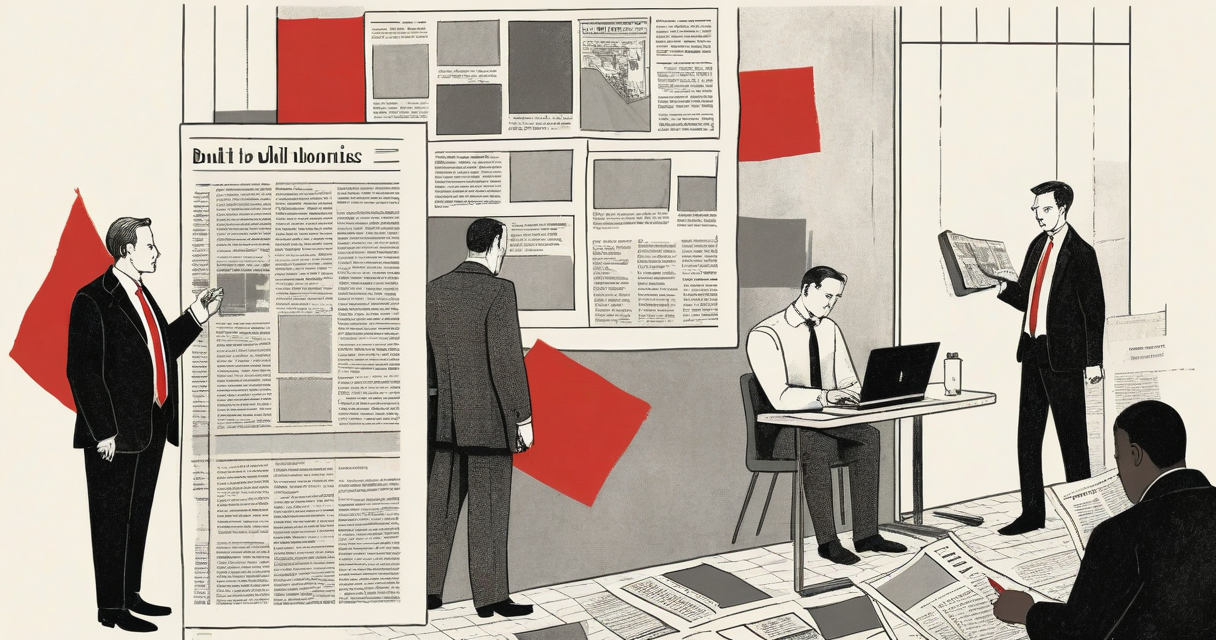
A public claim was made: a data room was built through vibe code. A counter-claim followed: the data room was taken from Papermark. These two statements describe different origins for the same artifact. They cannot both be accurate.
This is not an assessment of the data room. The product is not the exposure. The exposure is the provenance claim attached to it. A statement of origin is a statement of identity. When origin is asserted and not verified, every trust decision downstream of that assertion inherits the same gap.
What is confirmed: two competing claims of origin exist for the same artifact. What is not confirmed: which claim is accurate, how the artifact was produced, and what code, if any, was copied. The accusation against Nico is an allegation. Treat it as such. The condition under examination is not guilt. It is the trust model that allowed a claim of origin to be accepted without proof.
Papermark handles sensitive documents. That detail sets the stakes. It does not change the mechanism. The mechanism is the label ‘vibe code’ operating as a claim of authorship, and a claim of authorship operating as a claim of control. That chain is the target of this review.
The default trust model runs on declared origin. When a person states they built something, the statement is accepted. The builder claim is taken as the ownership claim. No verification step sits between the assertion and the trust extended to it. This is implicit trust. It is granted on declaration, not on evidence.
‘Vibe code’ is a label that carries provenance. It signals that the artifact was produced through the claimant’s own AI-assisted prompting. The label does its work at the point of assertion. It tells the audience how the thing came to exist. The audience does not inspect the source. They accept the label as the record of origin. The label is treated as the proof, when it is only the claim.
The assumption underneath is that a claim of building equals a claim of control, and that a claim of control is self-validating. Provenance is treated as ownership. Ownership is treated as fact. None of these transitions are enforced. They are assumed. An assumed boundary is not a boundary. It is a gap that holds until something tests it.
In this model the burden of proof never sits with the claimant. It sits with anyone who later disputes the claim. That inversion is the weakness. The system extends credibility first and verifies, if ever, second. Identity is supposed to be the boundary. Here the boundary was a self-reported statement, accepted at face value, with no enforcement point behind it.
The counter-claim inverts the burden. The allegation states the data room was not vibe coded but taken from Papermark. This is not confirmed. What changed is not the established truth of origin. What changed is that the provenance claim is now contested, and a contested claim cannot function as a trusted one.
If the allegation holds, the ‘vibe code’ label was not a description of method. It was a cover for origin. The label would have functioned as access. Not access to a system, but access to credibility. The claimant would have used a provenance statement to obtain trust that the actual source did not authorize. That is the same pattern as any identity claim accepted without validation. Whether the allegation holds is not confirmed.
The shift is procedural. Before the counter-claim, origin was assumed. After it, origin must be validated against the named source. The question is no longer what was claimed. The question is what can be verified against Papermark. Whether that verification has occurred is not confirmed. Whether code was copied is not confirmed. What is confirmed is that the declared origin can no longer be accepted on its own.
The artifact did not change. The claim about the artifact did. That distinction is the exposure. A trust model that depends on the honesty of a self-reported origin fails the moment the origin is disputed, because it was never validating the origin. It was validating the statement. Once the statement is contested, the model has nothing left to enforce.
The mechanism is substitution. A label was placed where a verification step should sit. ‘Vibe code’ is a provenance statement. In the observed trust model it was accepted as the record of origin. No process stood between the statement and the trust extended to it. The label did not describe a verified fact. It occupied the position a verified fact would hold. That substitution is the failure. The boundary that should have validated origin was replaced by a self-issued claim of origin.
The failure point is that the enforcement layer never existed. For a control to function it must be enforced where the claim is tested against an independent source. No such point is confirmed in this case. The audience received the label and extended credibility. The named source was not the basis of the trust decision. The declaration was. Whether Papermark was consulted at any point is not confirmed. A declaration that is not tested is not a boundary. It is an open path that holds until someone issues the counter-claim.
The drift is directional. Trust moved from the claimant to the audience in one step, and the burden of proof moved the opposite way. The claimant asserted. The audience accepted. Anyone disputing the origin now carries the cost of proving the negative. That inversion is the mechanism operating as designed, not as a defect. The model was built to extend credibility on assertion, and it did exactly that. The counter-claim did not break the model. It exposed that the model was never validating origin. It was validating that a statement had been made. Whether the statement is accurate is not confirmed. What is confirmed is that the model produced trust without testing the thing trust depended on.
5. The Parallel Pattern
The pattern is broader than this artifact. Any system that accepts a self-reported origin as proof of origin carries the same failure. The mechanism does not depend on data rooms, on Papermark, or on the term ‘vibe code’. It depends on one structural choice: trust granted on assertion, with the verification step absent. Where that choice exists, the same gap exists. The label changes. The mechanism does not.
The same mechanism appears wherever a claimed attribute is accepted as the attribute itself. A self-declared author treated as the verified author. A self-reported source treated as the confirmed source. A stated method, here AI-assisted production, treated as the established method. In each case a claim about origin is promoted to a fact about origin with no test between the two. The promotion is the vulnerability. It is not specific to authorship. It is specific to any boundary that runs on declaration.
This is why identity is the control surface and not the credential. A credential that is self-issued and self-validated enforces nothing. The ‘vibe code’ label, if the allegation holds, functioned as a self-issued credential of authorship. Whether the allegation holds is not confirmed. The pattern holds regardless. A boundary the claimant can satisfy by speaking is a boundary the claimant controls. When the subject of a control also issues the proof the control checks, the control is decorative. It records that a claim was made. It does not establish that the claim is true. Every system that extends trust before it validates origin inherits this exposure, and inherits it by design, not by accident.
6. Operator Position
A claim of origin is not origin. A label is not provenance. A statement that something was built is not evidence that it was built, and it is not evidence of who controls it. These are separate facts and they require separate proof. The trust model under review collapsed all of them into a single declaration. That collapse is the defect. Origin is established against an independent source or it is not established.
What must now be true was absent here. The burden of proof sits with the claimant. The verification point is the named source, not the claimant’s statement about the source. Until origin is validated against Papermark, the origin is not confirmed. Not false. Not confirmed. The allegation against Nico is also not confirmed. Both conditions are unresolved for the same reason: no test has been confirmed to have run. The status is the absence of validation, and the absence of validation is itself the finding.
Controls that are not enforced are not controls. A provenance claim accepted on declaration is an unenforced control, which means it is no control at all. Identity is the boundary, and the boundary failed the moment it accepted a self-reported origin as proof. This is not a question of whether Nico copied anything. That is not confirmed and it is not the exposure. The exposure is a trust model that grants credibility first and verifies never. If a system extends trust on assertion alone, the assertion will eventually be false, and the system will have no way to tell. If a system allows it, it will happen. Build the verification point, or accept that the next claim of origin is whatever the claimant says it is.
Keep Reading
 DNS security
The record is the authority
A for-sale DNS record sells naming authority itself, and every control above DNS keeps validating the name for whoever now holds the record.
 trust boundaries
They walked out with the blueprints, not answers
Anthropic alleges Alibaba extracted Claude capabilities. The confirmed issue is structural: authenticated access governs entry, not what a party accumulates.
 digital rights
demand is not a control
Stop Killing Games gathered 13 million signatures and produced no EU law. The proposed approach lacked granular data access control and identity verification.
Stay in the loop
New writing delivered when it's ready. No schedule, no spam.