Sony reaches into your account and deletes 551 movies
Sony deleting 551 movies exposes a control structure where purchase conferred revocable access, not ownership. The enforcement point was never the buyer's.
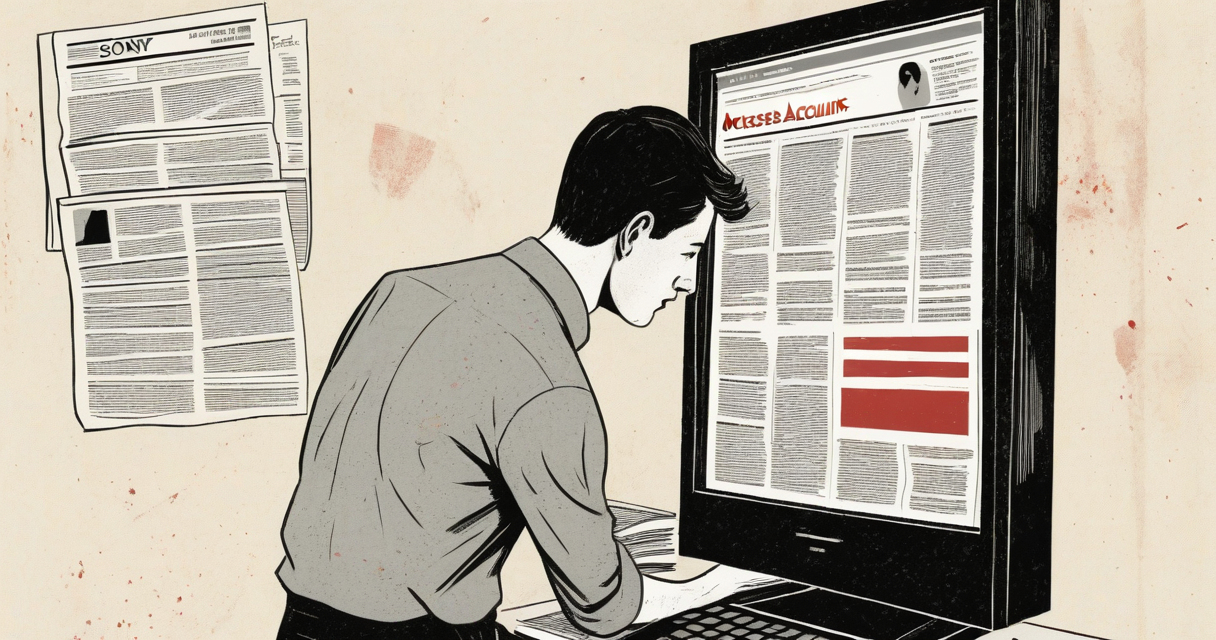
Sony is deleting 551 movies from customer accounts. The reflex reading is that a company made a mistake or mishandled a catalog. That reading is wrong. This is not an incompetence story. It is an access control outcome, and a predictable one. The titles sat inside customer accounts and were read as owned. They were never owned in any enforceable sense. They were granted, and a grant the customer cannot defend is a grant the issuer can withdraw.
The core position is simple. Ownership that depends entirely on another party’s continued permission is not ownership. It is access. The 551 titles were present in accounts because Sony allowed them to be present. Presence in an account is not a control the account holder holds. It is a state the platform maintains. When the party that maintains the state changes the state, the account holder has no boundary to enforce, because there was never a boundary on their side to begin with.
This matters beyond one platform and one catalog. The transaction was framed to the customer as acquisition. The system was built as revocable entitlement. Those are two different trust models, and only one of them was ever enforced. The customer operated on the assumption that purchase created a durable claim. The platform operated on the fact that the claim lived inside infrastructure the platform controlled. The gap between those two models is where this failure sits. It is identity and access, not customer service.
What is externally observable is narrow and it is enough. Content that was present in customer accounts is being removed by the platform operator. Access to those 551 titles ends for the account holders. The account holder did not initiate the removal. The operator did. That single detail defines the control direction. The party able to change the state of the asset is the platform, not the person who paid for it. Everything else follows from that observable fact.
Note what is not visible here, because absence is a condition and must be stated as one. The internal reason for the removal is not confirmed. The licensing arrangements behind the titles are not confirmed. How long the titles were available, in what sequence they were added, and whether any compensation follows the removal are not confirmed. None of that is required to characterize the failure. The failure is fully described by what can be seen from outside the system. A purchased item disappeared from an account, and the account holder had no mechanism to stop it.
The account holder’s controls, whatever they were, did not prevent the removal. That is not a soft observation. If a control does not stop the behavior it is supposed to govern, the control is ineffective. The customer’s password, account, and purchase record are intact, and none of them functioned as a boundary over the content. They authenticate the user to the platform. They do not give the user authority over the asset. The authentication worked. The authorization always belonged to someone else.
The reason this happened is that the controlling identity over the content was never the customer’s. This is the known part, and it is the part that matters. The customer held a credential to an account. The account held a grant to view specific titles. The grant was issued by the platform and remained revocable by the platform. A grant that one party can revoke unilaterally is, by definition, a permission held by that party. It is not a property right held by the other. The structure produced exactly the outcome the structure allows.
The implication that follows is that trust here was treated as a one-time event rather than a continuously enforced state. At the point of purchase the customer received confirmation and the title appeared. From there the customer assumed the state was fixed. It was not fixed. It remained a live permission, maintained by the platform, subject to change at the platform’s discretion. Because that permission was never bound to anything the customer controlled, there was no point at which the customer’s side could validate, defend, or refuse a change to it. Trust was assumed once. It was never something the customer could re-assert.
Where the boundary broke is identifiable. It broke at the point where purchase was presented as ownership while access remained the only thing actually conferred. The customer’s identity granted entry to an account. The account never granted authority over the content within it. There was no enforcement point on the customer’s side because the design placed all enforcement on the operator’s side. The specific trigger that caused the operator to exercise that authority is not confirmed. What is confirmed is that the authority sat entirely with the operator, and that this is what made the deletion of 551 movies possible without the customer’s consent or ability to intervene.
The mechanism is the separation between authentication and authorization, combined with the placement of the asset inside infrastructure the operator maintains. The customer’s credential proved identity to the account. It never attached authority to the content. Each of the 551 titles existed as a record the operator held. A record the operator holds is a record the operator can edit. Deletion is an edit. Access to those titles ends when the operator changes that record, which means the customer’s access depended entirely on the operator’s record and on nothing the customer held independently. If the customer had held a copy outside that record, ungated against the operator, removal of the account entry would not have ended access. Access ended. That is the confirmation that the controlling instance of the asset was always the operator’s.
The grant was revocable, and the revocation required nothing from the customer’s side to complete. There was no second control held by the account holder that the operator had to pass through. The customer could not refuse the change, could not validate the change, and could not produce an independent claim the system was built to honor. Authentication functioned exactly as designed. The customer logged in, the credential was accepted, the purchase record remained intact. None of that touched the content. The enforcement point that governed the content sat entirely with the operator, and the mechanism completes the moment the operator exercises authority it held the entire time. Nothing failed in an unexpected way. The system did what its control structure permitted.
Automation is what makes this a structural condition rather than an isolated event. The same centralized action that maintains the state is the action that changes the state. One decision at the operator’s enforcement point propagates to every account that holds the grant. The number of affected account holders is not confirmed. What is confirmed is that control runs in one direction, that the customer occupies the receiving end of it, and that the cost of changing 551 records is no different in kind from the cost of changing one. A control that scales removal at no marginal cost to the controlling party, and that requires no consent from the governed party, is a control the governed party does not hold.
The pattern this exposes is narrow and it is exact. A purchase label does not create a property boundary. Where the asset lives inside a record the seller maintains, and the buyer holds only a credential to reach it, the buyer holds access. The word used at the point of sale does not change who can alter the state of the asset. The control structure is defined by one question: who can change the state of the asset without the other party’s consent. In this case the answer was the operator, before the sale and after it. The transaction described ownership. The system enforced permission. Only the enforced model was ever real.
The same mechanism produces the same exposure anywhere it appears. A buyer authenticates to a library. The asset is a grant inside that library. No copy exists that is gated against the operator. That is the identical structure regardless of whether the asset is a film, a game, a book, or a track. The medium does not change the boundary. The label attached at checkout does not change the boundary. If the operator holds the only enforcement point, the buyer holds permission, and the durability of that permission is set by the operator’s discretion and not by the buyer’s payment. The 551 titles are one instance of a control structure, not a property of one catalog.
What this exposes underneath is a mismatch between the trust the customer extended and the trust the system was built to validate. The customer made a durability assumption against a system engineered for revocability. The assumption was extended once, at purchase, and never re-checked, because the customer was never given an instrument to re-check it. Identity is the boundary in this model, and the customer’s identity bounds access to an account. It does not bound authority over content. The boundary the customer believed they held and the boundary that actually existed were never the same boundary. The deletion did not break a boundary on the customer’s side. It revealed that no such boundary was ever present.
The operator position is direct. Ownership requires an enforcement point the owner holds. In this case the owner held none, so the correct term is access, not ownership. If another party can remove an asset and you have no mechanism to stop it, you do not own that asset. You are permitted to use it on terms that party controls, until that party changes them. The 551 titles do not create an exception to that rule. They demonstrate it. Treating the demonstration as a one-off mistake misreads the condition that produced it.
What must now be true is that the language of a transaction is matched to the control structure underneath it, or the buyer treats the language as marketing and the structure as fact. Where the asset resides in operator infrastructure and the buyer holds only a credential, the accurate classification is licensed access, revocable at the operator’s discretion. That classification has to be applied before the revocation, not discovered after it. Classifying it correctly does not return the titles. It sets the expectation to match the enforced model, which is the only model that was ever in effect.
The closing truth is that trust extended once is not a control, and identity that authenticates without authorizing is not protection. If a system allows unilateral removal, removal occurs, because a system that permits a behavior will eventually exhibit it. The failure here was never Sony deleting records it had the authority to delete. The failure was the assumption that presence in an account equaled possession of the asset. Possession requires control. Control was never on the customer’s side. It was never going to be, because nothing in the structure placed it there.
Keep Reading
 DNS security
The record is the authority
A for-sale DNS record sells naming authority itself, and every control above DNS keeps validating the name for whoever now holds the record.
 IoT security
The camera on your shelf handed out your GPS
A TP-Link Kasa camera returned home GPS over unauthenticated UDP for six years. The mechanism, the pattern it exposes, and what must now be true.
 tailscale
TS-2026-009 turned an argument into root
TS-2026-009: Tailscale SSH permitted root through argument handling. When supplied input can reach the privilege context, argument handling is the access control.
Stay in the loop
New writing delivered when it's ready. No schedule, no spam.