Someone else's hand pulled the plug on Mythos
NSA lost Mythos access through a vendor dispute, not a breach. The failure is a single-vendor enforcement point that can be revoked without intrusion.
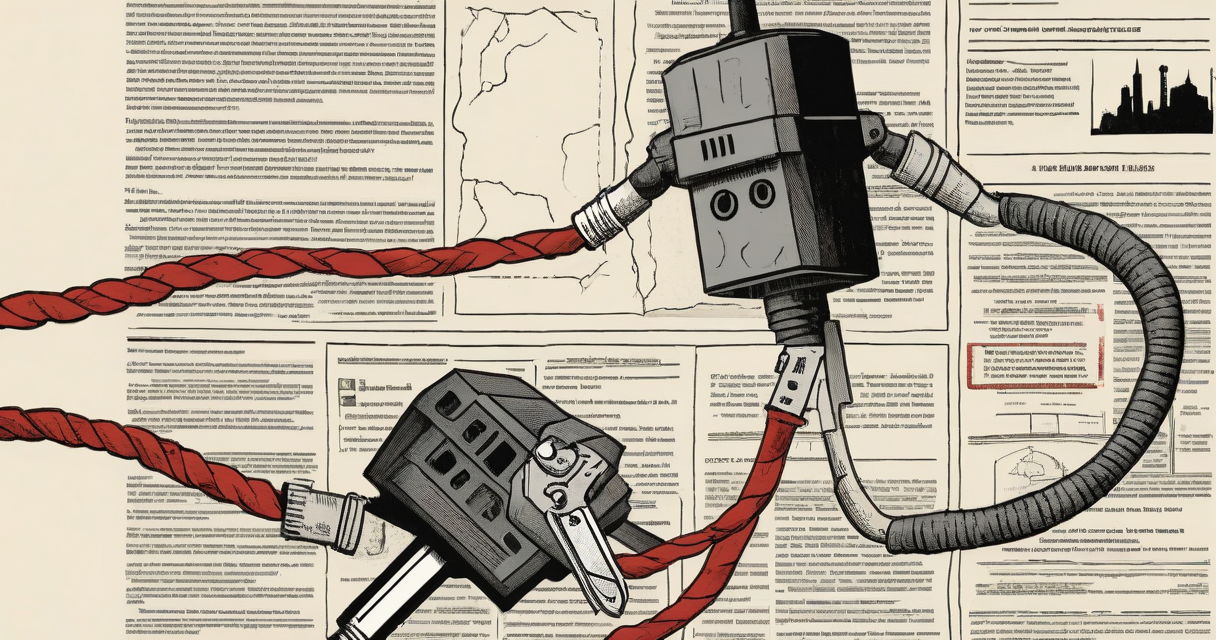
The NSA lost access to Mythos. The trigger on record is a dispute with Anthropic. That is the confirmed event. Everything attached to it beyond that point is interpretation, and the interpretation aimed at Anthropic is the wrong target.
This is not a vendor story. It is a dependency story. Access to Mythos was severed by a commercial disagreement, which means the access was never a capability the NSA held. It was a permission. Granted, and revocable, by a party outside the agency’s control. A capability you cannot retain through a contract dispute is not a capability. It is a lease.
The distinction sets accountability. If this were an intrusion, the questions would be detection and response. It is not an intrusion. It is a control that was never enforced on the agency’s side of the boundary. The point of failure is not Anthropic’s conduct. It is the architecture that let one external relationship decide whether a critical intelligence function stayed online.
The design assumption under examination is direct. A critical intelligence capability was allowed to depend on a single external provider, and that dependency was treated as stable. Stability here was assumed, not enforced. Nothing in the stated facts indicates the NSA held an independent path to the same capability. Whether a fallback existed is not confirmed.
Identity is the boundary, and in this configuration the boundary did not belong to the NSA. The access existed because a vendor relationship existed. When the relationship entered dispute, the access followed it. That is the defining property of the assumption. Continuity of access was tied to continuity of a commercial agreement. Those are not the same condition, and treating them as the same is the original error.
Layered defense assumes no single element can take the whole function down. A single-vendor dependency violates that assumption at the structural level. There is no layer behind a sole provider. When the provider is the layer, the depth of the defense is one. The facts describe that exact condition. One relationship, one trigger, full loss of access. Redundancy, if it was designed, did not engage. Whether redundancy was designed at all is not confirmed.
The observable change is a state transition. Before, the NSA had access to Mythos. After, it did not. The transition was controlled by a party that is not the NSA. That is the full extent of what the facts support. The mechanism behind the dispute, its duration, and whether the loss is permanent are not confirmed.
What did not get reported is also part of the record, and it should not be filled in. The number of systems or operations affected is not confirmed. Whether other programs share the same dependency is not confirmed. Whether access has been restored, in part or in full, is not confirmed. Any briefing that supplies those numbers is supplying assumption. Absence of that data is itself a finding. It means the blast radius of a single vendor decision was not bounded by anything visible.
The one element that changed with certainty is the proof. The dispute demonstrated, in production, that a commercial action external to the agency can remove an intelligence capability with no intrusion, no exploit, and no consent on the consuming side. No credential was taken. No system was breached. The capability stopped being available because the party that controlled it decided so. If a system allows that, it will eventually happen. Here it did.
The mechanism is the location of the enforcement point. Access to Mythos was enforced on the provider’s side of the boundary, not the NSA’s. The observable behavior confirms it. A commercial dispute occurred, and the access state flipped from available to unavailable. No intrusion was reported. No credential was reported taken. No system on the consuming side was reported breached. The capability was removed by an action taken at a control point the agency did not operate. Where the enforcement sits, the control sits. The enforcement did not sit with the NSA.
This is why no consumer-side measure could have held the line. You cannot enforce continuity at a boundary you do not own. The agency could harden every system it operated and the result would not change, because the revocation did not pass through any of those systems. It passed through the relationship. That is the single channel that mattered, and it terminated outside the agency. A control that lives on the other side of a commercial agreement is not a control the consumer holds. It is a permission the consumer is granted.
The failure is a categorization error made structural. A leased permission was treated as an owned capability. Those are different conditions with different failure modes, and the design did not separate them. An owned capability fails when the owner’s systems fail. A leased permission fails when the grantor decides, or when the agreement decides, with no requirement of technical compromise. Once a critical function is integrated against a single external grantor, every integration deepens the dependency on that one channel. Whether the NSA held any second path is not confirmed. The facts describe one channel, one trigger, full loss. That is a depth of one.
5. Expansion Into the Parallel Pattern
The pattern is not specific to Mythos, to Anthropic, or to intelligence work. It is specific to the mechanism. Any critical function whose enforcement point sits with an external party can be removed by that party without intrusion. The vendor identity is interchangeable. The property that matters is where enforcement lives. When enforcement lives outside the consumer, revocation is an administrative action, not an attack. It requires no exploit, no access, and no consent from the side that loses the capability.
The same mechanism produces the same result across every form this dependency takes. A function gated behind a single cloud tenancy ends when the tenancy is suspended. A function gated behind a single software license ends when the license is revoked. A function gated behind a single API credential ends when the credential is deactivated. A function gated behind a single signing or certificate authority ends when that authority withdraws trust. None of these require a breach. Each is the identical mechanism. The consumer holds the access, the provider holds the enforcement, and the provider’s action alone is sufficient to end the function. The trigger differs. A dispute, a billing lapse, a policy change. The mechanism does not.
This is what a centralized dependency actually is. It is a choke point with a single operator who is not you. The reason it presents as stable is that the revocation channel is quiet until it is used. There is no error condition, no failed login, no alert, because nothing was attacked. The capability stops being available the moment the external party acts. The absence of a visible attack is not evidence of resilience. It is the defining signature of this failure class. The blast radius is set entirely by how many critical functions share that one enforcement point, and in this case the number of functions that shared it is not confirmed. Unbounded blast radius is the default state of any dependency you cannot independently enforce.
Identity is the boundary, and in this configuration the boundary belonged to the provider. That is the finding. Not a dispute with a vendor, not a question of conduct, but a critical capability whose continuity was enforced by a party outside the agency. The trigger was commercial. The trigger is interchangeable. What is fixed is the structure that let a single external decision remove the function with no compromise required. If a system allows that, the only open variable is timing.
What must now be true is narrow and non-negotiable. A capability is owned only when its enforcement point is owned. Until a second, independently enforced path to the same function exists and is exercised, there is no layered defense. There is one provider acting as the entire layer, and the depth of that defense is one. Redundancy that is designed but never validated does not count. Whether redundancy was ever designed here is not confirmed, which means it must be treated as absent until proven otherwise. Absence of a confirmed fallback is the condition to plan against.
The correction is not better vendor relations. The correction is moving the enforcement point to a boundary the agency controls, or accepting in writing that the capability is leased and can be withdrawn at the grantor’s discretion. Those are the only two honest states. Anything between them is the same error restated. A capability you cannot retain through a dispute with its provider was never yours to lose. It was theirs to revoke. The dispute did not create that exposure. It proved it was already there.
Contains a referral link.
See also: NordVPN for tunneled traffic when operating outside controlled networks.
#ad Contains an affiliate link.
Keep Reading
 single-vendor risk
The 34x price hike isn't the problem
Hetzner raised dedicated server prices 34x. The cost is the symptom. The exposure is single-vendor control over a boundary the customer cannot enforce.
 github security
Nobody has to break into GitHub
GitHub incidents are feature abuse under valid credentials. The break is at the execution boundary, and standing scope is the real exposure.
 access-control
Nobody had to hack your meetings.
Over 180,000 tl;dv meetings were left open because access to recorded content was not conditioned on validated identity. What that failure exposes.
Stay in the loop
New writing delivered when it's ready. No schedule, no spam.