Cloudflare's self-managed OAuth secures nothing by default
Cloudflare's self-managed OAuth moves the enforcement point from provider to user. An unconfigured access control is an open path, not a safe default.
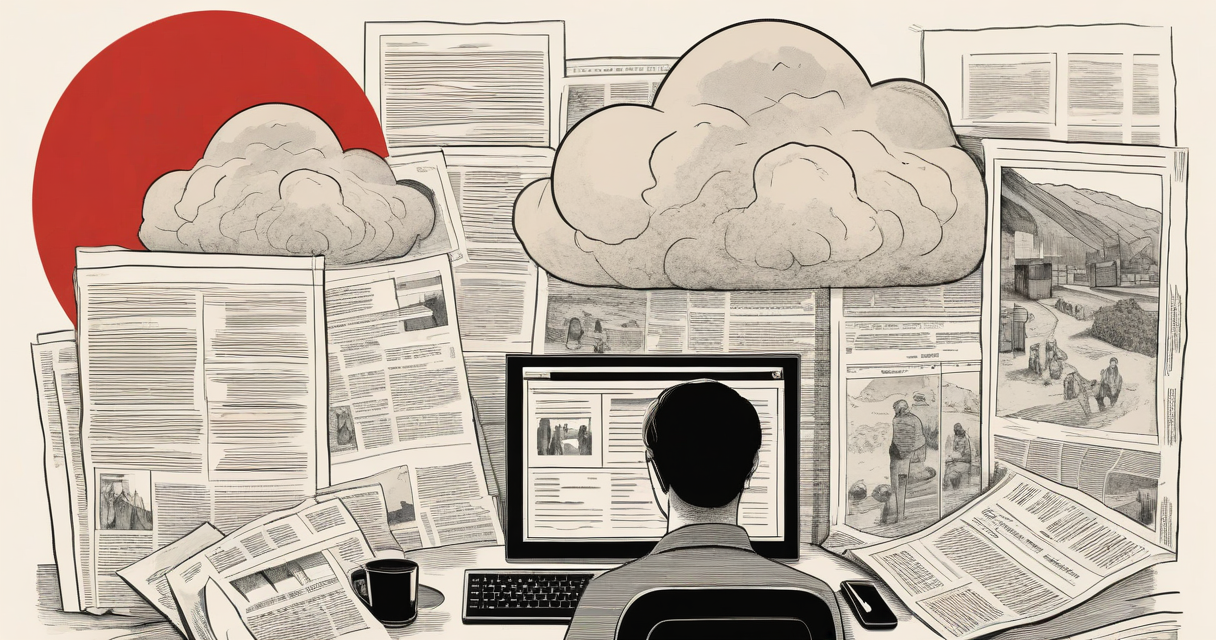
Cloudflare launched self-managed OAuth and made it available to all. The headline reads like a feature release. Read it as a transfer of responsibility. The control plane for access decisions moved from a managed default to a configuration the user now owns.
That transfer is the entire story. When a provider manages OAuth, the provider holds the enforcement point. When OAuth is self-managed, the enforcement point sits with whoever sets it up. Every access decision now falls on the user. That is not a marketing distinction. It is a change in where the boundary lives.
State the position plainly. Cloudflare opened a door. Locking it is now the user’s job. What that lock looks like in any specific deployment is not confirmed and is not Cloudflare’s to guarantee once the user holds the keys. The platform supplies capability. By definition of self-managed, it does not supply your configuration.
Managed OAuth carries one assumption: the provider owns enforcement. Users trust that the platform sets access policy and applies it. The trust relationship runs from user to provider, and the provider is the party validating it. Identity is the boundary, and under a managed model the provider draws that boundary for you.
The second assumption is more dangerous. Default equals safe. People treat whatever ships in the on position as correctly configured by someone who knew better. I have spent years watching that assumption get exploited. A default is not a security decision made on your behalf. It is a starting state. Attackers read defaults before defenders do.
Under a managed model these assumptions are survivable for one narrow reason: the user is not the one making each access decision. The enforcement point is owned and operated by a single party with the context to maintain it. Whether that managed enforcement was ever strong is a separate question and is not confirmed here. The point stands on what is stated. Responsibility sat with the provider, not the user.
Self-managed inverts the ownership. The enforcement point moved from the provider to the user. The user now defines, configures, and applies every access decision OAuth governs. Capability that was operated for you is now operated by you. That is the shift Cloudflare shipped, and the topic states it directly: every access decision now falls squarely on the user.
OAuth amplifies the cost of that shift because OAuth is not a single switch. It is a set of trust relationships and access grants that each have to be configured correctly and validated continuously. Each element is an access decision. Each one is now yours. The specific configuration surface Cloudflare exposes, and whether it ships with secure defaults or guardrails, is not confirmed in what was provided. Treat the absence of that information as a condition, not as reassurance.
Treat the open door literally. An access path that is available but not locked is an open path. Controls that are not enforced are not controls. If the system allows an access decision to be made wrong, it will be made wrong, because self-management distributes that decision to every operator who touches it. Cloudflare provided the mechanism. Enforcement is now a user-owned control, and an unconfigured control is an exposure, not a feature.
The mechanism is the transfer of the enforcement point. That is stated. Under a managed model the provider operated each access decision. Under self-managed, the user operates it. The failure does not require a new attack. It requires only that a user-owned control be left unconfigured or configured wrong. An access path that is available and not locked is an open path. That is a logically necessary implication of two stated facts: the model is self-managed, and every access decision now falls on the user. No additional attacker behaviour has to be assumed for the exposure to exist. The exposure is the state of the control, not the action of an adversary.
Drift is the slower form of the same failure. OAuth is a set of trust relationships and access grants. Each one is a separate access decision. Each one is now owned by whoever touches the deployment. The decision count does not collapse into a single switch. It distributes. Distribution is the mechanism. One enforcement point operated by a single party with context is replaced by many configuration decisions held by operators whose context is not confirmed. Where context is not guaranteed, consistency is not guaranteed. A boundary that depends on every operator drawing it the same way is a boundary that is not confirmed to hold.
What is observable here is narrow. Cloudflare made the capability available to all. That is confirmed. Whether the capability ships with secure defaults, guardrails, or enforced configuration is not confirmed. Treat that absence as a condition, not as reassurance. An unconfigured control is not a neutral state. It is an exposure that has not been triggered yet. The mechanism does not depend on sophistication. It depends only on a control existing in a state the user has not validated. If the system allows an access decision to be made wrong, the mechanism guarantees that it can be, because the party who would have caught it is no longer in the path.
The pattern is not specific to OAuth. It is specific to the mechanism. Any time an enforcement point moves from a single owning party to a self-managed configuration held by the user, the same surface opens. The mechanism is the relocation of a control from operated-for-you to operated-by-you. The technology on either side of that transfer does not change its shape. The shape is constant: capability supplied, configuration owned, enforcement unconfirmed. Reasoning from the mechanism, the failure mode is identical wherever that transfer occurs, because the failure is a property of the transfer, not of OAuth.
Self-management generalises by removing the party that held context. In the managed model one operator carried the access policy and applied it. In the self-managed model that operator is replaced by every user who deploys the capability. The number of those users is not confirmed. The competence of those users is not confirmed. What is confirmed is that the decision now sits with them. When a control is distributed to operators whose context is not guaranteed, the weakest configuration sets the real boundary, not the strongest. Automation scales both the control and the failure. The same mechanism that lets one operator lock the door correctly lets the next leave it open at the same speed, with no party in between to reconcile the two.
This is why framing the change as opt-in understates it. Opt-in describes who turned the feature on. It does not describe who now owns enforcement. The pattern that matters is the relocation of the boundary, not the act of enabling it. Every deployment of a self-managed control is a new boundary that has to be drawn explicitly and validated continuously. Trust must be continuously validated, because a configuration that was correct at setup is not confirmed to remain correct. For as long as the control is self-managed, ownership of that validation stays with the user. That is not a temporary handoff. It is the defining condition of the model Cloudflare shipped.
Define what must now be true. The enforcement point is user-owned. Reading the announcement differently does not move it back. Cloudflare supplies capability. The user supplies configuration. Any access decision OAuth governs is a control the user must explicitly enforce. A control that is not enforced is not a control. An unconfigured OAuth grant is not a default to be trusted. It is an open access path until proven otherwise, and proof is now the user’s to produce.
State the operator position without softening it. If the system allows an access decision to be made wrong, it will be made wrong, because self-management distributes that decision to every operator who touches it. The platform does not validate your boundary. By the definition of self-managed, it cannot. Whether any specific deployment is locked is not confirmed, and it is not Cloudflare’s to confirm once the keys are held by the user. The only party who can confirm it is the party who owns the configuration. After this release, that party is you.
Identity is the boundary. Under self-managed OAuth the boundary is drawn by the user, configured by the user, and validated by the user. None of that is confirmed to be correct in any deployment, including yours, until it has been validated by the owner. Cloudflare opened a door. The lock exists. Whether it is engaged is a user-owned fact, not a platform guarantee. Treat every unconfigured access decision as open. That is not pessimism. It is the only position consistent with where the enforcement point now lives.
Keep Reading
 access control
Bypassing the paywall is not a billing bug
Cloudflare's x402 monetization gateway collapses payment and access enforcement onto one bypassable point, turning a billing layer into a single failure domain.
 DNS security
The record is the authority
A for-sale DNS record sells naming authority itself, and every control above DNS keeps validating the name for whoever now holds the record.
 IoT security
The camera on your shelf handed out your GPS
A TP-Link Kasa camera returned home GPS over unauthenticated UDP for six years. The mechanism, the pattern it exposes, and what must now be true.
Stay in the loop
New writing delivered when it's ready. No schedule, no spam.