Looking was sufficient
Open webcams serve video to any connection because the deployment treats network reachability as authorization. A route is not permission.
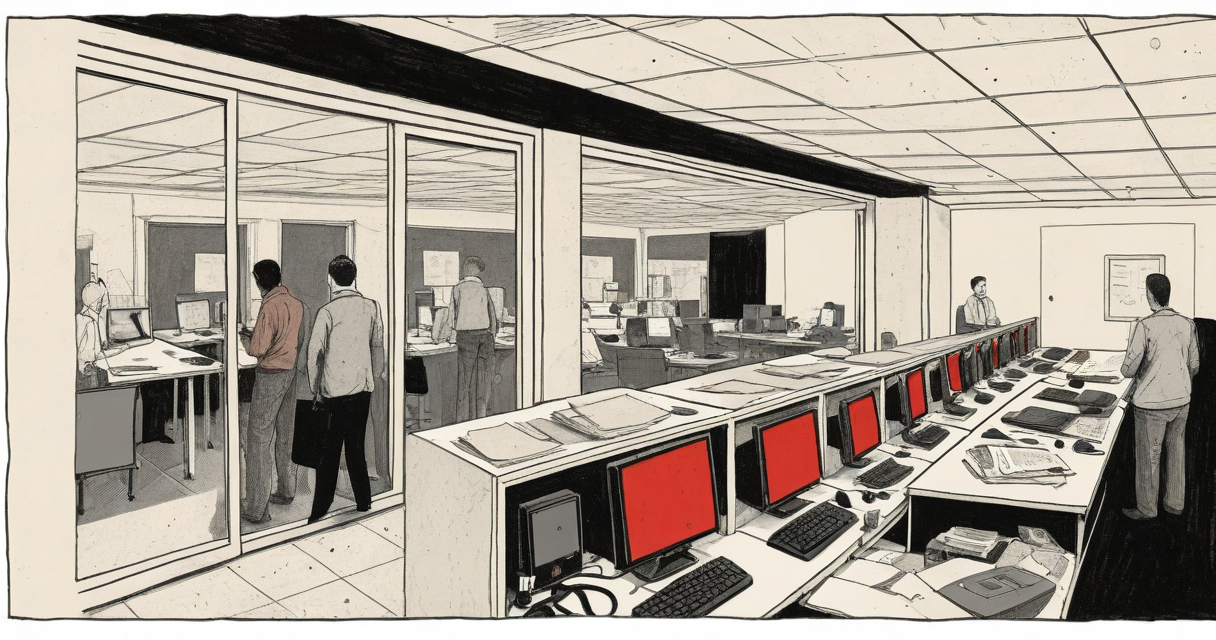
IP Crawl is an index of webcams that return a live video feed to any client that reaches them over the public internet. The devices in that index are not hidden. They are not breached in the conventional sense. They respond to connections because responding to connections is what they were configured to do. That is the finding. There is no exploit chain to describe. There is a public address, a port, and a device answering on it.
This is not a report about finding webcams. Finding implies the target was concealed. Nothing here was concealed. A public IP address and an open port are a published location and an open door. The index does not defeat a control. It records the absence of one. Hold that distinction as the center of this briefing, because every conclusion downstream depends on it.
The position is direct. The exposure is the default, not the exception. A camera that serves video to anyone who connects is operating exactly as deployed. The failure is not that someone looked. The failure is that looking was sufficient. Everything that follows is an examination of why sufficiency was set that low, and why it stays there.
What is observable is narrow, and it is enough. A device on a public IP address accepts an inbound connection from an arbitrary source and returns a video stream. No credential is requested. No credential is required. The client does not identify itself, and the device does not ask it to. The stream is served to the connection, not to a verified user. That is the whole of the observed behaviour, and it is the whole of the failure.
Stated without embellishment: the device does not distinguish between an authorized viewer and an unknown client. It cannot, because at the moment of connection it collects nothing that would let it distinguish. Reachability is the only condition the device checks, and reachability is satisfied by anyone with a route to the address. A request arrives. A feed is returned. There is no step between those two events where a decision about the requester is made.
Everything beyond that observation is not confirmed. Whether these specific devices were accessed by parties other than the index is not confirmed. How many devices are indexed is not stated and is therefore not confirmed. Who is scanning, what they target, and how quickly any asset changes hands are not confirmed by the facts in front of me. What was done with any stream is not confirmed. The confirmed fact is the response itself: a public request produces a private feed. That is the boundary that broke, and it is the only boundary the evidence supports discussing.
The device treats network reachability as authorization. Those are not the same property, and the deployment collapses them into one. Being able to reach a device is a routing fact. Being permitted to view its feed is an access decision. When a device serves video to any connection, it has made the routing fact carry the weight of the access decision. In practice there is no access decision on that connection. There is a route, and the route is treated as consent.
Identity is the boundary. When no identity is requested, there is no boundary, only a network path. The device does not enforce an access control because no access control operated on the observed connection. Absence of a credential prompt is not a weak control. It is the absence of a control. A control that is never invoked does not exist for the purposes of this analysis, regardless of what the specification or the product page may claim. Whether any such control was designed or intended is not confirmed. What is confirmed is that none acted on the request.
This is why the behaviour is predictable rather than accidental. The internet routes packets to reachable addresses. That is its function, and it performs it without regard to who sent the packet or why. A device that ties its access decision to reachability has delegated that decision to the routing layer, and the routing layer does not make access decisions. It moves traffic. Any device configured this way produces the same result on the same terms: reach it, receive the stream. The consistency is not coincidence. It is the direct output of binding access to reachability, and it will repeat on every device that binds them the same way.
The mechanism is a substitution. Reachability answers a question about the network: can a packet arrive at this address. Authorization answers a question about the requester: should this party receive what sits behind the port. The observed behaviour resolves the second question using the answer to the first. A connection arrives, and the stream is served to it. The only property the connection has demonstrated is that a route exists. That property is the entire basis on which the feed is released. One fact about the network is made to carry a decision it contains no information to make.
Nothing observed sits between the connection and the response. No credential is requested, so no credential is evaluated. No attribute of the requester is collected before the stream is returned, which means there is no input on which an access decision could operate. A decision requires something to decide on. On the observed connection there is nothing: no name, no key, no token, no challenge. The absence of an input is not a permissive decision. It is the absence of the decision. What remains is a direct mapping from connection to stream, with no step in which the requester is assessed.
Stated in terms of the boundary: the control that fails is access control at the point of connection. The boundary that broke is the one between an unverified client and a private feed. Access was enabled by binding the release of the feed to the establishment of a connection, and nothing else. In effect the access decision has been handed to the routing layer. The routing layer forwards packets to reachable addresses without regard to who sent them. It does not make access decisions and was never built to. Assigning the decision to a component that does not make it produces a system in which no component makes it. That is the failure, described only by what the system does when a request arrives.
The mechanism predicts the outcome, and the outcome does not depend on the device. Any deployment that releases a resource on the sole condition of an established connection will release that resource to every party able to establish a connection. The camera is incidental. The pattern is the shape of any endpoint that treats reachability as authorization, because the failure lives in the access model and not in the function of the thing behind the port. Change the device and the result holds, as long as the binding is the same: reach it, receive it.
The condition for access is satisfiable by any client that can route to the address. It follows, as a matter of logic rather than observation, that the set of parties who meet the sufficient condition is identical to the set of parties who can reach the address. Whether any party other than the index reached these specific devices is not confirmed. Who is scanning the public internet, what they are targeting, and how quickly any asset changes hands are not confirmed by the facts in front of me. The pattern is not a claim about who acted. It is a statement about what the mechanism permits, and the mechanism permits any routed client without distinction. Absence of a confirmed actor does not narrow the condition. The condition remains open by design.
This is why the behaviour repeats instead of surprising. Same mechanism, same result, on every device that binds access to reachability the same way. The failure is portable across device classes precisely because it is a property of the access model and not of the hardware or the video. It reproduces wherever release is tied to connection. The consistency is the finding. A result that recurs identically under the same condition is not an accident of any single deployment. It is the direct output of the model, and the model does not vary from device to device even when the device does.
The failure is not the camera. It is the model that lets a route stand for permission. Say it without softening: a control that is never invoked is not a control, and on the observed connection none was invoked. The device enforces nothing at the boundary between an unknown client and its feed. Whether such a control was ever designed or intended is not confirmed. What is confirmed is that none acted on the request, and a control that does not act is indistinguishable, at the boundary, from one that does not exist.
What must now be true is narrow and non-negotiable. Reachability and authorization must be separated again. The access decision must operate on an input the requester presents, and it must refuse the connection when that input is absent. The default state on an unidentified connection must be refusal, not release. Identity is the boundary. Where no identity is collected there is no boundary, only a network path, and a network path grants access to everyone who can walk it. Continuous validation of the requester is the condition for the resource to leave the device. Anything less returns the system to the exact behaviour recorded here.
None of this is resolved by patching an individual device. The mechanism reappears on every deployment that binds access to reachability, and there are only two states available to such a system: identity is checked, or it is not. Where it is not, the resource is released to anyone who connects. That is not a prediction about attacker behaviour and it is not a forecast of scale. It is a restatement of the configuration. If a system serves its resource to any connection, it serves its resource to any connection. The route is not the requester. Reachability was never permission, and a system that treats it as permission has already decided the outcome.
Keep Reading
 DNS security
The record is the authority
A for-sale DNS record sells naming authority itself, and every control above DNS keeps validating the name for whoever now holds the record.
 IoT security
The camera on your shelf handed out your GPS
A TP-Link Kasa camera returned home GPS over unauthenticated UDP for six years. The mechanism, the pattern it exposes, and what must now be true.
 tailscale
TS-2026-009 turned an argument into root
TS-2026-009: Tailscale SSH permitted root through argument handling. When supplied input can reach the privilege context, argument handling is the access control.
Stay in the loop
New writing delivered when it's ready. No schedule, no spam.