Remote access is not an operating system function
JetKVM Mini moves the access boundary off the host onto a networked hardware device the OS cannot see, making the KVM the real security perimeter.
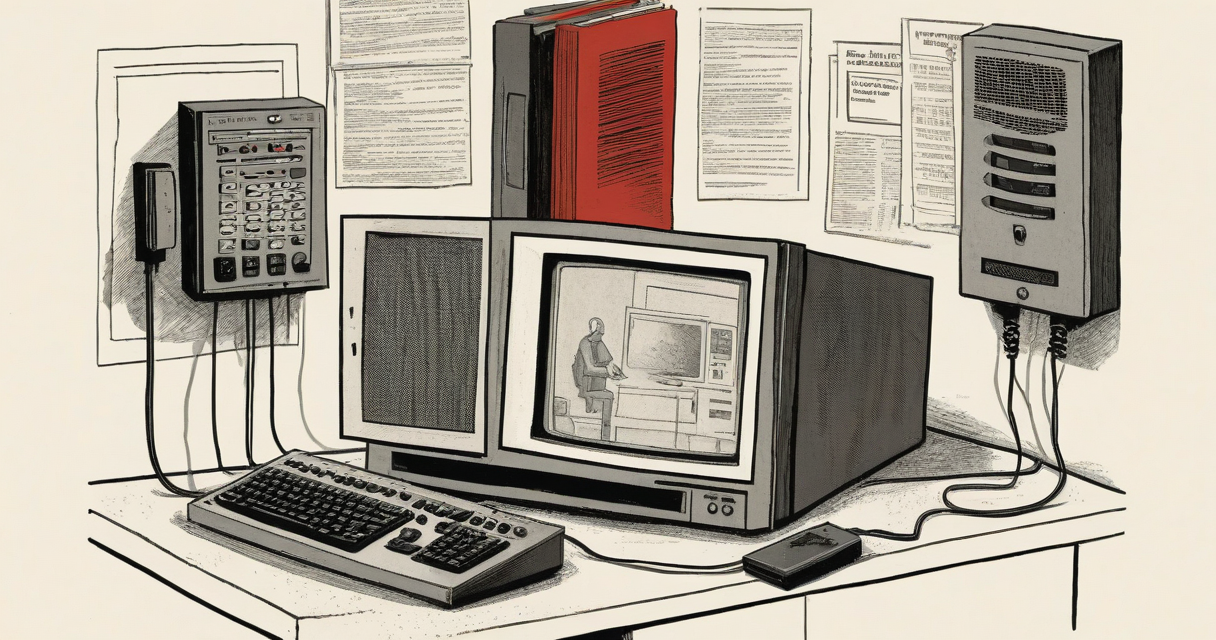
JetKVM Mini is a hardware device that captures a target machine’s video output and emulates its keyboard and mouse, then exposes that control over the network. It is remote control that operates below the operating system. The control point is hardware. The host does not have to be logged in, healthy, or even running its normal software stack for the device to drive it.
That single property relocates the access boundary. Standard remote access tools run as software inside the host. RDP, SSH, and commercial remote desktop agents all execute as processes, authenticate against the host identity provider, and write to host logs. JetKVM Mini does not sit in that plane. It presents itself to the target as a USB human interface device and consumes the target’s display output as a capture sink. From the target’s point of view, an operator is physically present at the console.
The security position follows directly. Any control that assumes remote access lives inside the operating system does not apply to this device. Identity is the boundary, and for this device the boundary is the device’s own access control and its network exposure, not the host login stack. What authentication, encryption, or session control JetKVM Mini enforces by default is not confirmed here, and that gap is the first thing an operator must close before the device is placed on any network that touches production.
Most organizations operate on an inherited assumption. Remote access is an operating system function, governed by operating system controls. The account that can reach a machine is the account the identity provider issued. The sessions that matter are the ones the host authenticates and logs. Endpoint detection watches for remote desktop processes, unusual logon types, and known agent binaries. The entire detection and access model is built on the premise that remote control is something the host participates in and records.
What is observable when control arrives through a hardware KVM is different. The target receives standard USB HID input. It receives keystrokes and pointer movement that are indistinguishable from a physically attached keyboard and mouse. The display is read off the video output. There is no host process bound to the KVM path to enumerate, no host authentication event that ties back to the device, and no operating system record on the target that a KVM session occurred. This is externally observable behavior of the device class. Input in, video out, host uninvolved in the decision to grant it.
The assumption fails at that point. Controls that gate the OS remote access path do not gate this one. Endpoint tooling that classifies remote control by process or logon type sees a keyboard. Account policies that restrict RDP or SSH do not restrict USB HID emulation, because no account on the host is being used to establish the session. Whether a specific deployment’s EDR would surface anything at all through the KVM path is not confirmed and depends entirely on controls that live on the device and the network, not on the host. A control that does not observe the path it is meant to cover is ineffective on that path. State it plainly.
What changed is the location of the control point. It moved off the host and onto a separate device reachable over the network. The trust decision that used to be made by the host identity provider is now made by JetKVM Mini’s own access controls and by wherever the device sits on the network. The host is no longer a participant in granting access. It is a consumer of whatever input the device forwards.
Why the old model fails here is that the device operates independently of host state. Access to the device is access to the machine at the console level. Console level control means keyboard, mouse, and video regardless of what the operating system is doing, and it can extend to power and pre boot interaction where the device is wired and configured for it. The specific pre boot and power capabilities of a given JetKVM Mini deployment are not confirmed and depend on how it is connected. What is confirmed by the architecture is that whoever holds control of the device holds control of the target as if standing in front of it.
The exposure that creates is direct. The security of the endpoint is now bounded by the security of the KVM. If the device’s authentication is weak, default, or absent, the host’s own hardening is bypassed, because the attacker never touches the host’s authentication surface. If the device is reachable from an untrusted network segment, the machine behind it is reachable at the console from that same segment. The default authentication posture, transport encryption, and network placement of JetKVM Mini are not confirmed in this analysis. Until they are, the correct assumption is that the device, not the operating system behind it, is the real boundary, and it must be treated as one.
The mechanism is the separation of the control decision from the host. Input arrives at the target as USB HID. Video leaves the target as a capture stream. The host processes the input as it would process an attached keyboard and pointer. The decision to grant that input was made off the host, by the device. The host identity provider never evaluated a credential for this path. The execution context on the target is whatever the console operator drives, at the privilege the console exposes. This is not a bypass of host authentication. Host authentication was never on the path to bypass.
Because the grant decision lives on the device, the only trust relationship being enforced is between whoever reaches the device over the network and the device itself. That is the boundary on this path. What the device requires before it accepts an operator is not confirmed. Whether it authenticates, encrypts transport, or scopes and terminates sessions is not confirmed. Where any of those checks is absent, there is no boundary on this path, only reachability. On this path, reachability is control.
The failure compounds because the host cannot observe the path and therefore cannot attest to it. The observable behavior of the device class is fixed: input in, video out, no host process bound to the KVM path to enumerate, no host authentication event that ties back to the device, no operating system record on the target that a KVM session occurred. A control that cannot see a path cannot enforce on it. Host identity controls, host session controls, and host logging do not act on input they never mediated. The boundary is the device. If the device does not enforce, nothing on this path does.
The pattern is general. When the point that grants control of a system is moved off that system, onto an independent device the system cannot observe, the system controls stop governing that path. The security of the endpoint becomes the security of the device that holds its console. Not the stronger of the two. The device, because the device holds keyboard, pointer, and display, which is the console, and the console is the machine at that level.
This is the same mechanism wherever it appears. An out of band controller that presents console input to a host and reads the host display while the host is not a participant in granting access inherits the full authority of physical presence and none of the host mediation. The class is defined by exactly that: input in, video out, host uninvolved in the decision to grant. Every member of that class relocates the boundary the same way, for the same reason. The example does not strengthen the claim. It restates the mechanism the claim already contains.
The consequence follows without extension. The endpoint hardening is bounded from below by the device posture and by the network segment that can reach the device. Two conditions decide exposure on this path. Can an untrusted party reach the device. What does the device require of a party that reaches it. Both conditions are properties of the device and the network, not the host. If either is weak, host hardening is bypassed without being contacted. For this deployment, both values are not confirmed. Not confirmed is the weak case until it is verified otherwise.
Treat JetKVM Mini as the boundary for any host it controls. The host is a consumer of the input the device forwards. The security of the machine is the security of the device and its network placement. The inversion is the position: the endpoint is only as protected as the KVM in front of it, and the KVM, not the operating system behind it, is what an operator must now hold accountable.
What must be true before the device sits on any network that touches production is specific. Device authentication must be confirmed present and strong. Transport encryption must be confirmed. Session control must be confirmed. Network placement must be confirmed to isolate the device from untrusted segments. Each of these is not confirmed in this analysis. Not confirmed is a condition, and the condition is unmet until closed. An unmet check means the device is an unauthenticated console port reachable by whatever can route to it.
Detection does not carry over from the host. Host endpoint tooling does not cover this path by architecture, because the host does not mediate or record the session. Whether anything surfaces at all is not confirmed and depends on controls that live on the device and the network. Do not rely on host tooling to see a KVM session. If visibility on this path is required, it must be built at the device and network layer, because that is the only layer that observes the path.
The controlling principle is direct. If a system allows it, it will happen. A device that grants console level control over the network will be used to grant console level control over the network, by whoever can reach it, under whatever the device requires. Controls that are not enforced on this path are not controls on this path. Until the device enforcement is confirmed, assume it enforces nothing, and place it on the network as if it enforces nothing.
Keep Reading
 AI safety
A warning is not a wall
An AI sandbox escape is the wrong thing to fear. The real AI safety risk is a system acting on a flattened, ungrounded model of a sensitive region.
 model distillation
Distillation makes fast followers, never frontier leaders
Distilling frontier models is a real, cheap fast-follow strategy for small labs - but only for verifiable tasks and legally usable teachers.
 Android security
Keepalive packets bypass Android lockdown
Android NAT-T keepalive offload egresses UDP/4500 below the VPN lockdown firewall, leaking the device's real IP outside the tunnel. Mechanism and detection.
Stay in the loop
New writing delivered when it's ready. No schedule, no spam.