Alibaba moves to ban Claude Code over backdoor risk
A reported ban on a widely-used AI development tool reframes third-party AI access as a board-level exposure most organizations have not measured.
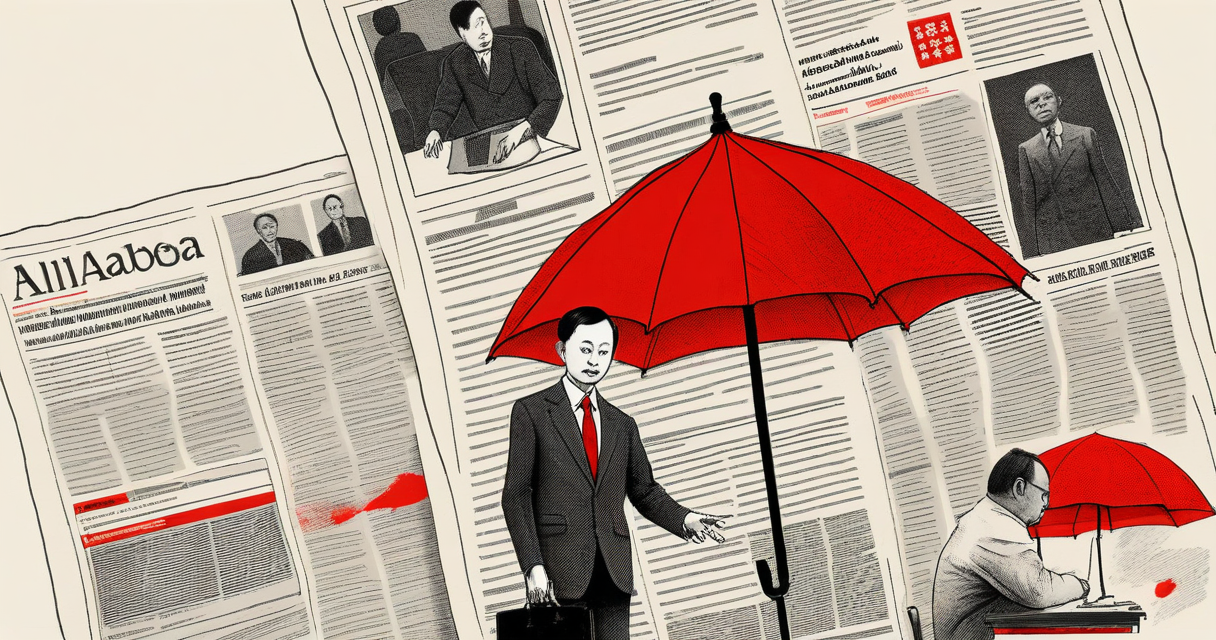
Alibaba is reported to be moving to ban Claude Code, a widely-used AI development tool, from its workplace over alleged backdoor risks. The account is attributed to a single source. The existence of a backdoor is alleged and not confirmed. No evidence of an exploited compromise has been established from the available information, and the specific basis for the decision cannot be determined from what has been disclosed. What is on record is the reported action itself: a major enterprise electing to remove a broadly adopted development tool from its environment on the grounds of stated risk.
The distinction matters at board level. This is a governance action, not a confirmed incident response. No breach, data loss, or access tied to the tool has been confirmed. The organization is treating a widely-used third-party technology as an access and control concern significant enough to justify removal before any compromise is demonstrated. That is a decision about acceptable exposure, and it is being made against a tool that many organizations rely on directly or through comparable alternatives.
For directors, the relevance is not whether the allegation is true. It is that reliance on a third-party AI development tool has been reframed, by a large enterprise, as a risk warranting a workplace ban. Any organization dependent on similar technologies now faces the same question the reported decision implies: what access does the tool hold within the environment, and what consequence would follow if that access were not constrained. The scope, duration, and validity of the underlying claim remain unconfirmed, but the exposure the decision points to is one every board should be able to describe for itself.
The operating assumption in most organizations has been that AI development tools are productivity software, adopted at the team or engineering level and governed as such. Under that assumption, tools of this kind are trusted by default once in use. Their access to code, systems, and internal context is treated as an implementation detail rather than as a third-party access boundary subject to board-level oversight. Adoption has generally outpaced scrutiny.
That assumption rests on a further belief: that developer tooling operates inside a trusted perimeter, and that the access such tools require is proportionate and contained. Access was rarely constrained by the same vendor scrutiny applied to other third parties handling sensitive assets. The tool is granted reach into the environment because it is useful, and that reach is seldom defined, inventoried, or challenged at the level of the risk committee.
The assumption also held that alleged risk is not actionable risk. Absent a confirmed vulnerability or demonstrated compromise, boards deferred to technical teams and continued use. Uncertainty was read as a reason to wait rather than a condition to manage. Under that posture, a third-party AI tool remained in place until something was proven, not until its access was justified.
The reported decision inverts that posture. A major enterprise has treated alleged risk as sufficient basis to act, removing the tool before any compromise has been confirmed. The threshold for restriction has shifted from demonstrated harm to unresolved risk. Whether or not the specific allegation is substantiated, the willingness of a large organization to act on it changes how comparable tools will be evaluated elsewhere.
The scrutiny is now directed at access controls for advanced AI models - what these tools can reach within an environment and under what constraint. The outcome indicates that the reach of an AI development tool, not only its output, is being assessed as an exposure. That is a different question from whether the software is functional or trusted by its users. It is a question about what access was granted and what would be exposed if that access were not bounded.
What remains unconfirmed is substantial and should be stated plainly. The existence of a backdoor is alleged and not confirmed. The reported ban is attributed to a source, and the full scope, timing, and official rationale cannot be determined from available information. No confirmed compromise, data exfiltration, or attacker action is established by these facts. The reported action is credible enough to warrant board attention; the underlying technical claim is not confirmed, and the durable signal is the reclassification of a widely-used AI tool as a third-party access risk.
The exposure does not originate in the allegation. It originates in what an AI development tool is permitted to reach once it is in use. Tools of this class operate inside the development environment, with access to code, systems, and internal context. That access is the asset at risk, and it exists whether or not any backdoor is ever confirmed. The outcome the reported decision points to is not a demonstrated exploit but an access boundary that was extended on the basis of utility and not constrained to a defined scope.
What did not function here is enforcement of that boundary. Access was not constrained to a bounded, inventoried set of assets that a risk committee could describe. Where a third-party tool holds reach into an environment and that reach is neither defined nor bounded at runtime, the consequence of any compromise is set by the access, not by the likelihood of the claim. No evidence of enforcement at the level of that boundary was identified in what has been disclosed, and the extent of the tool’s reach cannot be determined from available information.
For a board, this is the mechanism that matters. The question is not whether the alleged backdoor exists. It is whether the organization can state, for its own environment, what a comparable tool can reach and what would be exposed if that reach were used. If that answer is not available, the exposure is undefined - and an undefined exposure is governed by default trust rather than by any control that functions at runtime. That is the condition the reported action makes visible, independent of whether the specific allegation is ever substantiated.
This is not an isolated judgment about a single product. It is a signal about a category. AI development tools have been adopted across organizations faster than they have been governed as third parties, and their access has been treated as an implementation detail rather than as a boundary subject to oversight. The reported decision names one tool; the exposure it describes belongs to every tool of the same class that holds comparable reach into an environment.
The pattern is the reclassification itself. A widely-used technology, trusted by default, has been re-examined as an access risk by a major enterprise and acted on before any compromise was confirmed. Whether or not the underlying claim holds, that shift in threshold does not stay contained to one company. Comparable organizations now hold a precedent in which alleged risk against a third-party AI tool was treated as sufficient basis to restrict it. The evaluation of these tools moves from whether they are useful and trusted by their users to what they can reach and under what constraint.
What this reveals about the broader environment is that third-party access boundaries have accumulated inside development functions without being governed as such. Adoption at the team level created reach that was never inventoried at the board level. The number of such tools, and the extent of their access across most organizations, cannot be determined from available information - which is itself the finding. An exposure that cannot be described cannot be governed, and the reported action indicates that this class of exposure is now being priced by large enterprises as a reason to act.
What must be true going forward is not a position on this allegation. Boards do not need to resolve whether a backdoor exists to act on what the decision exposes. They need to be able to describe, for their own environment, which third-party AI tools hold reach into sensitive assets, what that reach permits, and what would be exposed if it were not constrained. Where that description does not exist, the tool is trusted by default, and default trust is not a control.
The enforceable condition is that access must be justified rather than assumed. A third-party tool with reach into code, systems, or internal context must be subject to the same scrutiny applied to any other third party handling sensitive assets - its access defined, bounded, and enforced at runtime, not granted on the basis of utility and left unexamined. Governance of these tools is measured by what is enforced, not by what policy states. A boundary that is not enforced at runtime does not exist as a control, regardless of how it is documented.
The durable truth is that access defines exposure. Whether a tool is useful and whether a tool is safe are separate questions, and the reported decision turns on the second. The specific claim against this product remains unconfirmed, and its scope, timing, and validity cannot be determined from available information. What is not uncertain is the standard it sets. Any organization that cannot state what its third-party AI tools can reach is carrying an exposure it has not measured - and an exposure that has not been measured has already been accepted, whether or not the board chose to accept it.
See also: NordVPN for tunneled traffic when operating outside controlled networks.
#ad Contains an affiliate link.
Keep Reading
 AI governance
Your AI features are now your attack surface
Meta has confirmed over 1,000 Instagram accounts were compromised through abuse of its AI chatbot - a board-level view of the control failure.
 AI governance
You still own every decision you automated.
When automation decides in threat detection and response, the judgment moves but the accountability does not - and the organisation owns every outcome it cannot explain.
 AI safety
Anthropic, OpenAI, and DeepMind grade their own models' danger
AI labs publishing dangerous-capability evals turns safety disclosure into marketing, and the self-graded scorecards drift toward a race to the bottom.
Latest on the Wire
Full wire →- 12 Zigbee Sensors Put to the Accuracy TestHacker News
- ChatGPT mimics signatures of New Yorker cartoonists without permissionHacker News
- ClickFix Attack Exploits Browser Cache to Evasion Windows Run LimitsThe Hacker News
- Common Lisp Shines in the Age of AI Code GenerationHacker News
New signal daily · RSS
Stay in the loop
New writing delivered when it's ready. No schedule, no spam.