You still own every decision you automated.
When automation decides in threat detection and response, the judgment moves but the accountability does not - and the organisation owns every outcome it cannot explain.
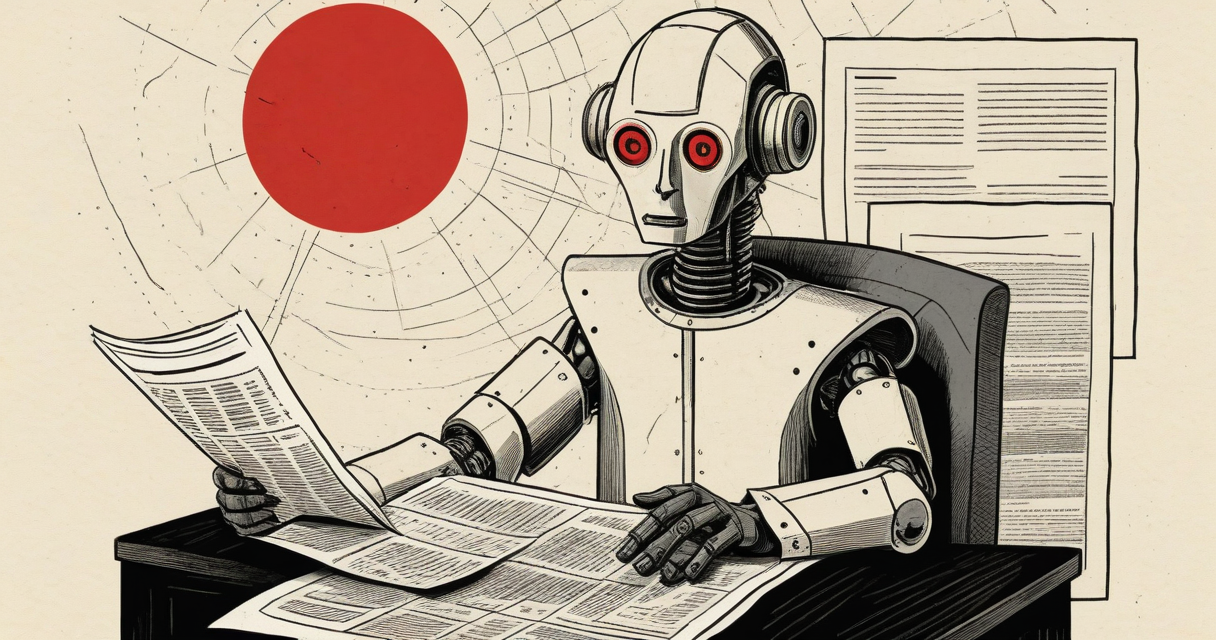
Automation now operates inside the decision path for threat detection and response, not beside it. That is the fact for the board to hold. When a system flags, triages, or contains a threat without a person forming the judgment, the organisation has not removed a decision - it has relocated it. The decision still happens. It simply happens somewhere the board has less visibility into, and often faster than any person can observe. Why this matters is straightforward: accountability does not move with the decision. The system may act, but the organisation answers for the outcome.
The distinction that concentrates board-level risk is the difference between a system that informs and a system that decides. A control that recommends leaves judgment with a person. A control that acts converts a recommendation into an outcome before a person is involved. Both are frequently described in the same language internally - “AI-assisted,” “automated,” “intelligent.” The exposure profile of the two is not the same, and the terminology tends to obscure which one is actually deployed. The board should not accept the label. It should ask what the system is permitted to decide without a person in the path.
The board’s interest here is not the technology and not the model. It is the question of where consequential decisions are now made and who remains answerable for them. Access defines exposure; the same principle governs decision authority. Whatever the automation is permitted to decide, it is permitted to expose. If a system can contain, isolate, or clear a threat on its own judgment, then the reach of that judgment is the reach of the organisation’s exposure. That boundary is a governance question long before it is a technical one.
The prevailing assumption has been that automation reduces risk by removing human error and compressing response time. Faster is treated as safer. Machines do not tire, do not lapse in attention, and do not vary from one hour to the next. Framed this way, automation reads as a net reduction in exposure - fewer missed signals, fewer slow responses, fewer inconsistent judgments. That framing has driven most of the investment, and it has largely been presented to leadership as efficiency and resilience.
Under that assumption, the value was clear enough to accept without close examination: detection at scale, response without delay, and consistency no human operator can sustain across a full duty cycle. The implicit trade was accepted along with it - cede some measure of judgment in exchange for speed and coverage. Few boards were asked to approve that trade explicitly, because it was rarely presented as a trade. It was presented as improvement. The judgment that was ceded was treated as the part worth removing.
That assumption rests on two beliefs that outcome does not confirm. The first is that human judgment is the weak point to be engineered out. The second is that the automation functions as a control by default. Neither holds on its own. A control exists only when it functions at runtime; speed and coverage describe capability, not effectiveness. A system that is fast and broad but wrong at the moment it acts has not reduced exposure. It has scaled it. The assumption measured the promise of the automation, not its behaviour under pressure.
What changed is the scope of what automation is now permitted to decide. Systems that once surfaced signals for a person to weigh now shape the conclusion, and in some deployments act on it, before a person is engaged. The boundary between supporting a decision and making one has moved. It has moved quietly, incrementally, and often without any corresponding change in who is accountable when the decision is wrong. The capability advanced faster than the governance around it.
When a system decides, its decision inherits the trust placed in it. If the basis for that decision is not visible or reviewable after the fact, the organisation cannot demonstrate why a given action was taken, or why a threat was cleared and not contained. The outcome indicates a decision was made; the reasoning behind it may not be reconstructable. That gap between the action and the accountable explanation is itself exposure. Its extent remains unconfirmed until the decisions are tested against real consequence, and in most environments they have not been tested at that level.
The material shift for the board is this. Automation that supports human judgment keeps a person accountable for the decision and able to explain it. Automation that replaces human judgment does not remove the accountability - it removes the judgment while leaving the accountability exactly where it was. The liability does not transfer to the system. No regulator, court, or affected party accepts the model as the responsible party. What changed is not the capability. It is the distance that has opened between where the decision now sits and where the responsibility still sits, and that distance is now the exposure the board owns.
The failure in this arrangement does not present as failure. When automation acts on its own judgment and that judgment is wrong at the moment it acts, the system still returns an outcome - a threat cleared, a session isolated, an alert closed. That outcome carries the same appearance as a correct one. Nothing in the immediate signal separates a sound decision from a flawed one, because the mechanism that would make the distinction - a person forming and recording judgment - has been removed from the path. The exposure is created not when the wrong decision is discovered, but at the moment it is made and trusted.
The speed presented as the primary benefit is also what closes the window in which the decision could be caught. A recommendation waits for a person; an action does not. When the system acts faster than any person can observe, there is no interval in which the judgment can be examined before it becomes consequence. The same reach that lets the automation contain a genuine threat at scale lets it clear, isolate, or expose at the same scale when it is wrong. Access defines exposure, and the automation’s decision authority is its access. A system that is fast and broad but wrong at the moment it acts has not reduced exposure. It has scaled it.
The failure becomes visible only when the outcome is tested against real consequence, and in most environments that test has not occurred at the level that would confirm it. Until then, the absence of a visible problem is read as evidence that the control is working. It is not. No evidence of a failed decision was identified is not the same as no failed decision occurred. The duration over which flawed decisions may have been accepted as correct, and their extent, remain unconfirmed - and they remain unconfirmed precisely because the basis for each decision was not reconstructable after the fact. The organisation cannot demonstrate why a threat was cleared and not contained, which means it cannot rule out that some were cleared in error.
This is not a property of a single deployment. The same structure appears wherever decision authority has been moved into automation without a corresponding relocation of accountability. The pattern is consistent: capability advances, the boundary of what the system is permitted to decide expands, and the language used to describe it stays the same. “AI-assisted” and “automated” continue to describe systems whose exposure profiles have materially diverged. The label lags the deployment, and the board is briefed on the label.
Across the environment, the constant is that capability has advanced faster than the governance around it. Systems that inform and systems that decide are procured, described, and reported through the same categories. No evidence of enforcement separating the two was identified in how they are commonly presented to leadership. Where a system’s decision authority is not explicitly bounded, it is bounded only by its own capability - and capability is expanding. The boundary is set by what the system can do, not by what the organisation has decided it may do. That is the recurring condition, not an isolated one.
The recurring outcome is that the organisation owns the exposure before it understands the boundary. Each expansion of what the automation may decide expands what it may expose, and each expansion has generally occurred without a decision at the level that answers for it. This is the pattern to recognise as the organisation’s own: not a series of isolated technical choices, but a steady, unowned migration of consequential decisions into systems whose reasoning cannot be reconstructed and whose authority was never deliberately set. The distance between where the decision now sits and where the responsibility still sits is the same distance in every case, and it widens each time the boundary moves without being decided.
One condition governs everything that follows. The organisation answers for every decision the automation is permitted to make, whether or not a person made it, and whether or not the reasoning can be reconstructed. Accountability did not move when the decision moved. It cannot be delegated to a system, and no regulator, court, or affected party will accept the system as the answerable party. Whatever the automation is allowed to decide, the organisation owns the outcome of that decision. That does not change with the sophistication of the model.
For that reason, the boundary of what any system may decide without a person in the path must be a decision the organisation makes deliberately, not one that capability makes by default. A control exists only if it functions at runtime; decision authority is real only if it is bounded at runtime. Where the automation acts, the basis for its action must be reconstructable after the fact, because a decision that cannot be explained cannot be defended, and the organisation will be required to defend it. Governance here is measured by what is enforced on the system, not by what is written about it. A boundary that is documented but not enforced at the moment of decision does not exist as a control.
The question the organisation must be able to answer is narrow and unforgiving: what is each system permitted to decide on its own, and can that decision be explained and stood behind after it is made. Where the answer is not known, the exposure is not bounded. Automation belongs in the decision path where it sharpens judgment a person remains accountable for. Where it replaces that judgment, it relieves the organisation of nothing - it removes the part that could be explained and leaves the part that must answer. That is the distance now owned at board level, and closing it is not a technical task. It is a decision about authority, and it has to be made by the people who will be held to the outcome.
Keep Reading
 third-party risk
Alibaba moves to ban Claude Code over backdoor risk
A reported ban on a widely-used AI development tool reframes third-party AI access as a board-level exposure most organizations have not measured.
 AI governance
Your AI features are now your attack surface
Meta has confirmed over 1,000 Instagram accounts were compromised through abuse of its AI chatbot - a board-level view of the control failure.
 AI safety
Anthropic, OpenAI, and DeepMind grade their own models' danger
AI labs publishing dangerous-capability evals turns safety disclosure into marketing, and the self-graded scorecards drift toward a race to the bottom.
Latest on the Wire
Full wire →- 12 Zigbee Sensors Put to the Accuracy TestHacker News
- ChatGPT mimics signatures of New Yorker cartoonists without permissionHacker News
- ClickFix Attack Exploits Browser Cache to Evasion Windows Run LimitsThe Hacker News
- Common Lisp Shines in the Age of AI Code GenerationHacker News
New signal daily · RSS
Stay in the loop
New writing delivered when it's ready. No schedule, no spam.