A patch waits eleven days at the gate
Google Play reviews now take a week or more. The real risk isn't malware slipping the gate - it's droppers that mutate after approval and slowed security patches.
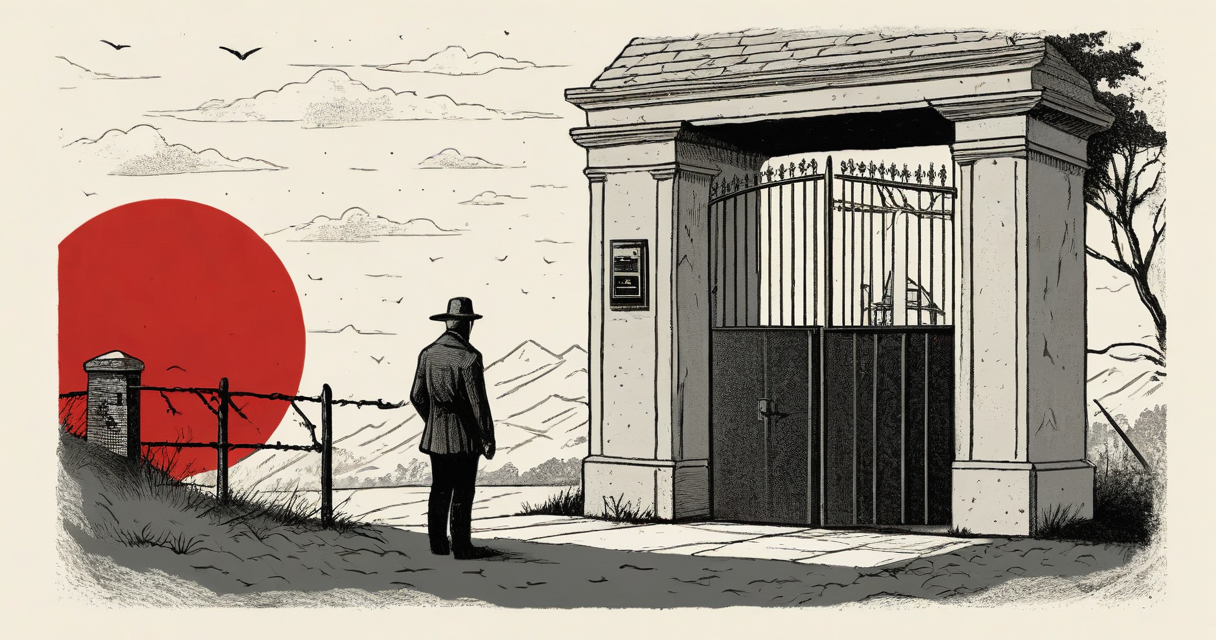
A developer submits a security patch to Google Play on a Monday morning. Two years ago it cleared review by Tuesday afternoon. Through 2024 and 2025, developers on Google’s Play Console forums and r/androiddev began reporting the same pattern: routine updates parked in review for seven, nine, sometimes eleven days. New personal developer accounts have it worse - Google now requires a closed test with 20 testers running for 14 days before an app is even eligible for production.
The slowdown is not the story. The story is what a slower gate does to everything passing through it, and to everyone who decides to route around it.
A review queue is a control, and its latency is part of the control
Google Play review is a checkpoint in a pipeline. Apps and updates go in, a mix of automated scanning and human reviewers look at them, and approved builds go out to billions of devices. Every checkpoint has three properties that matter for security: how accurately it catches bad things, how many good things it wrongly blocks, and how long it takes. Most coverage focuses on the first two. The third one moves the other two.
When a queue backs up, one of two things happens to the people running it. Either throughput stays fixed and the backlog grows, or reviewers speed up to clear it. Speeding up means less time per app. Less time per app means the accuracy of the check drops - not because anyone got worse at their job, but because you cannot look as hard at a build in four minutes as you can in forty. A slow queue and a rushed review are the same problem seen from two ends.
The app that gets approved is often not the app that runs
Here is the part most people miss. Review is a snapshot. It inspects the build in front of it at one moment. But modern Android apps do not hold still.
A large share of malware that reaches Google Play does not carry its payload through review. It arrives clean. The technique is called a dropper: submit an app that genuinely works - a PDF reader, a QR scanner, a file manager - and that contains no malicious code at review time. After approval, the app fetches its real payload from a server the developer controls, flips a remote configuration flag, or loads code dynamically that was never in the reviewed package.
This is not theoretical. The Anatsa banking trojan (also tracked as TeaBot) has repeatedly seeded dropper apps onto Google Play disguised as utilities, then pulled credential-stealing modules after install - documented by Threat Fabric and Zscaler across multiple campaigns in 2023 and 2024. The Joker family (Google’s internal name is Bread) has been one of the most persistent Play Store threats for years; Google has removed more than 1,700 Joker-infected apps, and new ones keep appearing because the malicious behavior activates after the review passes. SharkBot hid inside apps posing as antivirus and cleaner tools using the same pattern.
Against this class of attack, review latency is close to irrelevant. Making reviewers spend eleven days instead of one on a dropper does not help, because the dropper is clean during those eleven days. The malicious change happens on the attacker’s server, on their schedule, after the gate.
So the honest framing is not “slower review lets more malware through the gate.” It is “the gate was already the wrong place to stop this, and now it is also slower for everything else.”
The risk that actually grows: slow defense
The clearest security cost of a week-long queue is not offense getting easier. It is defense getting slower.
When a genuine developer finds a vulnerability in their own app - a leaking API token, a broken authentication check, an exposed storage path - the fix has to ship through the same queue as a cosmetic tweak. If that queue is now seven to ten days deep, the window during which known-vulnerable code is live on users’ phones stretches by a week. Attackers who reverse-engineer the patch once it does ship get to compare it against the still-widespread vulnerable version.
Google has an expedited review path for urgent fixes, but developers report it is inconsistent and not guaranteed. That inconsistency is itself a security property. If defenders cannot predict how long a critical patch takes to reach users, they cannot plan disclosure, and they end up sitting on fixes rather than shipping them into an uncertain queue.
Latency does not treat offense and defense equally. Attackers control their own delivery through remote payloads. Defenders are stuck in line.
Batching makes each review worse
There is a second-order effect. When re-review is slow and unpredictable, rational developers stop shipping small, frequent updates and start shipping large, infrequent ones. Nobody wants to enter a ten-day queue twice, so they bundle a month of changes into one submission.
That is the opposite of what a reviewer wants to see. A small diff is easy to reason about. A large one - new libraries, new permissions, refactored networking code, all at once - is exactly the kind of change where a malicious or negligent addition hides in the noise. Slow review pushes the whole ecosystem toward bigger, murkier submissions, which lowers the accuracy of the review even further. The queue’s latency degrades the queue’s own signal.
What this means if you install apps
You cannot see Google’s queue, but you can read the signals that survive it.
- Check the update history and the developer, not just the star rating. An app with millions of downloads and years of consistent updates is a different risk than a freshly published app with a generic name and a sudden marketing push. Droppers tend to be new, because Google eventually catches and removes them.
- Weigh permissions against function. A QR scanner that requests Accessibility Services, SMS access, or the ability to install other packages is asking for the exact capabilities dropper malware needs. Function should explain every permission. If it doesn’t, that gap is the finding.
- Keep Google Play Protect on. It is not the review queue; it scans on the device, after install, which is precisely where post-approval payloads reveal themselves. On-device scanning is the layer that matches the actual attack pattern.
- Be skeptical of “cleaner,” “antivirus,” and “battery saver” utilities from unknown developers. That category has hosted more Play Store malware than almost any other, because it is a plausible cover story for invasive permissions.
What this means if you publish apps
- Split security fixes out of feature releases. Submit the patch alone as a small, self-contained diff so it clears faster and reviews cleaner, even when the expedited path is uncertain.
- Do not treat remote configuration as a way to route around review. Loading behavior dynamically after approval is the same mechanism droppers use; Google’s scanners and Play Protect increasingly flag it, and you do not want your legitimate app to pattern-match a trojan.
- Assume review is a snapshot, and that your real security posture is enforced after publish - on your servers, in your update cadence, and in what your app is capable of doing once it is past the gate.
The week-long review queue is a real regression, but the lesson underneath it is older than this quarter’s slowdown. A gate you pass through once cannot secure a system that keeps changing after you are through it. Google Play review inspects a moment. The threat operates over time. A control that checks entry and then stops watching is measuring the wrong interval, and making that one-time check slower does not fix the interval it was never watching.
Keep Reading
 AI safety
What distillation leaves behind
Distilling frontier AI models copies capability cheaply but leaves safety training behind. What Garry Tan's push means for cybersecurity and AI safety.
 AI safety
A warning is not a wall
An AI sandbox escape is the wrong thing to fear. The real AI safety risk is a system acting on a flattened, ungrounded model of a sensitive region.
 Android security
Keepalive packets bypass Android lockdown
Android NAT-T keepalive offload egresses UDP/4500 below the VPN lockdown firewall, leaking the device's real IP outside the tunnel. Mechanism and detection.
Latest on the Wire
Full wire →- A Self-Taught Builder Hits the Wall: Seemann on Programming After LLMsHacker News
- AI pentest agent found a live admin GitHub token in Baseten's public imageHacker News
- AI red-team firm's misconfigured evals caused real hacks — then blamed 'rogue' agentsHacker News
- Apple's Reference Image: cryptographically verified photos on iPhone 18 ProHacker News
New signal daily · RSS
Stay in the loop
New writing delivered when it's ready. No schedule, no spam.