ZuckOff detects the camera outside your access model
Software controls govern only devices you administer; a concealed camera operates off every monitored plane, so only physical detection maps to it.
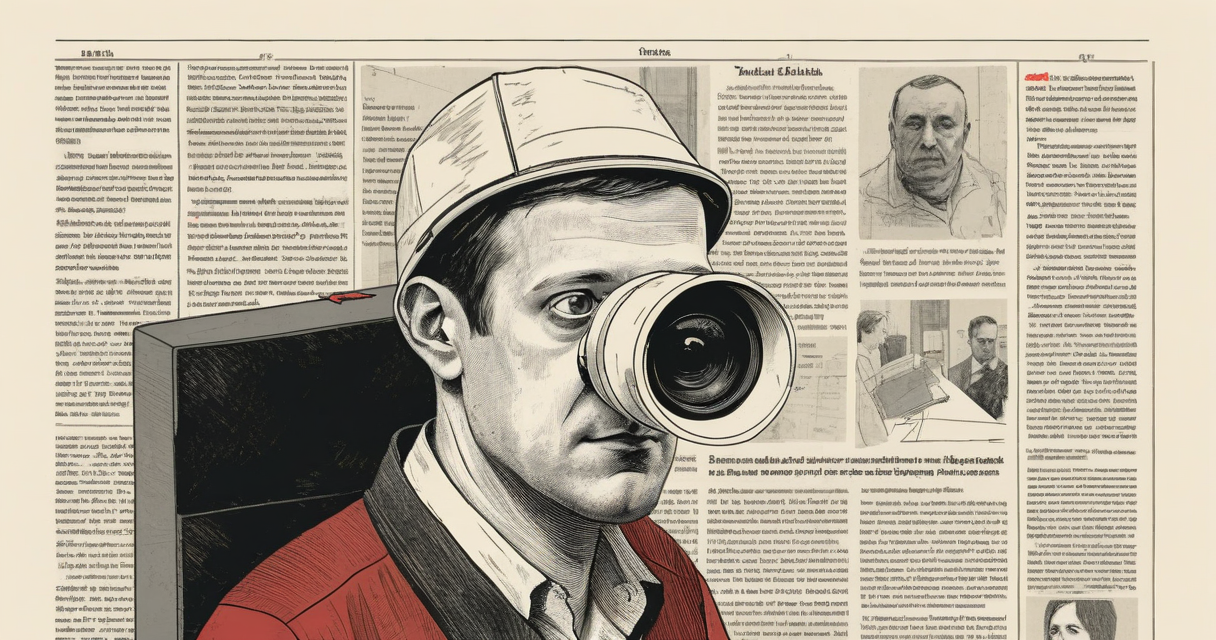
A camera does not need your permission to record you. It needs line of sight. That is the entire access requirement, and it is one your existing controls do not enforce. Every privacy control most people run operates inside a device they own. Camera permissions, indicator LEDs, webcam covers, MDM policy. All of it governs hardware under your administrative control. None of it governs the camera someone else carried into the room and left running.
Physical presence of a recording device is an access path that sits outside your identity and access model. You do not authenticate to it. You do not grant it scope. You cannot revoke it. If it is present and powered and pointed at you, it collects. ZuckOff addresses that specific gap and nothing wider. It answers one question with operational value: is there a camera in this room. In a properly scoped threat model, that question is a boundary condition, not a preference.
Treat the lens as a trust boundary. Everything on the capture side of that boundary is exposed the moment it is in frame or in range of the microphone that usually ships beside it. The device does not appear in your asset inventory. It does not request access through any interface you administer. The boundary is physical, the exposure is physical, and the only control that maps to it is one that operates in physical space. That is where this tool sits, and it is a narrow, correct place to sit.
The prevailing assumption is that camera risk is a software problem. Cover the webcam, revoke the app permissions, watch for the indicator light, keep the firmware current, and the exposure is considered managed. That model holds under one condition: the camera you are worried about is a camera you administer. Every control in that list terminates at the edge of a device you own. The model assumes the inventory of cameras in a space equals the inventory of devices you brought.
That assumption is the failure. A concealed camera placed by a third party has no permission prompt you can deny, no policy you can push to it, and no indicator you are positioned to see. The visible inventory of a room is not the actual inventory. You cannot enumerate the recording devices in a space by looking at it, and you cannot account for them by trusting the endpoints you walked in with. The threat is defined by what someone else deployed before you arrived, and none of your device-level controls were ever scoped to that.
State the control effectiveness plainly. A control that only governs hardware under your administration does not stop hardware outside it. Against a webcam you own, a cover and a permission setting are effective. Against a recording device you did not deploy, the same controls are not partially effective. They are ineffective, because they were never in that device’s path. If the threat is a camera you do not administer, the entire software-layer control set is out of scope by design. Calling it a defense against that threat is a category error.
What changed is the form factor and the economics of the camera itself. Recording hardware is now small enough to sit inside a smoke detector, a USB charger, a screw head, or a wall clock. It is cheap enough to be treated as disposable and left behind. It can store to local media or transmit over its own radio, which means it never joins your network and never generates an entry in any log you monitor. The moment the camera stopped being visible and stopped being networked, the assumption that you could see it or account for it broke.
That shift moved the threat off every surface your tooling watches. Network monitoring does not observe a device that writes to an SD card and never sends a packet. Endpoint controls do not observe hardware you do not own and cannot reach. The digital layers you would normally lean on have no visibility into an object that is offline, unmanaged, and physically hidden. When the device is removed from every plane your instrumentation covers, the only reliable signal that remains is physical presence. Detecting the camera as an object in the space is the layer that survives the disappearance of every other signal. That is the layer ZuckOff operates on.
This matters most in high-stake environments, and the definition is specific. A high-stake room is one where the value of what is said or shown inside it exceeds the cost of planting a device to capture it: executive negotiations, legal and M&A discussions, secure briefings, and any space you do not own and cannot pre-clear, including hotel rooms and short-term rentals. In those settings the adversary does not need your credentials, your network, or your endpoints. They need a device in the room before you enter. When the attack is a physical object placed in advance, the countermeasure has to be physical and has to happen on entry. Physical detection is not an additional layer bolted onto the software controls. Against this threat it is the layer that was missing.
The failure is not that a control was bypassed. It is that no control was ever in the path. Detection of any device depends on that device producing a signal on a plane you monitor. An administered camera produces those signals. An authentication event, a permission prompt, a driver load, a packet, a log line. Each is an observable behaviour a control can act on. A concealed camera that writes to local media, and transmits over its own radio if at all, produces none of them on any plane you instrument.
From outside the device, the only observable behaviour is physical presence. It occupies space, it has a lens, it has line of sight to what it records. Nothing about its operation reaches your network monitoring, your endpoint tooling, or your access logs, because it never touches them. The capture generates no record on any surface your instrumentation covers. Absence of a record is not absence of capture. It is absence of visibility, and the two are not the same condition.
This is where the control model breaks as a mechanism. Every software control terminates at a device boundary you administer. The threat sits on the far side of a boundary you do not administer and never crosses back onto a monitored plane. The two never intersect. A control cannot act on behaviour it never observes. The mechanism of failure is scope, not strength. The controls operate as designed. They are pointed at the wrong plane.
The pattern generalises directly from that mechanism. Visibility is scoped to the planes you administer. Any threat that operates entirely off those planes is invisible to every control bound to them, regardless of how many controls you stack. Adding software controls to a device you own does not extend coverage to a device you do not own. Coverage is not a function of control count. It is a function of whether a control sits on the same plane as the threat.
The microphone that usually ships beside the camera is the same mechanism, not a different one. It captures through physical presence, stores or transmits off your monitored planes, and produces no observable event on the surfaces you watch. Same boundary, same absence of signal, same failure of scope. The recorded output differs. The reason your controls miss it is identical. Wherever a capture device operates offline, unmanaged, and physically placed, the digital control set is out of scope by construction.
The correct reading of the pattern is that detection has to be placed on the plane the threat occupies. When the only observable behaviour is physical presence, the only control that can observe it is one that operates in physical space. This is not a preference for a physical layer over a digital one. It is the constraint the mechanism imposes. A control on the wrong plane detects nothing, and physical presence is the sole plane this class of device leaves a signal on.
State the position without softening. Against a recording device you do not administer, your software control set is ineffective. Not weakened, not partial. Ineffective, because it was never in the device’s path. Treating webcam covers, permission settings, and network monitoring as a defense against a concealed third-party camera is a category error, and in a high-stake room it is a costly one, because it reports coverage that does not exist.
What must now be true. In any room where the value of what is said or shown exceeds the cost of planting a device, the presence of a camera is a boundary condition to clear before the room is trusted, not a possibility to accept after the fact. The device is placed before you arrive, so the check has to happen on entry, in physical space, against the object itself. That is the single question ZuckOff is scoped to answer. Is there a camera in this room. It does not extend past that, and it should not be asked to.
The lens does not authenticate, does not request access, and does not appear in your inventory. If it is present, powered, and in line of sight, it collects, and no control you run on your own devices changes that. The only control that maps to a physical boundary is one that operates in physical space. In a high-stake environment that control is not an additional layer. It is the one that was missing. Until it is applied, the status of the room is not confirmed. Unconfirmed is not cleared. Treat it as such.
Keep Reading
 cloudflare
One vendor, one subpoena, one reach
Cloudflare's VoidZero acquisition collapses the vendor boundary between build tooling and edge runtime. Attestation reduces to self-reporting.
 privacy
Your privacy settings are decoration.
Privacy is no longer a default state. A former black hat defines what failed, why it failed, and what operators must now assume.
 physical security
A postcard breached a warship
A 5 dollar Bluetooth tracker hidden in a postcard broadcast a 585 million dollar warship's position for 24 hours. The control that failed was classification.
Latest on the Wire
Full wire →- Academic Lab Bets on Local AI: Frontier Models on a Single 24GB GPUHacker News
- AI cracks a 1941 Enigma message that stumped cryptanalysts for 20 yearsHacker News
- AMD's RDRAND may never return a true zero, assembly hobbyist claimsHacker News
- Anthropic ships Opus 5.5: Fable 5.1-class work at 40% lower costHacker News
New signal daily · RSS
Stay in the loop
New writing delivered when it's ready. No schedule, no spam.