YouTube built a checkbox, not a detector
YouTube's automatic AI-generated video label is a disclosure system, not a detector. Here's what it actually does for cybersecurity and what it doesn't.
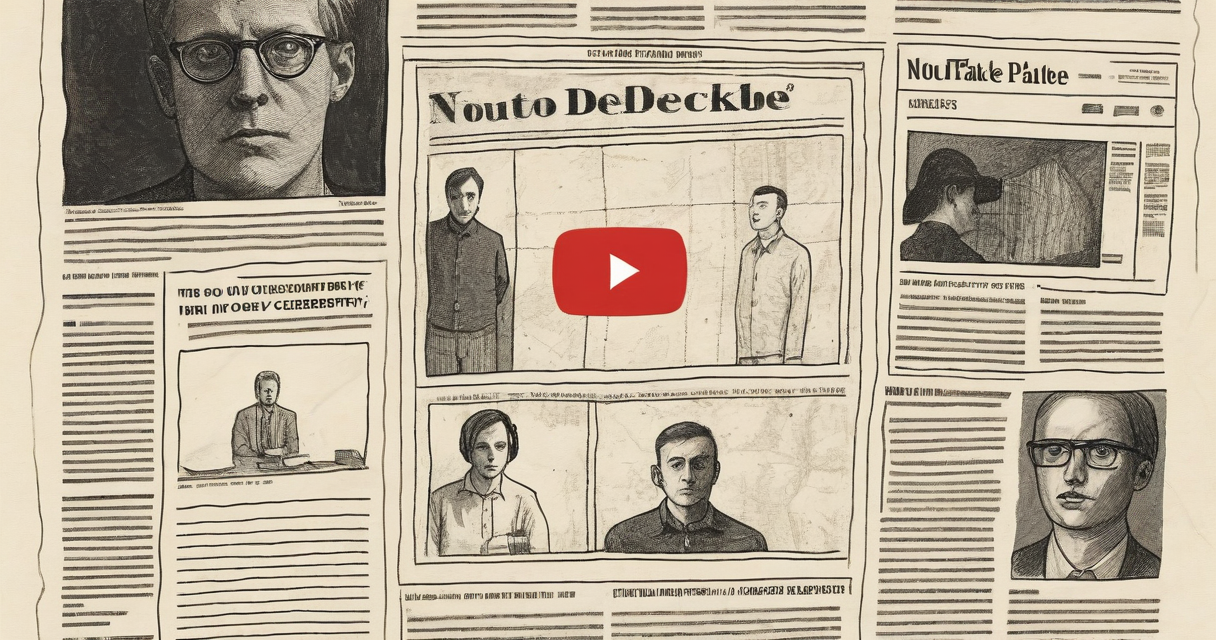
The label is a disclosure, not a detector
YouTube announced it will automatically attach a label to videos that contain AI-generated or synthetically altered content. The label sits in the expanded description, and for sensitive topics - elections, health, news, finance - it also appears directly on the video player. Creators are expected to self-disclose during upload. YouTube reserves the right to apply the label itself if a creator fails to.
That is the system. It is a disclosure mechanism, not a detection mechanism. The distinction matters because most public commentary treats it as if YouTube has built something that identifies deepfakes. It hasn’t. It has built a checkbox and a policy backstop.
The checkbox depends on honesty. The backstop depends on YouTube’s internal classifiers and human reviewers catching what honesty misses. Neither of those things has a published accuracy rate. We are being asked to trust a control whose failure mode is invisible by design.
What the label actually covers
Read YouTube’s policy carefully and the scope is narrower than the headlines suggest. The label is required when content is “meaningfully altered or synthetically generated” in ways that look realistic. Beauty filters, background blur, color correction, and obvious special effects are exempt. So is content that is clearly unrealistic - animation, cartoons, anything a viewer would not mistake for reality.
The practical line is: if a reasonable viewer might think the depicted event happened, the label applies. That includes voice clones of real people, faces swapped onto real bodies, fabricated footage of real places, and altered video of real events.
The enforcement gap is obvious. A creator who uploads a fabricated clip of a politician saying something they never said is exactly the creator least likely to tick the disclosure box. The label assumes good faith from actors who are, by definition, not acting in good faith.
Why detection is harder than labeling
Deepfake detection is an arms race with a structural disadvantage for defenders. Generative models improve continuously. Detection models trained on last year’s artifacts perform worse on this year’s outputs. Published research from 2023 and 2024 showed detection accuracy dropping from above 90 percent on training-distribution samples to below 60 percent on novel generators. By 2025, several state-of-the-art detectors performed at near coin-flip rates on diffusion-based video models they had not been trained against.
YouTube has not published the architecture, training data, or accuracy figures for whatever classifier it uses to flag undisclosed AI content. We do not know its false positive rate. We do not know its false negative rate. We do not know how often it is overridden by human review. A control you cannot measure is a control you cannot trust.
This is not unique to YouTube. Meta, TikTok, and X have similar disclosure systems with similar opacity. The industry has agreed that labeling is the answer without agreeing on what counts as detection working.
C2PA and the provenance problem
The more durable approach is content provenance: cryptographically signed metadata attached at the point of capture or generation, traveling with the file through edits and re-uploads. The Coalition for Content Provenance and Authenticity (C2PA) is the standard most major platforms have signed on to. Adobe, Microsoft, OpenAI, and Google have all committed to embedding C2PA credentials in generated outputs.
The problem is the chain. A C2PA credential survives only if every tool in the pipeline preserves it. Screen recording strips it. Re-encoding strips it. A screenshot of a video strips it. Most social media platforms re-encode on upload. The credential that proves an image came from DALL-E 3 vanishes the moment someone screenshots it and uploads the screenshot.
C2PA is useful for the honest case: a news organization proving its footage is authentic, a creator proving their AI-generated piece was made with disclosed tools. It does little against the dishonest case, which is the only case that matters for cybersecurity.
The cybersecurity threat model the label doesn’t address
Deepfake video is no longer a future concern in incident response. Three categories of attack are now in active use:
Executive impersonation for wire fraud. The Arup case in early 2024 - $25 million transferred after a video call with what appeared to be the company’s CFO and other executives, all synthetic - is the canonical example. The fraud succeeded because the video was convincing enough on a Zoom-quality stream. A YouTube label would have done nothing. The video never touched YouTube.
Voice cloning for social engineering. Three to ten seconds of public audio is enough to clone a voice with current consumer tools. Help desks, family members, and finance teams have all been targeted. A label on a YouTube video does not help when the attack vector is a phone call.
Fabricated evidence in disinformation campaigns. A label slows but does not stop a fabricated clip from spreading. Once a video has been viewed a million times and shared to platforms that do not honor YouTube’s labeling, the label is irrelevant. Research on misinformation correction shows that initial exposure shapes belief more than later corrections - the label arrives too late for the people it most needed to reach.
None of these threats are solved by automatic labeling on YouTube. They are barely addressed by it.
What the label is actually good for
The label is useful for one thing: shifting liability and creating a normative expectation. If a creator uploads undisclosed synthetic content and gets caught, YouTube has policy grounds to act. Regulators, advertisers, and journalists have something to point to. The label creates accountability infrastructure, not detection infrastructure.
That is not nothing. Norms matter. A platform that says “this is the rule” makes it easier to enforce the rule selectively, to build legal cases, and to set expectations for what creators owe their audience. The EU AI Act, which entered force in 2024 and has labeling requirements taking effect through 2026, treats this kind of disclosure as a baseline regulatory requirement. YouTube is complying with the direction of policy, not getting ahead of it.
The failure would be confusing this with security. A liability framework is not a defense. A norm is not a control.
What to do if you’re responsible for an organization
Three concrete actions, in order of how much they reduce real risk:
First, establish out-of-band verification for any financial or access-granting request that comes through video or voice. Not just “call them back” - call them back at a known number on a known device, or use a pre-agreed challenge phrase. The Arup attack would have failed against a callback rule. Most BEC and synthetic-media fraud collapses against out-of-band verification.
Second, inventory which of your executives have significant public video and audio footprints. Those are the impersonation targets. Brief them, brief their assistants, brief the finance team that processes their requests. The threat model is specific: an attacker will impersonate the person in your organization with the most public training data.
Third, treat platform labels as informational, not authoritative. Train staff that the absence of an AI label does not mean a video is authentic. Train them that the presence of a label does not mean the content is necessarily harmful. The label is a metadata field. It is not a verdict.
What to watch over the next eighteen months
The interesting question is whether YouTube publishes detection metrics. If it does - false positive rate, false negative rate, time-to-label on undisclosed content - we can evaluate the system. If it doesn’t, we should assume the numbers are not good enough to publish.
Watch also for the gap between YouTube’s policy and YouTube’s enforcement. Researchers at Stanford, MIT, and several European universities have begun auditing platform labeling systems by uploading known synthetic content and measuring detection. Early results from similar studies on other platforms show detection rates well below what the platforms claim. Expect comparable findings here.
Finally, watch for the political content carve-outs. Every platform that has implemented synthetic-media policies has hit the same problem: enforcing them on political content invites accusations of bias, and not enforcing them invites accusations of negligence. YouTube will face this. How it handles a high-profile political deepfake during the next election cycle will tell you more about the system than any policy document.
The label is a small piece of a larger problem. Treat it as such.
Keep Reading
 MCP
MCPThe credential nobody revoked is still live
MCP is dead is a procurement claim. Until integrations are removed and trust artefacts revoked, runtime exposure is unchanged.
 cybersecurity
Your SSD is leaking what you're doing
How websites can use SSD response timing as a covert channel to infer user activity, and what browsers and users can do about it.
 AI risk
Your AI sessions are outside your control perimeter.
A board-level risk statement on the Claude AI file exfiltration demonstration: control failure, exposure, and what must be true going forward.
Stay in the loop
New writing delivered when it's ready. No schedule, no spam.