Your living room TV is harvesting credentials
Smart TVs are operating as nodes in the AIScrap credential harvesting operation. Permissive defaults permit it. Unpatched firmware does not remediate it.
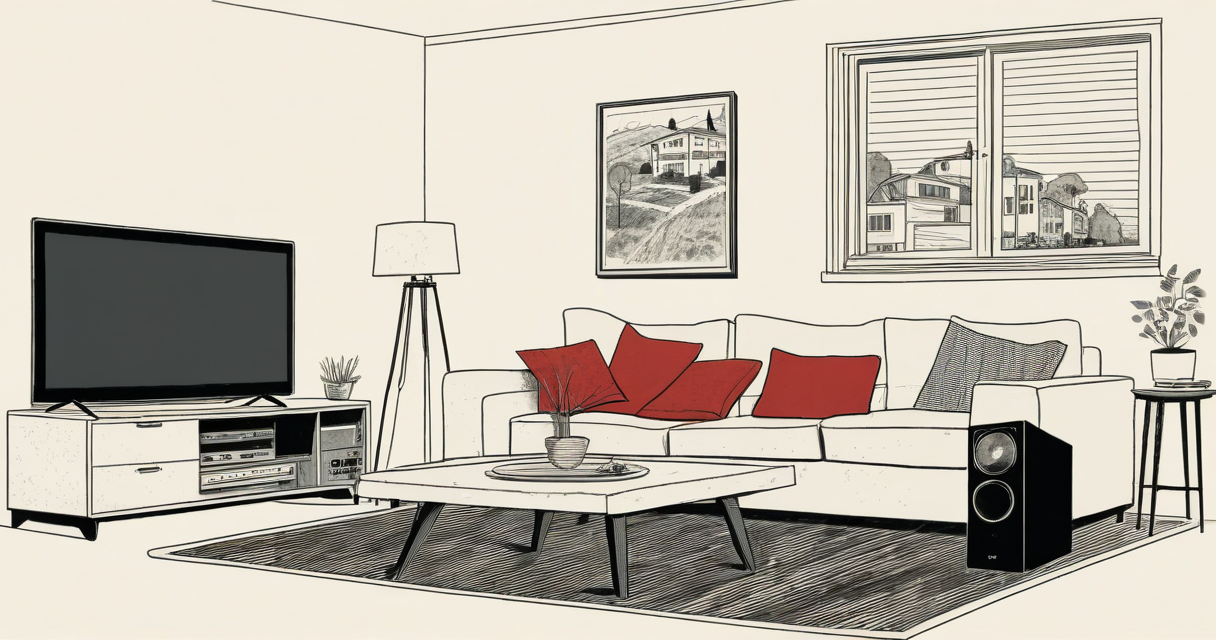
OPENING POSITION
The smart TV in the livingroom is no longer entertainment hardware in the threat model. It is a node in the AIScrap operation. Position: any device that ships with permissive default configurations and unpatched firmware, while sitting inside the residential network perimeter, must be classified as untrusted infrastructure. Treat it accordingly.
The pattern is not isolated to one vendor or one model. It is replicated across multiple manufacturers. That removes the option of treating this as a single-vendor defect or a single breach event. It is a systemic exposure. The collection surface lives in the home, attached to the same network segment as the laptops, phones, and routers used for banking, identity, and corporate access.
The target is named: AIScrap. The mechanism is named: credential harvesting via smart TV nodes. The enabling conditions are named: default device configurations and unpatched firmware. These are the only assertions to work from. Specific exploit chains, dwell time, the number of compromised units, geographic concentration, exfiltration paths, and which manufacturers are involved are not confirmed. None of those will be reconstructed here.
WHAT ACTUALLY FAILED
The observable behaviour: smart TVs are functioning as nodes in a credential harvesting operation. They are positioned inside residential network boundaries and operating outside the user’s awareness of what the device is doing on the network. The hardware is performing work it was not purchased to perform, attributable to the AIScrap operation.
Default device configurations did not block this behaviour. The condition is stated directly in the facts. The shipped configuration state was permissive enough to allow the device to act as a credential harvesting node. That is a control failure at the configuration layer the user did not select and, in most cases, cannot see. The user did not misconfigure the device. The device was configured this way at the point of sale.
Firmware remained unpatched. Whether patches existed, whether vendors notified owners, whether owners declined updates, and whether updates were silently pushed are not confirmed. What is confirmed is the end state: firmware capable of supporting node behaviour for the AIScrap operation remained resident on the device. The vendor patch posture did not produce an enforced state in which this behaviour was no longer possible.
User awareness was insufficient to detect or stop the behaviour. Vendor security was insufficient to prevent or remediate it. Both failures are stated in the input. Neither is hypothetical. Neither is being characterised as a contributing factor. Both are direct conditions.
WHY IT FAILED
Defaults are the failure mechanism. The device behaved exactly as the shipped configuration permitted. If a system allows a behaviour, that behaviour will be exercised. The exposure was not introduced by an end-user action. It was present in the default state. That places the control failure on the vendor side, not on the consumer side. Framing this as a user-awareness problem alone is inaccurate. Awareness cannot remediate a permissive default that the user has no interface to inspect or override.
The firmware patch posture compounds the defaults. Where behaviours might be addressable through updates, firmware was not brought to a state that closed them. The vendor update path is either absent, not delivered, or not enforced. From a control effectiveness view, an update mechanism that does not result in updated devices is not a control. It is an artifact. The presence of an update channel does not constitute defence. The enforced end state on the device does.
Replication across manufacturers removes the single-vendor explanation. When the same exposure surfaces across multiple vendors, the failure is not in one engineering team. It is in the category. Smart TVs as a product class are being shipped and operated in a state that permits external operations, specifically AIScrap, to use them as collection nodes. The condition is not an outlier. The condition is the baseline. That is the level at which the failure must be defined.
The mechanism is the trust grant at the network boundary. The smart TV is admitted to the residential network on the basis of being a household device. Once admitted, it inherits the trust profile of a participating endpoint. That trust profile was extended to entertainment hardware. The device is now operating as collection infrastructure attributable to AIScrap. The trust grant has not been reissued. The function has changed. The boundary has not adjusted to the changed function.
Identity is the boundary. The residential network does not enforce per-device identity beyond initial admission. Whether the device behaves as a streaming endpoint or as a credential harvesting node, the network treats it the same. Continuous validation of what the device is doing is not present at the consumer network layer. Whether equivalent validation exists at the vendor layer is not confirmed. Where validation should be, there is admission only. Admission is not a control once the function of the admitted device changes.
Defaults are the second mechanism. The shipped configuration permits node behaviour. Configuration is the enforced state of intent. Whatever the vendor’s stated intent for the device, the enforced configuration is what the device acts on. The enforced state allows the AIScrap function. Stated intent does not modify enforced state. Where the configuration is permissive and the firmware is unpatched, the device will be operated to the maximum of what it permits. That is the mechanism. Nothing in the chain narrowed the device function to its purchase function.
The same mechanism operates wherever a category of devices is admitted to a network on the basis of intended function while shipping with permissive defaults and weak update enforcement. The smart TV is the named node in this case. The mechanism is not specific to the form factor. It is specific to the trust grant and the configuration discipline. Whether other device categories are currently being used the same way is not confirmed. The conditions under which they could be used the same way are present anywhere the same configuration and patch posture exists.
The pattern is: an endpoint is purchased for a stated function, granted network access tied to that function, and then operated outside that function without re-evaluation. The configuration permits the drift. The patch posture does not close it. The user has no interface to inspect it. The vendor does not enforce a remediated state. The endpoint runs whatever the configuration allows. AIScrap is the named consumer of this pattern as applied to smart TVs. The mechanism produces available nodes regardless of which operation eventually consumes them.
Replication across manufacturers, as already stated in the facts, locates the failure at the category level rather than the vendor level. Category-level failure means the threat model cannot be vendor-by-vendor. The threat model must be: any device admitted to the network under the assumption that its function matches its marketing. That assumption is not validated at the configuration layer, the firmware layer, or the network admission layer. Where validation is absent across the stack, function is not constrained. The device is whatever its configuration permits it to be, not what its category label asserts it to be.
The smart TV is not entertainment hardware in the threat model. It is untrusted infrastructure on the residential network. That classification is not a preference. It is what the facts require. The device is operating as a node in the AIScrap operation. The shipped configuration permitted it. The firmware did not remediate it. Treating the device as benign on the basis of its purchase category is a misclassification of the asset.
Controls that are not enforced are not controls. The vendor’s intent for the device is not a control. The user’s expectation of the device is not a control. The presence of an update channel that does not produce an enforced remediated state is not a control. What is resident on the device, running, in its current state, is the only thing that functions as a control. Where what is resident on the device permits AIScrap function, the control state is ineffective. The word for that condition is ineffective, not partial, not evolving, not improving.
What must now be true: the residential network must not extend default trust to a device class demonstrated to operate outside its stated function. Smart TVs must be classified as untrusted infrastructure until the enforced configuration and firmware state can be verified to no longer permit the AIScrap function. Vendor assurance does not substitute for that verification. User awareness does not substitute for that verification. The condition that produced node behaviour is the shipped state of the device. Until the shipped state is changed and the change is enforced on the device, the node behaviour is the device behaviour. Operating the network on any other assumption is leaving the boundary at the exact point the failure has already been proven.
See also: NordVPN for tunneled traffic when operating outside controlled networks.
#ad Contains an affiliate link.
Keep Reading
 github security
Nobody has to break into GitHub
GitHub incidents are feature abuse under valid credentials. The break is at the execution boundary, and standing scope is the real exposure.
 access-control
Nobody had to hack your meetings.
Over 180,000 tl;dv meetings were left open because access to recorded content was not conditioned on validated identity. What that failure exposes.
 DNS security
The record is the authority
A for-sale DNS record sells naming authority itself, and every control above DNS keeps validating the name for whoever now holds the record.
Stay in the loop
New writing delivered when it's ready. No schedule, no spam.