What a tool does never made it safe
When ownership of an integrated, data-access tool changes, existing access persists under a new identity unless it is revoked and re-issued.
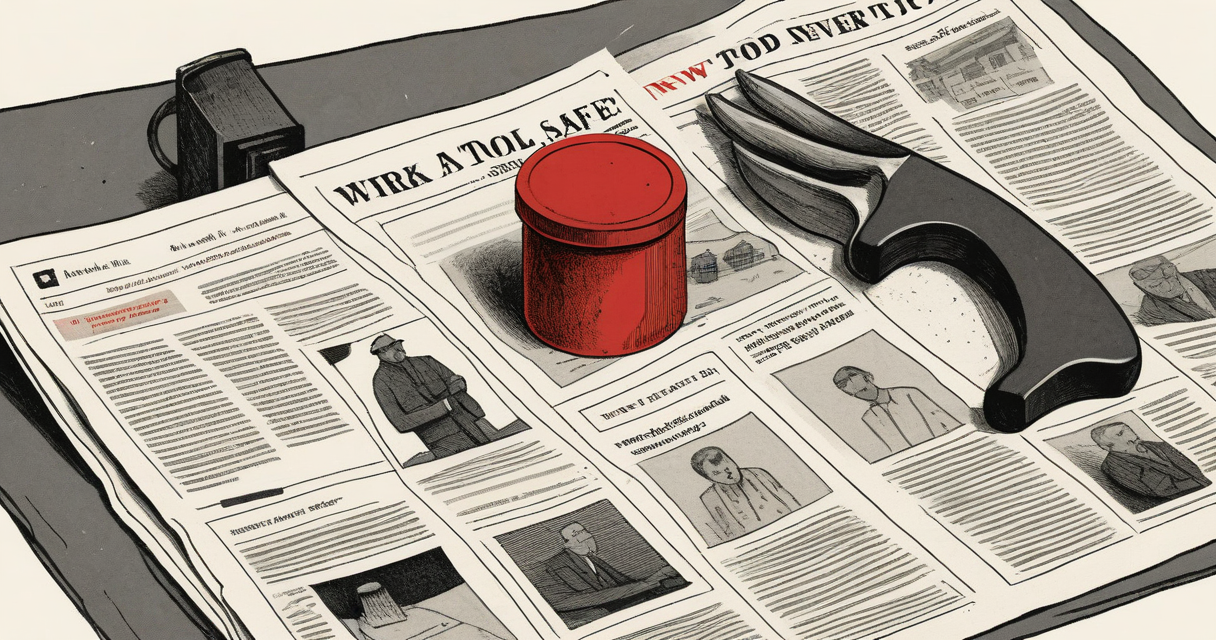
A claim is circulating that SpaceX is acquiring Cursor, and that Cursor’s role is dark web monitoring and intelligence gathering at scale. Read that as a report. Not as a fact. The acquisition is not confirmed. The described function is not confirmed. The first failure in this story is analytical, and it happens before any system is touched. It is the decision to treat an unverified acquisition as settled ground.
My position does not depend on the rumor being true. It depends on a property that holds regardless. The moment any tool with broad data access changes the identity that controls it, the trust relationship around that tool changes. The feature set can stay identical. The risk does not. Identity is the boundary, and in this scenario the boundary moved.
So I am not going to confirm a deal I cannot confirm, and I am not going to characterize a product based on a claim I cannot verify. I am going to define what becomes true the instant ownership of an integrated, data-touching tool transfers. That is the exposure under review. It exists whether or not this specific transaction is real, and it is the only part of this story I can speak to with discipline.
Organizations adopt tools by capability. They evaluate what the tool does. They rarely evaluate who controls it after adoption, or what happens to that control over time. The working assumption is that a tool is defined by its function, and that function is stable. Ownership gets treated as a footnote on a purchase order, not as a control parameter.
That assumption is wrong at the boundary that matters. A tool integrated into an environment does not hold features. It holds access. Tokens, API scopes, repository read rights, telemetry pipelines, cached data. Those grants were issued to an identity under a specific trust relationship. The identity is the actual control surface. The feature list is not. When teams reason about a tool, they reason about the feature list and ignore the access, which is the inverse of what the threat model requires.
Treat ownership as continuous and you have made trust static. Static trust is the failure mode. A control that was justified by who held the tool yesterday is not automatically justified by who holds it today. If nothing re-validates that trust at the point of transfer, the trust carries forward by default. Carried-forward trust without re-validation is not a control. It is an assumption wearing a control’s name. Trust must be continuously validated, and an ownership change is precisely the event that should force re-validation and almost never does.
Here is what changes the instant ownership of a data-access tool transfers, independent of the SpaceX and Cursor specifics, which remain not confirmed. The access does not reset. Integrations stay live. Issued tokens stay valid. Data already collected stays collected. None of that expires because a controlling entity changed. The grant outlives the relationship that justified it, and nothing in a standard adoption flow revokes it on transfer.
That reframes the attack surface. The surface is not the tool’s published capability. The surface is the accumulated access the tool already holds across every environment that adopted it. An ownership event does not create new access. It re-points existing access to a new controlling identity. Across many tenants, that is a single transfer of standing trust, not a per-target operation. The work that an attacker would otherwise have to perform target by target is replaced by inheriting trust that was already granted and never re-examined.
Hold the categories apart, because the discipline of this work demands it. Known: ownership transfer of an integrated tool moves the controlling identity behind existing access. Implied, by logical necessity: unless that access is revoked and re-issued, it persists under the new identity. Not confirmed: that SpaceX is acquiring Cursor, that Cursor performs dark web monitoring or intelligence gathering, and any specific scope, scale, dwell time, account count, or technique attached to that claim. I will not estimate those. Absence of data is a condition, and I am treating it as one.
Access inside an integrated tool is bound to credentials and scopes issued to an identity. The binding is enforced at the credential, not at the entity that controls the identity. What the environment observes is narrow. The token authenticates. The integration responds. Data moves across the pipeline that was opened at adoption. None of those checks ask who controls the identity at the moment of use. The trust decision was made once, at issuance, and it is not made again. That single, non-repeating decision is the mechanism.
The drift follows directly. When the controlling entity changes, the credential does not. The identity string is the same. The scopes are the same. The externally observable behavior of the system is identical before and after the change of control. That identical behavior is the failure, not a sign that nothing failed. A control that returns the same result regardless of who stands behind the counterparty is not validating the counterparty. It is validating a token. The distance between ‘this credential is valid’ and ‘the entity holding it is still trusted’ is the gap the drift occupies.
Nothing in a standard adoption flow closes that gap, because the binding is set at install time and there is no event in the flow that fires on a change of controlling identity. The change occurs outside the environment that issued the grant. The environment cannot observe a transfer it is not party to, and it cannot revoke against a signal it never receives. Known: the grant persists. Implied by logical necessity: with no signal reaching the environment, no revocation triggers and the access continues under whoever now controls the identity. Not confirmed: any specific scope, token lifetime, retained data volume, or dark web monitoring function in the Cursor case. The mechanism does not require those values. It operates on the structure of credential-bound trust, which is present wherever an integrated tool holds standing access. If the monitoring framing were real, it would change the sensitivity of the data class and therefore the impact. It would not change how the trust is inherited. That boundary stays clean.
Stated as a pattern and derived only from the mechanism above: standing access survives a change in controlling identity because access is bound to a credential and no process re-validates that binding at transfer. Any system in which access is granted once to an identity, and that identity can change hands without forced re-issuance, carries this pattern. The data class does not define the pattern. The persistence of the grant across an unobserved transfer defines it.
The same mechanism appears in dependency handoff. A widely installed package executes in many environments under the trust granted at install. Control of the publishing identity moves to a new maintainer. The installed base does not re-evaluate that trust, because installation bound it once. The next release runs with the standing trust the prior maintainer held. Credential-bound execution access survives an identity transfer with no re-validation, across many environments, in a single move. That is not a similar concept. It is the same mechanism on a different grant type.
The same mechanism appears again in third-party integrations whose vendor changes ownership. Granted scopes such as mailbox read, repository read, or telemetry export remain valid after the vendor changes hands. The consuming environments authorized a vendor identity, not the entity behind it, so the scopes persist when the entity changes. One ownership event re-points standing access across every tenant that integrated. In each case the work is not performed per target. The new controlling entity inherits access that was already granted and never re-examined. Automation scales both control and failure, so the wider the adoption, the more standing trust transfers in one event. The pattern is not specific to OSINT tooling or to any product named here. It is specific to any standing grant whose controlling identity can change without forcing re-issuance. That is the strict generalization of the mechanism, with nothing added to it.
Define what must now be true. A change of ownership of any integrated, data-access tool must function as a revocation event. Not a notice. Not a line item in a quarterly review. A trigger that invalidates issued credentials and forces re-issuance under a trust relationship that has been validated again. Where the adoption process holds no such trigger, the transfer of trust resolves on the new controlling entity’s terms, and the environment has consented to that resolution by default through the absence of a control.
Identity is the boundary. A credential is not an identity. It is a token that asserts one. When the entity behind the token changes and the token does not, the boundary has moved and the control has not moved with it. A control that does not re-validate on that event is not a control. It is a record of a trust decision that no longer describes the counterparty. Controls that are not enforced at the point of change do not exist at the point of change.
The SpaceX and Cursor claim is not confirmed, and the conclusion does not depend on it. Wherever a tool holds standing access in the environment, one condition sets the exposure: whether anything in the stack would register a change of control over that tool. If nothing would register it, the trust is already transferable without the environment’s involvement, and the only undetermined variable is who ends up holding it. If a system allows it, it will happen. The absence of a revocation trigger is the exposure. It is the one element in this story under direct control, and it is the one to fix first.
Keep Reading
 supply-chain-security
No one hacked the NSA
The NSA's Mythos access loss wasn't a breach - it was a control-plane revocation by a third party. A supply chain availability failure with no patch.
 ransomware
PgDog's funding does not make it dangerous
PgDog shifts ransomware to direct database infrastructure attacks. The enabling failure: identity and access controls that did not hold under exercise.
 biometric-security
FaceTec stores non-rotatable identity material
A senior operator's position on the storage of non-rotatable biometric templates by ID verification vendors, and the exposure that condition creates.
Latest on the Wire
Full wire →- 12 Zigbee Sensors Put to the Accuracy TestHacker News
- ChatGPT mimics signatures of New Yorker cartoonists without permissionHacker News
- ClickFix Attack Exploits Browser Cache to Evasion Windows Run LimitsThe Hacker News
- Common Lisp Shines in the Age of AI Code GenerationHacker News
New signal daily · RSS
Stay in the loop
New writing delivered when it's ready. No schedule, no spam.