They kept a folder on everyone who objected
MSG built a dossier on facial-recognition activists. The exposure is one party holding identity data and the authority to target it with it.
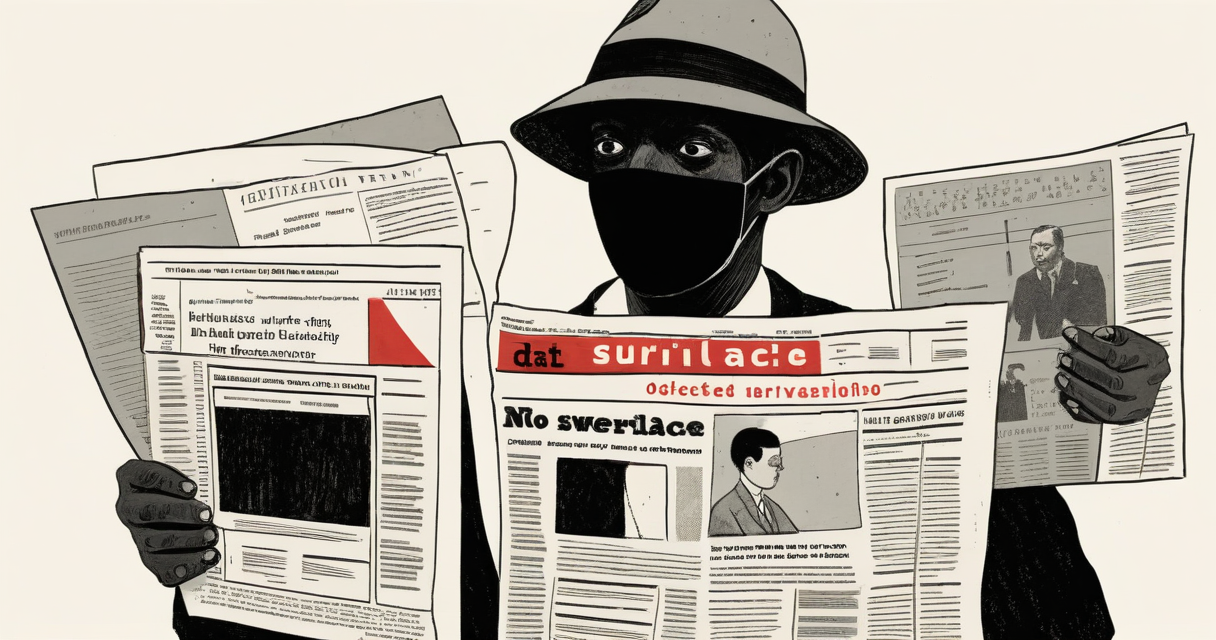
MSG compiled a dossier on activists who opposed facial recognition. That is the stated fact, and it is the entire finding. The facial recognition technology is not the exposure here. The dossier is.
A dossier is a compiled record. Its existence means that identifying information about specific individuals was collected, retained, and assembled into a structured product. It also means those individuals were indexed against a position: opposition to facial recognition. The record does not describe a crowd. It describes named people tied to a stance. Whether facial recognition was the source of the underlying data is not confirmed. Whether any other collection method fed the dossier is not confirmed. The mechanism of collection is not stated, so it does not exist as fact.
Read this as an access and identity event, not a technology debate. The question is not whether a camera can match a face. The question is who held the data, who decided to assemble it against a political position, and what boundary was supposed to prevent that assembly. That boundary did not hold. A control that does not stop the behavior it was meant to stop is not a control. On the facts provided, no such control is described, and its absence is a condition, not a detail.
The default assumption around surveillance data is purpose limitation: data gathered for one declared function stays inside that function. People assume a system positioned for access or security operates only within access or security. They assume the operator of a collection capability uses it for the reason it was deployed. Whether MSG declared a purpose for its data collection is not confirmed. The assumption is the public one, not a stated fact in this case.
A second assumption follows from the first. People assume that opposing a system keeps them outside its data. The belief is that objection is external to collection, that you can stand against a capability without being processed by it. The dossier contradicts that belief as a matter of what was produced. Individuals who opposed facial recognition became subjects of a compiled record. Their opposition is the indexing key. The act of taking a position placed them inside a data product, not outside it.
The third assumption is about separation of function. There is a presumed wall between collecting data and targeting individuals by belief. Collection is treated as passive. Targeting is treated as a separate, deliberate act requiring its own authorization. The existence of the dossier means those two functions were connected. Data about people and a judgment about their political position ended up in the same artifact. Who authorized that connection is not confirmed. What enforcement point should have separated the two is not described in the facts, so it is not confirmed to have existed.
The dossier converts a debated capability into a demonstrated one. The concern about surveillance data is usually framed as theoretical: it could be repurposed. The dossier is the repurposing in finished form. Identifying data about individuals was assembled into a targeted record keyed to political opposition. That is not a risk projection. It is the stated outcome.
The location of the failure is the point that matters. The exposure is not at the sensor. It is at the point where held data is associated with identity and a position and then compiled. That association is the failure. Whatever data MSG held about these individuals, the system permitted it to be linked to their opposition and packaged. If a system allows that linkage, the linkage will be produced. Here it was produced. The number of individuals is not confirmed. The time period is not confirmed. The distribution of the dossier beyond MSG is not confirmed. The single confirmed transition is from data held to dossier built.
The other change is who is shown to be inside the trust boundary. The entity that held the data also controlled the decision to compile it against a stance. Possession of the data and the decision to target sat with the same party, and nothing in the stated facts separated them. That concentration is the mechanism. When the party that holds sensitive data is also the party that decides how it is turned against individuals, the only remaining protection is restraint, and restraint is not a control. The dossier exists because the data flow allowed it to exist. Everything about its scale, persistence, and onward use remains not confirmed.
The failure point is the association step. Data that identifies a person and a record of that person’s position were joined in a single artifact. That join is the observable behavior. The system that held the data permitted the data to be linked to a name and to a stated stance, then permitted the linked result to be compiled into a dossier. Each of those is an action the system allowed. None was blocked. The dossier is the output of those allowances and nothing in the facts describes a step that interrupted them.
The drift is from possession to targeting with no boundary between the two. Possession of identity data is one function. Deciding to assemble that data against a declared position is a separate function. In the stated facts, both functions resolved to the same party. No enforcement point between them is described. When the holder of the data is also the author of the targeting decision, the move from held to compiled requires no external authorization, because there is no second party to authorize it. The dossier confirms the move occurred. What it does not confirm is any check that sat between possession and compilation. The absence of a described check is the condition, not a missing detail.
Restraint is the only thing that could have occupied that gap, and restraint is not a control. A control stops the behavior it is meant to stop. The behavior here was the compilation of a targeted record keyed to political opposition. It was not stopped. It was produced. That makes any control that should have separated possession from targeting either ineffective or absent. Which of the two is not confirmed. The outcome is identical under both. The system allowed the linkage and the linkage was built. Read the dossier as proof of capability, not proof of intent beyond the single compilation that is stated. Intent past that point is not confirmed.
The Parallel Pattern
Strip the specifics and the mechanism stands on its own. Any party that holds identity-linked data and also controls the decision to compile that data against a position can produce a targeted record without crossing a boundary, because in that configuration there is no boundary to cross. The mechanism is concentration. Possession and targeting authority resting in one party. Where that concentration exists, the targeted record is available to be made. Whether it is made depends on an internal decision by the holder. The dossier shows the decision can resolve to build it.
The pattern does not depend on facial recognition and it does not depend on MSG. Replace the position with any other stance. Replace the holder with any other party that keeps records tied to identity. The output is the same class of artifact. A store of identity-linked data, held by a party that also decides what to assemble and against what index, can yield a record that ties named individuals to a position. The illustrating cases are not other technologies or other incidents. They are the same single-party structure expressed over different identity-linked stores. The mechanism is the constant. The data type is the variable, and the variable is not where the failure lives.
The range of the pattern is the set of all holders that carry this concentration. How many such holders exist is not confirmed and is outside the facts. But the mechanism does not require scale to operate. One holder, one position, one decision produces one dossier. The instance here is one. The pattern is the structural condition that made the instance possible, and that condition is present wherever possession of identity data and authority to compile it against a stance are not separated. The exposure is therefore not a property of what was collected. It is a property of who controlled the data and the assembly decision at the same moment.
Operator Position
Identity is the boundary, and the boundary failed at the point of assembly. The defensible position is not that surveillance data is dangerous in the abstract. The defensible position is that possession of identity-linked data and the authority to compile it against a position cannot sit with the same party. Where they do, the targeted record is not a risk projection. It is a pending output. The dossier is what that pending output looks like once it has been produced. Everything the assumption of purpose limitation promised was contradicted by a single compiled artifact.
State it without softening. A control that does not stop compilation is not a control. On the facts, no control stopped it, because if a control had enforced separation between holding the data and weaponizing it against a stance, the dossier would not exist. Enforcement is observable by outcome. The outcome is a compiled, identity-keyed record. The separation was therefore not enforced. That conclusion is not an extension of the facts. It is the single stated fact read in the only direction it permits.
What must now be true follows directly. The party that holds identity-linked data must not also hold the authority to assemble it against a position, and where that separation cannot be guaranteed, the data flow itself is the exposure, not the sensor and not the technology debate. Everything past the confirmed transition remains not confirmed. The number of individuals is not confirmed. The time period is not confirmed. The distribution beyond MSG is not confirmed. Those gaps are conditions, not reassurances, and they should not be read as limits on impact. The one confirmed fact is enough to define the finding. Data held became a dossier built. If a system allows that, it will happen. Here it did.
Keep Reading
 data governance
Palantir was blacklisted for working exactly as designed
Spain's Palantir blacklist is not about capability. It is what happens when a system executes trust granted once and never revalidates its lawful basis.
 europol
Europol's second database ran unwatched for years
A board-level analysis of Europol's unsafeguarded secondary database and the European Commission oversight gap that did not constrain it for years.
 data governance
The Open Courts Act exposes what PACER fees hid
PACER's per-page fee was an accidental privacy brake. Making court records free is right - but only if redaction, governed bulk access, and security replace it.
Stay in the loop
New writing delivered when it's ready. No schedule, no spam.