The seed money didn't kill that repo.
An AI OSS tool repo archived overnight after a 73M seed round. The targeting, scrub, and OSINT operation are not confirmed. What the facts actually support.
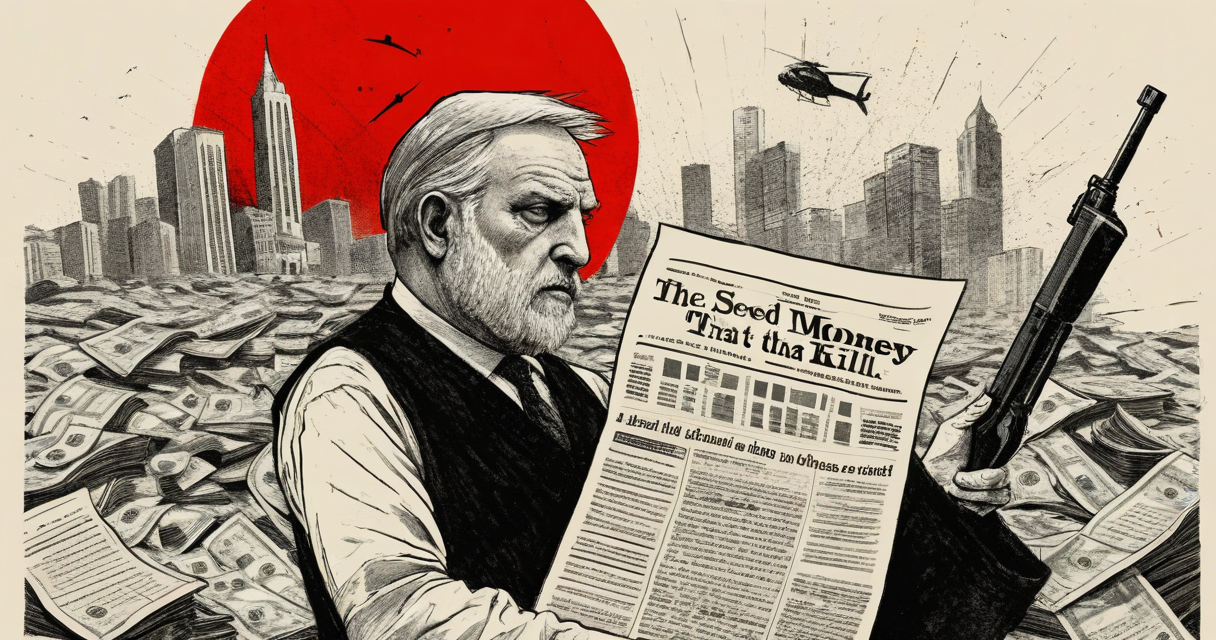
A repository for an AI open source tool moved to archived status overnight. The same project reportedly closed 73 million dollars in seed funding. Those are the two facts on the table. Everything stacked on top of them is interpretation, and the interpretation is running well ahead of the evidence.
The version spreading right now reads as an operation. Seed money bought reach and access, someone used that access to target the project, and the archive scrubbed the evidence before anyone could look. That story is clean and it moves fast. It is also not supported by what the facts state. The facts describe a state change and a funding event. The line connecting them is not confirmed.
I have no stake in the project or in the framing around it. My job is to separate what the system shows from what people need it to mean. A repository flipping to archived is an observable state transition. A funding round is a transaction on a different ledger. Sitting close together in time does not make one the cause of the other, and cause does not establish intent. Hold all three apart until evidence joins them.
For a leadership audience the discipline matters more than the drama. Accept the operation narrative as fact and you commit resources to hunting an actor, a motive, and a data theft that may not exist. Stay with the confirmed facts and you ask narrower questions that return answers you can act on. The cost of believing the story early is real work spent defending a conclusion nobody has proven.
The assumption running through the coverage is a four-link chain. Investment brings newfound interest and access. That access enables targeting. The targeting produces an intelligence gain. The archive removes the trail. Stated in order, the claim is that funding turned the project into both a target and a tool, and the archive was the cleanup pass. Each link is being treated as established. None of them are.
Take the first link. The claim is that 73 million dollars produced attacker-relevant access. Capital is capital. Money in a bank account does not open a path into a codebase, a dataset, or an identity store. Whatever access the round created, if any, is not stated in the facts. Assigning it an attacker function is invention, not analysis.
The second and third links depend on the repository contents. An OSINT play needs a source, and that source here would be whatever the repo held. The facts do not describe those contents. Credentials, user records, internal tooling, model weights, or nothing of intelligence value, all of it remains unknown. With the source undefined, the claim of an intelligence gain has nothing to stand on. Not confirmed.
The last link carries the heaviest load. The archive gets cast as a deliberate scrub timed to beat an investigation. Who performed the archive is not stated. Whether any content was deleted is not stated. Whether an investigation existed to outrun is not stated. The assumption supplies an actor, a motive, and a sequence that the input never provides. That is three fabricated elements presented as one confident reading.
One thing changed in observable terms. The repository state went from active to archived inside a window described as overnight. That transition is confirmed and the timeframe is stated. The actor who triggered it, the reason behind it, and the intent driving it are not.
Nothing else asserted around that change is confirmed. Archive describes a status, not a deletion. Read and write permissions tighten and the contents stay in place, unless the facts state that something was removed. They do not. The claim that evidence was scrubbed assumes a deletion event that the input never reports. If files were destroyed, that is a heavier claim and it carries its own burden of proof. Nobody has met that burden.
The telling escalated overnight. The established record did not. The input traveled from a repository archived to a coordinated OSINT operation and evidence scrub without adding one confirmed data point along the way. A funding figure is real. A state change is real. The operation binding them together remains not confirmed, and labeling it confirmed is how a team ends up chasing a narrative while the system sits unexamined.
Four facts have to land before any attack framing holds, and right now none of them have. What data the repository held. Who executed the archive. Whether anything was deleted. Who accessed the contents before the state changed. Those are the open questions. Until they return hard answers, the status of the operation stays at not confirmed, and anyone treating it otherwise is reporting a hypothesis as a finding.
The drift runs on one move repeated four times. Substitute an assumption for a missing fact, then treat the assembled chain as evidence. The substitution is hard to see because each step sounds reasonable on its own. Reasonable is not confirmed.
First substitution: temporal proximity becomes causation. The archive and the funding sit near each other on a timeline, so the telling binds them. Adjacency on a clock is not a link. Two events can occupy the same window with no relationship between them. The facts state two events and a window. They do not state a connection. The connection is supplied by the reader, not the record.
Second substitution: absence of data becomes presence of threat. The repository contents are not stated. Instead of holding that as an open condition, the narrative converts the blank into an asset, the OSINT source. Unknown content cannot be an intelligence source. It cannot be anything until it is defined. Loading a blank with a value is the core failure, and once the source is assumed, every downstream claim inherits a foundation that was never laid.
Third substitution: a status change becomes a destruction event. Archive is a state. The telling reads it as a scrub, which requires deletion the facts never report. The word carrying the load is ‘scrub’, and it imports an actor and a motive that ‘archived’ does not. Swapping the heavier word in is not interpretation. It is fabrication wearing the same sentence.
Fourth substitution: speed becomes intent. Overnight is a duration. The narrative reads it as coordination, as proof of a plan executed against a deadline. Fast is not the same as planned. A state change can happen overnight for reasons that have nothing to do with an investigation, none of which are stated, none of which can be ruled in or out. Duration does not testify to motive. Each of these four moves is the same defect: a confirmed input of low detail expanded into a conclusion of high detail, with the gap filled by assumption and the assumption presented as fact.
The mechanism is not specific to this repository. It is the standard shape of how an unconfirmed operation gets reported as a finding. Two observable events, a gap between them, and an observer who needs the gap filled. The fill runs the same direction every time, toward the most active explanation available, because an active explanation justifies an active response.
The pattern surfaces anywhere absence is treated as signal. A login at an odd hour with no other data becomes ‘the attacker was already inside.’ A deleted file with no recovered contents becomes ‘they covered their tracks.’ A vendor going quiet becomes ‘they are hiding a breach.’ In each case the confirmed input is thin and observable, a timestamp, a state, a silence. In each case the output is thick and motivated, an actor, a method, a sequence. The distance between the thin input and the thick output is the assumption, and the assumption stays invisible because it arrives as a story rather than as a claim that has to be defended.
The same mechanism that builds the OSINT operation here builds the false positive in a detection queue and the wrong conclusion in a post-incident review. The tell is identical every time. The explanation contains more detail than the evidence supports, and the surplus detail all points one direction. When the conclusion is richer than the inputs, the difference was manufactured, not observed. An analyst reading for that gap stops the chain at the first substitution. An analyst reading for narrative coherence carries the whole chain forward and signs it. The skill that separates the two is not technical depth. It is the refusal to let a missing fact become a populated one.
Two facts are confirmed. A repository moved to archived. A project reportedly raised 73 million dollars. Everything beyond those two facts, the targeting, the access, the intelligence gain, the scrub, the coordination, the implied timeline, is not confirmed. That is the entire established record. The rest is telling.
The operation narrative is not wrong because it is impossible. It is unproven because nothing in the input supports it, and unproven is the only status it can hold until four open conditions return hard answers. What the repository contained. Who executed the archive. Whether anything was deleted. Who accessed the contents before the state changed. None of these are answered. Until they are, the operation does not exist as a fact. It exists as a hypothesis dressed as a finding.
The discipline is simple to state and expensive to hold. A confirmed fact and a plausible story are not the same input, and treating them as the same is how a team spends real resources defending a conclusion nobody proved. The repository archived. The funding closed. The operation is not confirmed. Anything that asserts more than those three sentences is reporting what it needs to be true, not what the system showed. Define what failed, hold what is unknown as unknown, and do not move on the story until the evidence joins it.
Keep Reading
 firmware-security
Motorola signed its own kill switch
Motorola's silent firmware push bricked its WiFi router line. The mechanism is identical to AcidRain. Here is what failed and why it repeats.
 github security
Nobody has to break into GitHub
GitHub incidents are feature abuse under valid credentials. The break is at the execution boundary, and standing scope is the real exposure.
 access-control
Nobody had to hack your meetings.
Over 180,000 tl;dv meetings were left open because access to recorded content was not conditioned on validated identity. What that failure exposes.
Stay in the loop
New writing delivered when it's ready. No schedule, no spam.