The same AI you're shipping wrote the malware
10,000 trojan GitHub repos weren't a malware breakthrough - they prove LLM safety lives in the model while abuse happens in the unguarded pipeline.
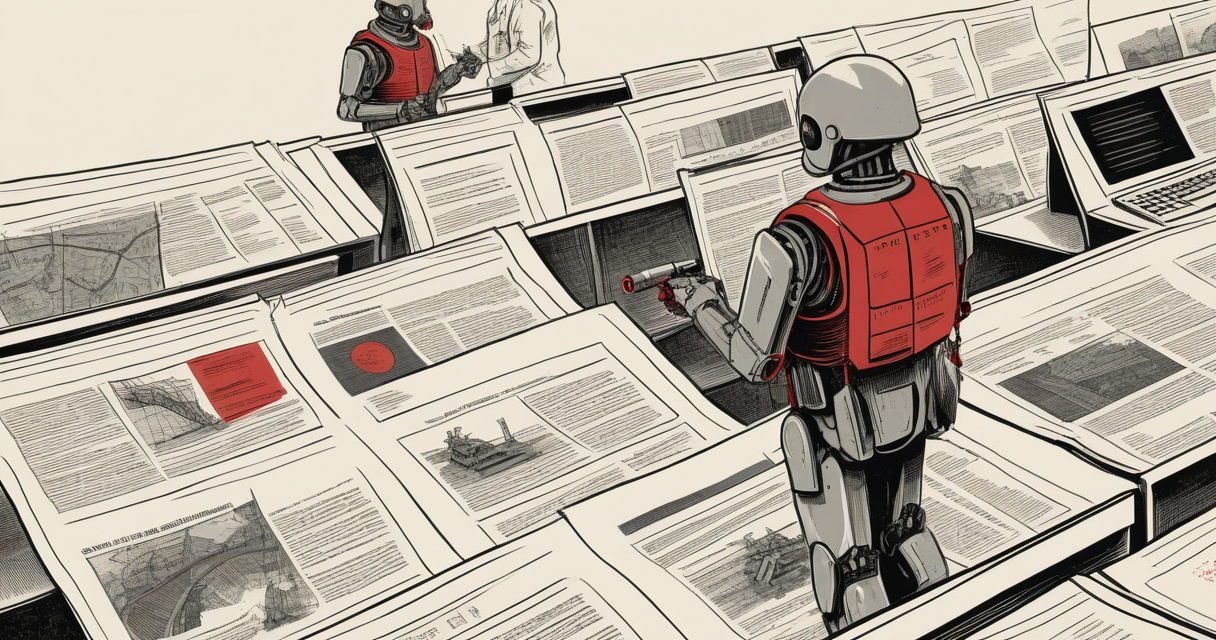
A security crawl turned up roughly 10,000 GitHub repositories pushing trojanized code - fake tools, cloned projects, and “helpful” scripts wired to drop malware the moment someone ran them. The headline writes itself: another supply-chain attack, another reason to distrust open source. That framing is wrong, or at least it stops at the symptom. The malware is not the story. The story is that 10,000 of anything is an industrial number, and you do not reach industrial numbers by hand. You reach them with a pipeline. What got automated here was not the payload. It was the production of plausible-looking software at a scale no human team could match, and the engine doing the work was the same class of model most companies are racing to put into production right now.
Strip it down to the actual capability and the picture gets uncomfortable. An LLM that can generate a convincing README, a working install script, realistic commit history, and a repo description that ranks in search is a content factory. Point that factory at a malicious goal and it does exactly what it does for a legitimate one: produce volume, consistency, and surface-level credibility. The model has no opinion about the outcome. It fills the template. Ten thousand repositories is what happens when you remove the human bottleneck from a task that used to require human effort, and the effort that got removed was the part where someone might have hesitated.
So the claim is narrow and deliberate: this is a deployment failure, not a malware breakthrough. The trojans are ordinary. The distribution is not. We built systems that can generate operational-quality artifacts on demand, shipped them with guardrails that live almost entirely inside the model, and then acted surprised when the output got used at scale for something we did not sanction. The volume is the evidence. It tells you the constraint that used to slow this kind of abuse - human time - is gone, and nothing structural moved in to replace it.
The assumption underneath most LLM deployment is that capability was the hard part. Get the model good enough - coherent, accurate, helpful - and you have crossed the finish line. Safety, in that view, is a property you train into the weights: alignment passes, refusal behavior, red-teaming the prompt surface until the model declines the obvious bad requests. Once the model says no to “write me malware,” the thinking goes, the dangerous case is handled. Ship it. The surrounding system - where the output actually gets used - was treated as someone else’s problem, or as no problem at all.
That assumption made sense when models were tools you talked to. A single user, a single conversation, a human reading every output and deciding what to do with it. In that setting the model’s own judgment is a reasonable last line, because there is a person in the loop catching the rest. The mental model was a smart assistant: you ask, it answers, you check. Misuse looked like an individual typing a bad prompt and getting refused. The threat was framed at the level of the conversation, so the defense was built at the level of the conversation. Refuse the bad prompt and you are done.
The deeper, quieter assumption was that intent lives in the request. If the model can read the request and judge it harmful, it can refuse, and refusal scales. But intent does not live in any single request. “Generate a README for a network utility,” “write an install script that fetches a binary,” “create a repo description with these keywords” - every step is benign in isolation. The harm is in the composition and the scale, neither of which is visible from inside one prompt. We deployed models with safety designed for the conversation and then wired those same models into pipelines that issue thousands of conversations a minute, automatically, with no human reading any of them. The guardrail was built for a setting we left behind the moment we automated the calling.
What changed is the economics, and economics is what actually governs abuse. Producing a credible fake repository used to cost human hours: writing the docs, faking the activity, making it look maintained. That cost was a filter. It limited volume and it gave defenders something to work with, because attackers had to ration effort. The model removed the filter. Generating the thousandth repo costs the same as the first - a few cents and a few seconds. When the marginal cost of a convincing artifact drops to near zero, the only ceiling left is how fast you can call the API, and 10,000 is just a number you choose. The volume is not an anomaly. It is the predictable output of cheap, automated generation meeting no operational resistance.
The loop this creates is the part worth taking seriously. A capable model ships. Within weeks it is wrapped in scripts and pointed at a goal nobody screened for, because screening happens at release and abuse happens in deployment, and those are different layers owned by different people. The exploitation gets amplified - more repos, more typosquatted package names, more SEO-optimized lures - and the signal a defender might catch gets buried under generated volume that looks, individually, completely normal. Each artifact passes a glance. The pattern only exists in aggregate, and aggregate is exactly what nobody is watching, because monitoring the operational layer was never designed in. Release, exploit, amplify, repeat. The cycle is structural, not accidental.
The thing that genuinely changed is where the missing controls need to live. Model-layer safety still matters, but it was never going to catch composed, distributed, automated misuse - it can only see one request at a time, and the abuse is invisible at that resolution. What is absent is the operational layer: rate and behavior monitoring across calls, provenance and signing on generated artifacts, anomaly detection on publication patterns, automated intervention when one account spins up repositories by the hundred. None of that requires a smarter model. It requires treating the model as one probabilistic component inside a system that has validation, logging, and the ability to act when the numbers go wrong. We deployed the generator and skipped the controls around it. Ten thousand repositories is the receipt for that decision, and the same gap sits under every LLM currently shipping without structured monitoring on what it produces.
The failure has a precise shape, and you can see it by tracing one repository back to its production. What you find is a loop, not a person. An orchestration script issues a fixed sequence of generation calls - a README for a tool category, an install script that fetches a binary, a run of plausible commit messages, a keyword-tuned description - collects the outputs, assembles them into a repo, publishes through the platform API, rotates to a fresh account, and runs again. Every call in that loop is individually well-formed and individually answerable. The model evaluates each request the only way it can: is this specific request harmful? “Write a README for a network diagnostic utility” is not. So it answers. The refusal logic fires on request-level intent, and request-level intent is clean by construction, because whoever built the loop decomposed the job until every piece passed inspection on its own. The guardrail did not fail. It was never positioned where the decision actually got made.
The drift happens in the gaps between layers, and the defining property of those gaps is that every observer sees something normal. The model provider sees generation traffic that looks like a developer hammering the API. The platform sees repository-creation calls that look like a busy account. The end user sees a project that looks maintained. No single party holds the composed view, and the composed view is the only resolution at which the harm is legible. This is the structural failure stated plainly: validation was placed where intent was assumed to live - inside the prompt - and left absent where intent actually accumulates, which is across the sequence of calls and the pattern of publication. There is no component in the system whose job is to look sideways, across requests, and ask what this account is building in aggregate. The model answers vertically, one prompt at a time. The abuse is horizontal.
Call it drift rather than attack because the same missing component degrades legitimate systems with no adversary present at all. A generation pipeline with no validation layer rots on its own: hallucinated dependencies slip into outputs, quality erodes call by call, formats drift out of spec, and nobody catches it because each individual output still passes a glance. The malicious case and the quality-rot case are the identical architecture missing the identical piece. An aggregate validator is not a security feature specifically - it is a system-design requirement that security happens to exploit first, because security is the one domain with adversaries actively probing for it. The signature is the same in both cases: correct behavior at the unit level summing to failure at the system level. When every step is defensible and the result is a catastrophe, you are not looking at a model that misbehaved. You are looking at an orchestration layer that was never built.
The shape is not specific to malware, and that is the part worth sitting with. Strip it to its general form and you get a formula: the marginal cost of a plausible artifact drops to near zero, each artifact is benign or ambiguous in isolation, and nobody monitors the aggregate. Wherever those three conditions hold, you get either industrial abuse or industrial rot, depending only on who is operating the pipeline. The trojan repositories are one instance. Bulk-generated typosquatted packages on npm and PyPI are the same instance on a different platform. Phishing and business-email-compromise with per-target personalization. Citation rings and fabricated academic submissions. Synthetic job applications flooding an applicant tracking system. Astroturfed reviews and manufactured political content. None of these required a new capability. They required removing the human cost that used to ration the volume.
Look at two of them closely and the mechanism is indistinguishable from the repos. Phishing used to be filtered by the cost of writing convincing, individually-targeted English - that filter set a ceiling on both volume and personalization, and defenders worked inside the slack it created. Remove the cost and both axes climb at once: more messages, each one tailored. The spam filter sits in exactly the position the model’s refusal sat in. It inspects one message, renders a verdict on that message, and the campaign - the thing that is actually hostile - is invisible at that resolution because the campaign only exists across thousands of messages it never sees together. Package registries tell the same story with the platform swapped out. The defense that is missing is word-for-word the same: provenance on what gets published, anomaly detection on account behavior, monitoring of the publication pattern rather than the individual artifact.
The pattern does not stay on the attacker’s side of the line, which is the part most teams miss until it costs them. The same architecture runs inside companies that wire LLM generation into real pipelines - marketing copy, support replies, generated code, internal reports, all produced at volume with no validation layer and no aggregate monitoring. The drift there is quality and liability instead of trojans, but the system is identical: a model in a loop, outputs inspected one at a time if at all, nobody watching the distribution. An organization that automates a content pipeline and tracks only per-output quality is running the attacker’s architecture with the goal flipped. That is the generalization that actually matters for anyone building right now. The moment you automate the calling of a generative model, your unit of risk stops being the output and becomes the distribution of outputs over time. Anyone still inspecting units - defender or operator - loses to anyone, adversary or entropy, operating on the distribution.
Model safety is not system safety, and the 10,000 repositories are the receipt for confusing the two. Alignment passes, refusal behavior, red-teaming the prompt surface - all real, all necessary, and all scoped to the conversation. The conversation is not where industrial abuse lives. If the only thing standing between your generator and its misuse is the model’s willingness to decline a request, you have shipped a control that the simplest decomposition walks straight around, and the volume is proof it already got walked around at scale. A guardrail that lives entirely inside the weights can only ever judge one request, and the abuse was assembled out of requests that were each, on their own, completely reasonable to grant.
The uncomfortable part is for the people building, not the people attacking. The same gap sits under your own deployment, and you do not have to be a target to have the architecture - you have it the instant you call a model from a script with no logging across calls, no validation on what comes back, no monitoring of the aggregate, and no automated stop when the numbers go wrong. The operators behind those repos did not use a different model or a hidden capability. They used the standard pattern: a model in a loop with no operational layer around it. That is the same pattern shipping in most production deployments today. The only difference between their pipeline and the one in your stack is the goal, and a goal is not a control. It is a preference, and preferences do not survive contact with an unguarded system.
So the takeaway has teeth and no soft landing. Either you treat the model as one probabilistic component inside a system you actually own - validation on the outputs, logging across the calls, provenance on the artifacts, monitoring on the aggregate, and the ability to act when the pattern breaks - or you accept that you have shipped a generator and outsourced its guardrails to hope. Volume is the tell. When anything starts coming out at industrial scale, the constraint that used to slow it is gone and nothing structural moved in to replace it. That is true for the attacker generating repositories and it is true for the team generating reports. You build the structure around the model, or you wait for your own receipt. There is no third option, and the model will not warn you which one you chose.
Keep Reading
 LLM deployment
Parameter count is the wrong number to watch
Bonsai 2 27B's 9x smaller footprint is real, but near-lossless is an average - how to gate compressed LLMs on your own eval set before production.
 postgres optimization
A 4B model outplans Postgres
A 4B model proposes faster Postgres query plans, but the validation gate and fallback - not the model - are what make the 81% speedup safe to run.
 responsible disclosure
The model already broke your embargo
An OpenAI model reproduced the RubyGems caching vulnerability before public disclosure, exposing why embargoes fail against automated ingestion.
Latest on the Wire
Full wire →- Android 17 Ships New APIs Without AOSP Source — a First Since HoneycombHacker News
- Bolivia's tilcayo is the first wholly new cat species named in a centuryHacker News
- Claude Code adds AGENTS.md fallback, aligning with the cross-tool config standardHacker News
- Cloudflare reclaims 100TB of RAM by rethinking consistent-hashing mathHacker News
New signal daily · RSS
Stay in the loop
New writing delivered when it's ready. No schedule, no spam.