the phone rings in a voice you trust
Unreal Agent clones trusted voices for social engineering, and any identity check that ends at voice recognition is already defeated.
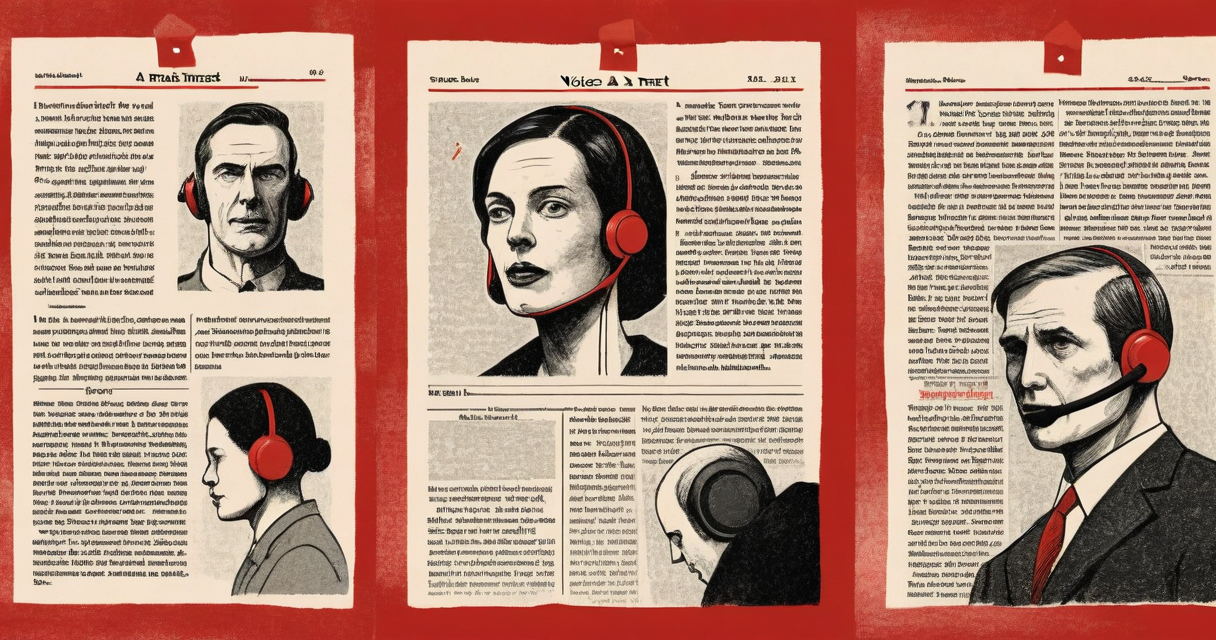
A recognized voice is no longer evidence of identity. Unreal Agent is AI-powered deepfake voice cloning, and the topic states it is being used in social engineering attacks. That is the position. Any process, human or automated, that treats a familiar voice as proof of who is speaking is now ineffective. If verification ends at ‘I know that voice,’ verification did not happen.
I am stating this as a condition, not a prediction. The capability is described as in use. There is no version of events where voice remains a reliable identifier and cloning is simultaneously operating against targets. One cancels the other. The moment a voice can be reproduced on demand, the value of recognizing it drops to zero for authentication purposes.
The boundary under attack is identity. Social engineering manipulates a person into taking an action they would not take for an unknown party. It works by borrowing trust that belongs to someone else. A voice clone hands the attacker that trust directly. They no longer have to talk their way into sounding legitimate. They arrive already sounding like the person the target trusts. Every decision made after ‘I recognized them’ is exposed.
What fails is voice-based identity verification. When a target hears a voice tied to a known person and acts on the content of that contact, the identity check has already completed inside the listener. The clone passes that check because it reproduces the exact signal the listener uses to identify the speaker. The failure is not in a server or a protocol described in the facts. The failure is the acceptance of voice as identity.
The observable behaviour is narrow, and it is enough. At the receiver, synthetic voice presents the same as authentic voice. The listener has nothing perceptible to separate the two, so the trust decision proceeds as though the speaker were verified, and the requested action is taken. That is the observable outcome the capability is built to produce. A request delivered in a trusted voice is treated as a request from the trusted person.
What is not confirmed is scope. The specific targets, the specific requests made, the number of attempts, the amounts or access involved, and how long any single operation ran are not stated in the facts. They are therefore not confirmed. Do not read the absence of those details as a limited exposure. Absence of scope data is a condition to manage, not evidence that the impact is small.
It failed because a trust decision was bound to a signal that can be copied. Voice was operating as an authentication factor. A factor that can be reproduced from samples is not a factor. It is a public attribute, exposed every time the person speaks in a place that can be recorded. Once Unreal Agent reproduces that voice, the attacker holds the same input the listener depends on, and the input still works.
The facts describe voice cloning used in social engineering. They do not describe a technical exploit against a system. A technical compromise is therefore not confirmed, and I will not assert one. The mechanism that carries this attack is trust assigned to voice. The clone supplies precisely what that trust responds to. Nothing in the target environment has to be breached for the request to be believed. The point of failure sits at the identity decision, and that decision was made on a reproducible signal.
This is the part that does not soften. Identity is the boundary. When the boundary is defined by voice, and voice is reproducible, the boundary is open to anyone who obtains samples and runs the clone. That follows directly from the two facts in front of us. The voice can be cloned, and the clone is being used against people. A control that depends on a signal the attacker can generate is not a control. It is a formality the attacker has already satisfied.
The mechanism is a substitution at the point of input. Voice-based identity verification takes one input, the sound of a known speaker, and returns one decision, this is that person. The clone does not defeat that logic. It supplies a valid input. From the receiver’s position nothing in the process changed. The same signal arrived, the same match occurred, the same decision followed. The attacker did not break the check. They fed it exactly what it was built to accept.
This is why there is no error to catch. A check that fails leaves evidence. This check succeeds. The listener reaches the correct conclusion for the input received, and the input received is indistinguishable from the authentic one. The failure is silent because the process performed as designed. It matched a voice to a person, and the voice matched. The defect is in what the process treats as sufficient, not in how it runs.
Reproducibility is the entire mechanism. A voice is emitted every time the person speaks. Any speech that can be captured becomes a sample, and samples are the input voice cloning consumes. The reproduction carries the same identifying characteristics the listener depends on, because those characteristics are what was reproduced. The distance between authentic and synthetic collapses at the exact property used for identification. Nothing is left for the receiver to test against. Because the capability is AI-powered, the reproduction is generated rather than performed, so it is not bound by an attacker’s skill at imitation.
Any authentication factor that is a reproducible, publicly emitted signal fails the moment reproduction is available. That is the pattern. It is not specific to voice. Voice is one instance of a signal a person releases into the environment as a normal function of existing, then relied on to prove that person is present. The structure applies to any identifier with two properties. It is emitted where it can be captured, and it is accepted as proof of identity. Satisfy both, and the identifier is defeated by whoever can reproduce it.
The driver is the confusion between recognition and authentication. Recognition tests whether a signal matches something already known. Authentication tests whether a signal could only have been produced by the party it claims to be. A reproducible signal can pass recognition and fail authentication in the same instant, and most trust decisions never separate the two. The listener runs recognition and reports the result as authentication. The clone lives in that gap. Any process that accepts recognition as authentication inherits this failure, whatever the signal.
The same mechanism holds for any trait a person emits into a space where it can be recorded and is then treated as proof of presence. A face in view of a camera. A signature on a page. The structure does not change. A signal released by ordinary activity is captured, reproduced, and replayed into a decision that treats the signal as the person. Voice is the instance described in the facts. The mechanism is not unique to it, and nothing about the mechanism limits it to voice. Reproduction that once required human skill no longer does. That removes the constraint that limited this class of impersonation, which was the difficulty of doing it convincingly. The scale, targets, and volume of any specific use are not confirmed. The removal of the skill constraint is not a scope claim. It is a property of the mechanism.
Voice is a claim. Treat it as one. A recognized voice states what the speaker wants believed about who they are. It is not evidence of who they are. Every process that ends at recognition has to be rebuilt so recognition starts verification instead of concluding it. Identity has to rest on something that cannot be reproduced from samples. A factor qualifies only if it is not emitted during normal activity and cannot be captured and replayed. Voice fails both conditions.
Where a process authenticates a party by voice, that process is ineffective, and its output cannot be trusted for any decision that moves money, grants access, or changes state. Whether such a process was in place in this case is not confirmed, and I will not assert one. The condition holds regardless. Where voice is the check, the check is already satisfied by the attacker. A control that the attacker can satisfy on demand is not a control. It is a formality.
Identity is the boundary. The boundary cannot be a signal a person broadcasts by speaking. Unreal Agent did not defeat a control. It exposed that a voice was never one. Anyone relying on a recognized voice was exposed before the clone existed and did not know it. The clone removed the assumption, not the protection, because there was no protection in the position that voice provided. What must now be true is short. No action of consequence proceeds on a voice alone. If a system allows it, it will happen.
Keep Reading
 social engineering
LLMs turned fluency into a forged credential
Perceived intelligence is a sender-controlled signal, not identity. Treating fluency as authorization is the exposure social engineers now produce on demand.
 microsoft teams
The helpdesk chat window is the breach
Microsoft Teams helpdesk impersonation succeeds because identity verification is placed at the channel boundary, not at the credential action.
security incidentHow Identity Presentation Without Verification Enabled a Credential Compromise
A breakdown of how the Axios npm credential breach occurred due to identity presentation without technical validation, highlighting systemic risks in open-source infrastructure.
Latest on the Wire
Full wire →- AMD Ryzen's 50% Speedup in Two Years Came From Wider Cores, Not Faster ClocksHacker News
- Anthropic's Claude autonomously flags a new CRISPR-like enzyme system in bacteriophagesHacker News
- Apple slips undismissable ads for its own services into the iOS Settings appHacker News
- Bloomberg: some vapers reportedly turning to cigarettes to quit nicotineHacker News
New signal daily · RSS
Stay in the loop
New writing delivered when it's ready. No schedule, no spam.