The padlock only proves someone holds the key
X.509 certificates authenticate a source, not the truth of its content, and trust resolved once at issuance is inherited unchanged until it expires.
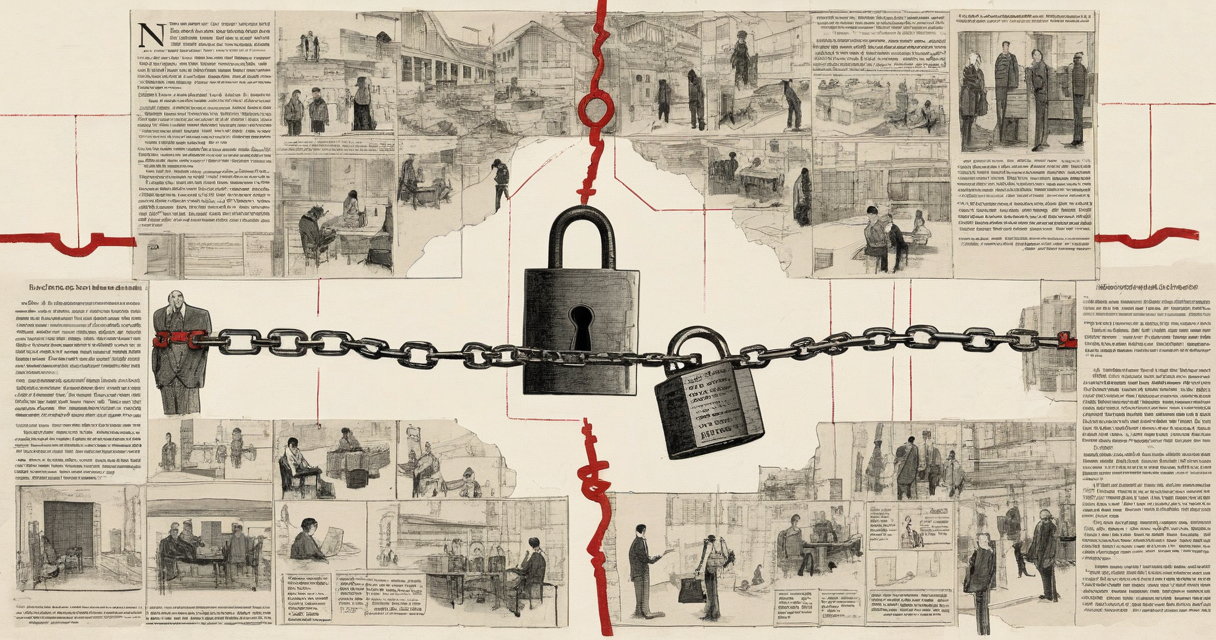
Tonight’s address, as reported, will argue that foreign intelligence services have undermined the security of American elections. Set the claim aside for a moment and look at the machinery underneath it. Every digital interaction that carries the word secure in that sentence rests on the same small set of components: X.509 certificates, the certificate authorities that issue them, and the relying software that validates the chain between them. An X.509 certificate performs one function. It asserts that a named certificate authority, at a specific point in time, bound a public key to an identifier. That is the entire scope of what it certifies.
A certificate authority does not observe behavior. It does not know whether the key it certified is still under the control of the party named in the subject field. It does not evaluate whether the content signed by that key is accurate, current, or offered in good faith. Under RFC 5280, validation is a chain-building exercise: the relying party confirms that a leaf certificate links, through 0 or more intermediates, to a root already present in its trust store, and that none of the certificates in that path have expired or been revoked. When the math checks out, the connection is authenticated. Authentication, here, means only that the far end holds a private key corresponding to a certified public key. Nothing more is proven.
This distinction is not academic, and it is the pivot the televised framing will step over. Authentication is not validation. A system that authenticates confirms the source of a message. A system that validates confirms the integrity of its content. X.509 was built to do the first with precision and was never built to do the second at all. When an official stands in front of a camera and describes elections as secured by cryptography, the word is carrying weight the mechanism does not support. The certificate authority answered exactly the question it was asked. It was asked who signed, not whether the thing signed is true.
It did not start as a gap. The design of public key infrastructure rests on a specific and internally coherent model of trust, and that model is hierarchical, transitive, and durable. A small number of root certificate authorities are trusted absolutely, by virtue of being installed in the trust store of an operating system or browser. Those roots delegate to intermediate authorities. Intermediates certify end entities. The relying party trusts a leaf certificate not because it examined the leaf, but because the leaf chains to a root it already accepted. Trust flows downward through the chain, and each link inherits the authority of the one above it.
The assumption underneath this is that trust, once established, is persistent and transferable. Persistent, because a certificate carries a validity window measured in months or years, and within that window it is treated as good. Transferable, because the trust placed in a root is passed intact to every entity beneath it, without the relying party independently re-earning confidence at each level. The model assumes that the conditions that justified issuance at the moment of issuance continue to hold across the entire validity period. It assumes that the identity certified at the top of the chain is a reliable proxy for the integrity of everything signed at the bottom of it.
That assumption is what allows the system to work at scale, and it is also the assumption that carries the failure. Trust delegation is efficient precisely because it does not revisit its own basis. A relying party validating a certificate does not contact the certificate authority to ask whether the subject is still trustworthy today. It does not evaluate whether the private key has been copied, coerced, or is being operated by a party other than the one named. The system treats the identity of the source as a settled fact and the integrity of the content as an entailment of that fact. Source and content are collapsed into a single decision, made once, at the moment the chain resolves.
What changed was not the sophistication of any adversary and not a lapse by any operator. What changed was the validity of the assumption. A certificate issued to an entity that was trustworthy at the moment of issuance continues to validate cleanly after that entity has been compromised, coerced, or quietly placed under the control of someone else. The key is the same key. The chain still builds to the same root. The signature still verifies. Every check the relying party performs returns the same answer it would have returned before anything changed, because none of those checks are looking at the thing that changed.
This is the structural condition that a phrase like foreign intelligence undermined the process obscures rather than describes. Nothing about the mechanism was broken. An X.509 chain that validates after a compromise is not malfunctioning. It is executing its designed behavior with complete fidelity. The revocation machinery meant to close this window, certificate revocation lists and OCSP, exists precisely because the designers understood that trust granted at issuance can become invalid before expiry. But revocation is a positive action that must be published, distributed, and honored, and relying software frequently soft-fails when a revocation status is unreachable, treating the absence of a no as a yes. The default posture of the system is to inherit trust from the past.
That is the deeper pattern the address will not name. The system does not re-evaluate trust at the moment of use. It resolves a reference, once, and then treats the result as durable. The certificate authority, the trust store, the chain-building logic, all of them answer a question about a prior state and carry that answer forward unchanged. Trust is not enforced at each interaction. It is delegated at issuance and inherited thereafter. When the framing tonight describes external actors as having undermined election security, it points outward at intent, when the condition it is describing was present in the architecture the entire time, waiting only for the moment the certified past and the operating present stopped agreeing.
Look at what the relying party actually does at the moment of use, and the failure stops looking like an intrusion and starts looking like a lookup. When a browser or a server establishes a session, it does not investigate the far end. It retrieves a decision that was made earlier and elsewhere. The certificate authority already bound a key to a name at issuance; the trust store already accepted a root; the chain-building logic under RFC 5280 confirms that the leaf connects, through 0 or more intermediates, to that accepted root. Every one of those operations consults a prior state. The handshake completes, the session key is negotiated, the connection is marked authenticated, and none of the observable outputs distinguish a certificate whose subject is still in control of its key from one whose key is now operated by someone else. The externally visible behavior is identical in both cases. That is the mechanism. Reference resolved cleanly, so execution followed.
What has happened is that the identity of the source has been accepted as a proxy for the integrity of the content. The signature proves that a certified key produced the message. The system then treats everything carried under that signature as trustworthy by inheritance, because the only question the cryptography was ever asked to answer was a question about the key, not about the truth or the current legitimacy of what the key signs. The two revocation mechanisms built to narrow this window, certificate revocation lists and OCSP, do not close it. They ask a single binary question, revoked or not revoked, and they ask it about the certificate rather than the content. When the answer is unreachable, and relying software commonly soft-fails, the absence of a published no is read as a yes. The check that was supposed to catch a change in trust is itself a reference lookup that defaults to the last known state.
Nothing here is a bypass. No parser was overrun, no chain was forged, no cryptographic primitive was broken. An X.509 certificate that validates after its subject has been compromised is not producing an error; it is producing exactly the output its designed logic entails, because the certified past and the operating present have diverged and every check the system performs is pointed at the past. The certificate authority answered the question it was asked at issuance and never asked again. The relying party asked whether the chain builds, and it builds. The system did not misfire. It resolved a reference, and the reference still resolves, which is the entire problem stated as a fact rather than a fault.
Strip away the certificates and the pattern underneath is simple. A system that executes on the basis of a reference rather than a verification will act on what the reference named, not on what the reference currently points to. The reference is a name, a version, a fingerprint, a location. It is durable by design, because durability is what makes delegation efficient. The thing it names is not durable, because the world moves and the named entity can be replaced, coerced, or quietly substituted while the name stays constant. Every system that separates the act of naming from the act of using inherits this gap, and the gap is invisible precisely at the moment of use, because at that moment the system is looking at the name and the name has not changed.
The same mechanism runs a software build. A dependency manager requests a package by version reference, and the registry returns the bytes associated with that reference. At most, the resolver confirms that the returned artifact matches a checksum recorded in a manifest that was itself fetched by reference. The build then executes that code with the full privilege of the build environment. Nothing in the transaction evaluates whether the code behind the version is the code the version described when trust in it was first established. Source identity, the package name and the version string, stands in for content integrity, exactly as the certified subject stands in for the trustworthiness of the signed content in X.509. The registry answered who published, not whether what was published is safe today. The resolver confirmed that the reference matched, not that the referent had held still.
Both systems collapse two different questions, what is this and what was this called, into a single answer computed once. The certificate authority and the package registry are the same structure wearing different names: a trusted intermediary that resolves a durable reference to a mutable thing and passes the resolution downstream as if the two were the same. This is why the framing that points outward at a foreign intelligence service describes the weather and not the physics. The condition does not depend on who arrives to use it. It is present in any architecture that treats a reference resolved in the past as a statement about the present, and it is waiting the entire time for the moment the two stop agreeing.
A certificate authority resolves identity once, at issuance, and carries that resolution forward until expiry. It does not revalidate at the moment of use, because it was never built to. The reference still points, the chain still builds, the signature still verifies. The control exists. The outcome does not.
Keep Reading
 systems failure analysis
The browser runs whatever the host returns
A browser tab holding 2 GB is not a malfunction; it is a trust model that resolves references and never revalidates the referent behind the name.
 systems failure analysis
The rubric graded an empty chair
Brown's AI cheating scandal is not a student failure. It is an assessment system that resolves trust by reference and never revalidates the reality behind it.
 surveillance
You are already in the murder investigation
Flock license plate readers answer queries by reference, never by purpose; the promise that footage serves only serious crime lives in policy, not the system.
Stay in the loop
New writing delivered when it's ready. No schedule, no spam.