The merged Claude isn't about a smarter model
Merging Claude Cowork and chat removed the seam that forced discipline. Now structured workflows, not prompts, decide whether your AI work holds up.
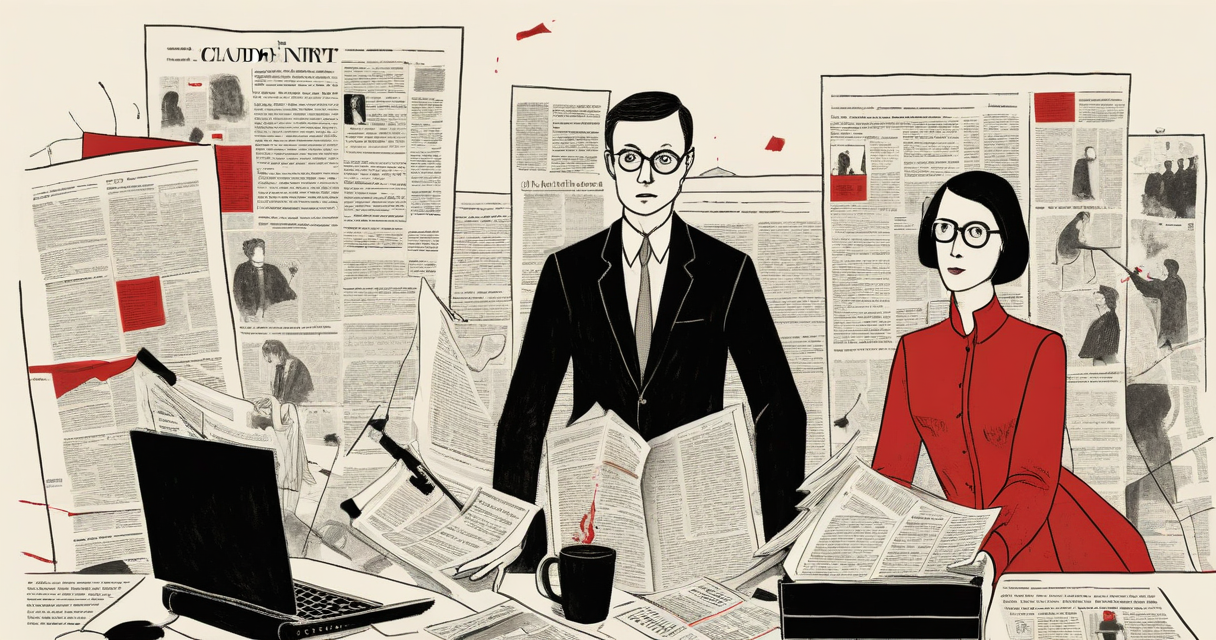
Anthropic collapsed Claude Cowork and Claude chat into a single product. Two entry points became one surface. Read as a release note, this looks like housekeeping: fewer tabs, one login, a cleaner menu. It is not housekeeping. The thing that moved is the boundary between talking to a model and running work through it, and that boundary is exactly where most teams bled time and lost state.
The practical answer: a unified Claude matters because it removes the copy-paste tax. Before the merge, you reasoned in one place and executed in another. You worked out an approach in chat, then rebuilt the same context inside a workspace to actually produce the files, run the tools, and ship the output. Every handoff dropped context. You re-explained the goal, re-pasted the data, re-stated the constraints the model had already seen ninety seconds earlier. Multiply that across a day and the cost is not friction, it is rework.
If you run AI inside a real workflow, treat this as an orchestration change, not a chat upgrade. The value is not a smarter model. The same weights sit underneath. The value is that reasoning and execution now share one context, one memory, and one set of tools, so the path from decision to artifact stops leaking. That single design choice is worth more to a working team than any single-turn quality bump, because it attacks the failure mode that actually shows up in production: state that dies at the seam between thinking and doing.
Underneath the interface, chat and Cowork solved two different problems. Chat gave you a conversational surface tuned for reasoning, drafting, and quick back-and-forth, with a context window that reset every time you opened a fresh thread. Cowork gave you a workspace with files, persistent tool access, and the ability to run multi-step jobs against real inputs. You reasoned in the first and operated in the second. The two never shared a spine, so the human became the integration layer, carrying context by hand from one into the other.
Merging them means the model now holds a continuous context across both modes. When you shift from discussing an approach to building it, the goal, the files, the prior decisions, and the tool outputs stay in scope. The system keeps the working state instead of forcing you to reconstruct it. That is the real mechanism: not a new capability bolted on, but the removal of a boundary that used to sit between the part of Claude that talks and the part that acts. Shared memory, shared file context, shared tool access, one addressable session.
That shift changes what you are actually configuring. You are no longer choosing between a chat product and a work product. You are running one system that spans the full arc from framing a task to producing the output, and that arc is a pipeline whether or not you drew it as one. Inputs, a reasoning step, a set of tool calls, an artifact, a checkpoint you can inspect. The merge does not invent that pipeline. It exposes it, and it makes the structure of your workflow the thing that determines whether the system holds up or falls apart.
The common read of this launch is convenience: one place instead of two, less clicking, a tidier product. Teams that stop at that read will use the merged Claude as a bigger chat window, pour everything into a single sprawling thread, and expect the persistent context to compensate for having no structure. It will not. A longer shared context with no defined inputs and no checkpoints does not remove chaos, it stores it. You get a session that remembers every half-formed instruction and contradictory correction you fed it, and the model carries that noise forward into the work.
The second mistake is trusting the seamlessness itself. When reasoning and execution live in one continuous surface, the moment where you used to sanity-check the output disappears. In the old split, the handoff from chat to workspace was annoying, and it was also a natural inspection point: you looked at what you were about to run before you ran it. Remove the seam and you remove that pause. The model reasons and acts in one motion, and an unverified assumption flows straight into a file, a commit, or a sent message with nothing standing between the guess and the artifact. Convenience quietly deletes your validation step.
What changed is not that Claude got easier to use. What changed is where the burden of structure now sits. In a two-product world, the seam between them forced a crude discipline on you. Unified, that discipline is gone, and the responsibility for defining clean inputs, explicit steps, and checkpoints moves onto you and the way you design the session. A merged Claude rewards teams that already think in workflows and punishes teams that think in prompts, because the same continuous context that carries good structure forward will carry sloppy structure forward with equal fidelity. The tool got simpler. The requirement to design your work got sharper.
Treat the unified session as a pipeline you are responsible for defining, because the product no longer defines it for you. Start every session by writing the contract before you write the request. Four things: the goal stated as a done condition, the inputs the model is allowed to use, the constraints it must hold, and the shape of the output. This costs two minutes, and it replaces the ninety seconds of re-explaining you used to pay at every handoff - except now you pay it once and the shared context carries it forward. The difference between a contract and a sprawling thread is that a contract is inspectable. When the output drifts, you can point at the thing it was supposed to satisfy instead of scrolling back through a conversation trying to reconstruct what you meant.
Break the work into named stages and put a checkpoint between reasoning and execution. The old seam gave you a free inspection point; you rebuild it deliberately by making the model stop and state its plan and its assumptions before it touches a file, runs a tool, or sends anything. “Here is what I am about to do and what I am assuming” is one line, and it is the line that stops an unverified guess from becoming an artifact. The working pattern is simple: reason, propose, then execute on approval. For anything irreversible - a commit, a sent message, a write to a shared system - the approval is not optional. That is not process for its own sake; it is the manual replacement for the pause the merge quietly removed.
Use structured outputs and validation wherever one step feeds the next. If a reasoning stage produces the parameters for a tool call, make it emit them as a defined schema - not prose - so the following stage consumes something you can check rather than something you have to trust. Then manage the persistence deliberately, because the shared context is an asset when it carries a clean contract forward and a liability when it carries every correction and dead end with equal fidelity. Scope one session to one job. When the job changes, start clean. Prune the thread when it accumulates noise. The persistent memory rewards you for keeping the working state clean and punishes you for treating it as a junk drawer that the model has to read every time it acts.
Take a weekly customer-health report, generated from raw usage data and sent to the account team. In the two-product world, you reasoned in chat about which accounts counted as at-risk and why, then rebuilt the whole thing inside Cowork to pull the usage files, run the thresholds, and produce the document. Every handoff re-pasted the metric definitions the model had already seen. Unified, it is one session that spans framing to output - and that is exactly where it fails if you pour it into a single undisciplined thread.
Here is the failure without structure. Midway through the conversation you refine the definition of at-risk, moving the churn-signal threshold from thirty days of inactivity to twenty-one. The model holds that correction. It also holds the three earlier half-statements where you were still thinking out loud and had not settled on anything. With no checkpoint between reasoning and execution, it computes, drafts, and - because you wired it to send - emails a report to the account team that silently applied the wrong threshold, or blended two definitions into one, with nothing standing between the guess and the inbox. The seamlessness deleted the exact moment you would have caught it in the old split, when copying the plan from chat into the workspace forced you to look at what you were about to run.
Now the structured version, same session, defined as a pipeline. Inputs are stated up front: the data sources, the metric definitions as an explicit block, the output template. Stage one reasons about the at-risk criteria and emits them as a small schema - threshold, window, signal - which you read and confirm in a glance. Stage two pulls the data and computes against that schema, not against whatever the model remembers from the conversation. A validation gate checks the computed numbers against the source rows and flags any account whose classification is ambiguous. Only then does stage three draft the report, and sending is a separate, explicit approval. The model still does all of it in one continuous context. The structure is what makes that continuity an advantage instead of a hazard - same tool, same weights, completely different reliability.
The merge is an orchestration change wearing the clothes of a UI cleanup. The model did not get smarter. The boundary that used to force you to structure your work got removed, and that boundary was doing real work. It carried a crude discipline you never had to design, and now you do. Read it as convenience and you will inherit the failure mode it exposes; read it as a shift in where the burden of structure sits and you can actually use it.
The practical consequence is a sorting. Teams that already think in inputs, stages, and checkpoints get a faster version of a workflow they already run, because the copy-paste tax is gone and their structure carries cleanly through one shared context. Teams that think in prompts get a longer thread that remembers their chaos with perfect fidelity and pipes it straight into production. Same product, opposite outcomes, and the variable is not the model - it is whether there was a design behind the session or just a conversation.
So do the unglamorous work. Write the contract before the request. Rebuild the inspection point the seam used to give you for free. Gate anything irreversible behind an explicit check. Scope your sessions and prune them when they fill with noise. None of this is about getting more out of Claude. It is about making sure the output that now flows out of a system that reasons and acts in one motion is output you actually verified before it left. The tool got simpler. Whether that simplicity produces work you can trust is now entirely a function of how you design the session.
Contains a referral link.
Keep Reading
 agentic benchmarks
The benchmark isn't your bottleneck
Qwen3.8 Max topped the agentic index, but a benchmark win is a signal to test against your own tasks, not a reason to migrate your automation.
 AI agent security
DayBreak doesn't make your systems vulnerable
A capable security model like DayBreak doesn't add new risk - it exposes that your agent controls were calibrated for a model too weak to exploit them.
 AI workflow design
Keep the hard part
AI doesn't erode your problem-solving skills-offloading the reasoning does. Any intelligence atrophies without use; the fix is design, not avoidance.
Latest on the Wire
Full wire →- A Self-Taught Builder Hits the Wall: Seemann on Programming After LLMsHacker News
- AI pentest agent found a live admin GitHub token in Baseten's public imageHacker News
- AI red-team firm's misconfigured evals caused real hacks — then blamed 'rogue' agentsHacker News
- Apple's Reference Image: cryptographically verified photos on iPhone 18 ProHacker News
New signal daily · RSS
Stay in the loop
New writing delivered when it's ready. No schedule, no spam.