The console gathers dust, then deletes your games
Sony's EU inactivity policy is license termination, not deletion. Purchase transferred access, not ownership, and Sony controls the condition.
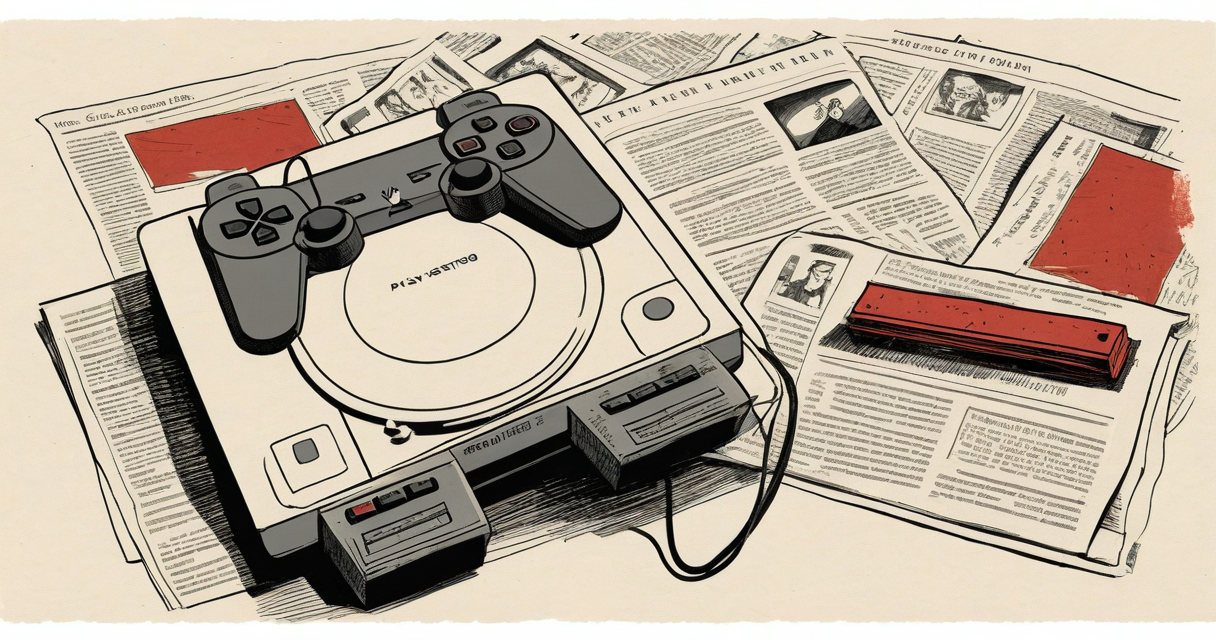
Sony’s EU terms allow PlayStation to delete every digital game attached to an account after three years of inactivity. State the classification first, because the classification is where this gets read wrong. This is not a security control. It is an account management tool. It operates on dormant digital game licenses, and it monetizes inactivity. That is the function.
The word deletion is carrying weight it should not carry. Nothing is being protected. No threat is being contained. The behavior is license termination executed against accounts that meet an inactivity condition. Sony holds the license. The user holds access to that license, and only while the account stays active. Three years of inactivity is the trigger Sony selected.
Given the business model, this is a predictable outcome, not an anomaly. Digital licenses that generate no activity are revenue already captured that now sits idle. An inactivity policy is the instrument that acts on that idle position. Whether Sony has executed deletions at scale is not confirmed. The permission to do so is stated, and the permission is the exposure.
The externally observable behavior is direct. A user pays for a digital game. The user retains access to that game while the account remains active. After three years without activity, that access can be removed. The purchased library is not a possession the user holds. It is access contingent on a condition the user does not set.
What failed is the assumption that purchase equals ownership. It did not. The transaction transferred a license, not the asset. The license is the boundary between the user and the game, and Sony sits on the enforcing side of that boundary. The user’s retained access was always conditional. The inactivity policy makes the condition explicit and enforceable.
Hold the line on what is stated. The policy applies to EU accounts and uses a three year inactivity window. Whether notice is given before deletion is not confirmed. Whether a reactivation or recovery path exists is not confirmed. The number of accounts exposed is not confirmed. What is confirmed is the control: inactivity permits termination of purchased licenses.
It failed because ownership was never the model. The storefront presents a purchase. The system delivers a license. Those are not the same instrument, and the difference is not cosmetic. A purchased good does not expire on inactivity. A license terminates on whatever condition the licensor writes into it. Sony wrote inactivity into it.
The enforcing party is the party that defined the condition. The user has no control over the inactivity window, the trigger, or the outcome. Control sits with Sony. When one party defines the condition, holds the license, and executes the termination, the user’s access is not owned. It is permitted. Permission can be withdrawn on the terms of the party that granted it.
This is where the business model and the policy align. Dormant licenses are a known state, and the policy is the tool built to act on that state. The design treats player-held value as a Sony-controlled asset, because in license terms it is one. That treatment exposes a stated gap: a lack of understanding of player rights and value. Anything beyond this is not confirmed. What is confirmed is that the library was never the user’s to keep. It was theirs to access, on Sony’s condition.
The failure is located at the account boundary. Access to every digital title routes through the account identity. The account state, active or inactive, is the only variable that determines whether that access holds. Sony defines what counts as active. Sony sets the three year window. Sony executes the termination. The user contributes nothing to any of those three positions.
Observable behavior confirms the concentration. A user pays. Access is granted against the account. The account carries an inactivity condition. When the condition is met, access can be removed. Every enforcement point sits on Sony’s side. The user holds the library only as a function of keeping the account active, and activity is measured by terms the user does not write.
This is why the control is effective for Sony and absent for the user. A control that one party defines, holds, and executes is not shared. It is unilateral. The user’s access was never protected by a boundary the user controls. It was permitted across a boundary Sony controls. Whether the termination has been executed is not confirmed. The capacity to execute it is stated, and capacity on one side with no counter-capacity on the other is the mechanism.
The pattern is structural. When a transaction is presented as a purchase but delivers a license, and the licensor holds both the condition and the enforcement, the resulting access can be withdrawn on the licensor’s terms. Ownership language on the storefront does not change the instrument delivered. The instrument is a license. The license carries whatever condition the licensor wrote into it.
Inactivity is one condition. The mechanism does not depend on which condition is selected. Any condition the licensor can define and measure produces the same result, because the enforcement sits on the same side as the definition. The three year window is a value. The structure holds at any value. Change the number and the mechanism is unchanged. The user still does not set the trigger and still cannot block the outcome.
The same mechanism appears anywhere access is granted against an identity the provider controls and revoked against a condition the provider defines. The provider holds the license. The provider measures the condition. The provider acts. The account is the point where all three meet. That convergence is the pattern. Access that converges on a single controlling party is not property. It is permission with a controlling party attached.
Correct the classification and the rest follows. This is not deletion in the security sense and it is not ownership in the consumer sense. It is license termination on a licensor-defined condition. Once that is stated plainly, the exposure is direct. The exposure is not the possibility that games are removed. The exposure is that the permission to remove them exists and sits entirely with Sony.
What must now be true for the user is a recategorization of the asset. The digital library is access, not possession. It holds while the account holds and while the condition is not met. Whether notice precedes termination is not confirmed. Whether a recovery path exists is not confirmed. Treating unconfirmed protections as present is the error. Absence of confirmation is a condition, not a reassurance.
Identity is the boundary, and here the boundary is owned by the counterparty. If a system permits an outcome, that outcome is available regardless of whether it has been executed. Sony wrote the permission. The permission is the fact. Scale, timing, notice, and recovery are not confirmed and must be treated as not confirmed. What is confirmed is the position: the library is access on Sony’s condition, and the condition is enforced from Sony’s side of the boundary. Plan from that, not from the word purchase.
Keep Reading
 digital rights
demand is not a control
Stop Killing Games gathered 13 million signatures and produced no EU law. The proposed approach lacked granular data access control and identity verification.
 github security
Nobody has to break into GitHub
GitHub incidents are feature abuse under valid credentials. The break is at the execution boundary, and standing scope is the real exposure.
 access-control
Nobody had to hack your meetings.
Over 180,000 tl;dv meetings were left open because access to recorded content was not conditioned on validated identity. What that failure exposes.
Stay in the loop
New writing delivered when it's ready. No schedule, no spam.