Springer Nature unpinned two papers, no log
Springer Nature removed two Max Planck studies. The real exposure is a research supply chain with no integrity log - the same trust gap as CI/CD poisoning.
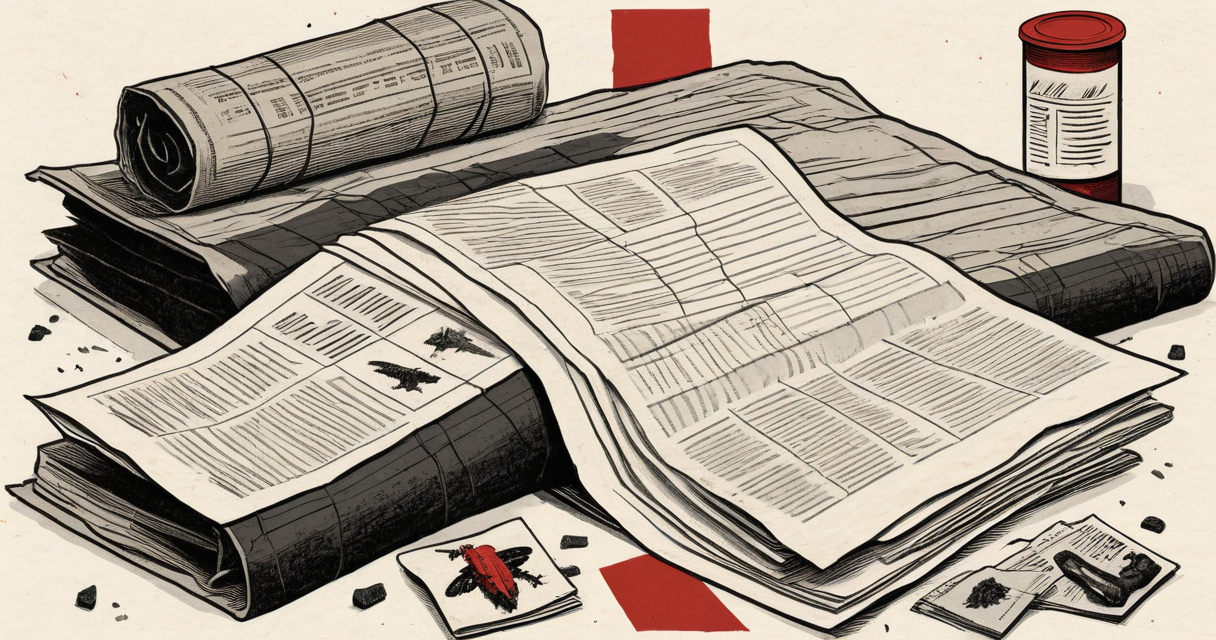
Springer Nature removed two studies authored by Max Planck researchers from its platform. The papers were published, assigned DOIs, indexed, and resolvable. Then the records changed state. The publisher’s language for this is editorial integrity. That language describes intent, not mechanism. The mechanism is a write to the canonical scholarly record, performed by the single entity that controls the dissemination node, with no append-only log that lets any downstream consumer verify what changed, when, or why.
That is a supply chain problem. Not a metaphor for one.
Treat scholarly publishing as a build-and-distribution pipeline, because structurally it is one. The author is the source. Institutional review and peer review are the build stage. The publisher is the registry. The DOI is the version pin. CrossRef and DataCite are the resolver. Scopus, Web of Science, PubMed, and Google Scholar are the downstream consumers that pull the artifact and cache its metadata. Every citation in every later paper is a dependency edge that pins to that DOI. The DOI is supposed to be immutable. Resolve it today, resolve it in ten years - the same object returns. That immutability is an assumption. Nothing cryptographic enforces it.
Look at how resolution actually works. A DOI is an indirection. It resolves through the Handle System to a URL the publisher controls, and the publisher decides what sits at the other end. Restore the paper, and the link resolves to the PDF. Withdraw it, and the same DOI resolves to a tombstone page, or to nothing. Content negotiation against the DOI returns whatever metadata the registry currently asserts. The identifier is stable. The thing it points to is entirely mutable, and the party holding write access is the party that benefits from the change being invisible.
The exploit primitive is control of the registry node. Whoever holds write access to the canonical record can mutate the artifact set. Add, alter, withdraw. A withdrawal is a yank. It is the scholarly equivalent of unpublishing a package that thousands of downstream builds pin to. npm demonstrated the blast radius in 2016 - left-pad, one maintainer, one unpublish, and a continent of builds broke because everything downstream trusted the registry to keep resolving. The research record has the same single point of mutation and weaker rollback.
Removal is the loud variant. The quiet one is substitution. Keep the DOI live, replace the content behind it. The version of record drifts while the identifier and the citation count stay frozen. Every paper that cited the original now points, silently, at something the authors did not write or a result that no longer says what it said. No 404. No broken link. No tombstone to trip an alert. That is stored data manipulation in its sharper form - the record reads as authentic because the channel that vouches for it is the channel that altered it.
This is the same class as CI/CD poisoning, and the comparison is exact, not loose. Poison a build pipeline and the malicious artifact ships signed, through the legitimate channel, with valid provenance metadata, to consumers who verify the channel instead of the content. Dependency confusion works because the resolver picks the attacker’s package and downstream trusts the resolver. Registry substitution works because the consumer pins a name and trusts the name to keep meaning the same thing. The scholarly pipeline has the identical trust topology - a central resolver, immutable-by-promise identifiers, consumers that never re-verify - and fewer integrity controls than a modern package registry ships by default.
MITRE has names for this. T1565.001, stored data manipulation - altering data at rest in a system of record to influence downstream outcomes. T1195, supply chain compromise - subverting a product or distribution channel before it reaches the consumer. T1199, trusted relationship - abusing the access of a party the victim already trusts. A publisher is a trusted third party by definition. Indexers ingest its feeds without independent verification. They trust the registry’s assertion that a record exists, or does not. That trust is the boundary. Whoever controls the boundary controls what the rest of the ecosystem accepts as true.
Whether this specific removal was malicious, coerced, erroneous, or legitimate editorial action is not confirmable from outside the publisher. That is not a hedge. That is the finding. The pipeline produces no evidence that would let an external observer distinguish a justified retraction from a silent suppression. Same state transition. Same downstream propagation. No attestation either way. When the mechanism cannot establish intent, intent stops being the interesting question. Capability is. The capability exists, it is centralized, and it is unlogged.
The pattern is familiar from code. CVE-2024-3094, the XZ Utils backdoor, CVSS 10.0 - a trusted maintainer position used to insert a controlled modification into a distribution channel, undetected for months because trust in the maintainer substituted for verification of the artifact. Codecov, 2021 - a modified bash uploader exfiltrated CI secrets from thousands of pipelines because the script was trusted by reference, not by hash. SolarWinds - a build system compromised so the signed artifact was malicious at the source. The common failure across all three repeats in the scholarly pipeline. The consumer verifies the channel, not the content. It trusts the registry because the registry has always been honest.
For a security audience this is not academic-politics trivia. The scholarly record is an upstream dependency for systems that never re-verify it. Systematic reviews and meta-analyses pull from it. Standards bodies and policy cite it. Threat-intelligence and risk models ingest it. Large language model training corpora scrape it wholesale. Mutate a node in that record and the change propagates into automated pipelines that treat published research as ground truth and never check resolution again. Data poisoning does not require a novel exploit when the authoritative source itself is mutable by a single party.
One more surface sits below the content layer: identity and metadata. Authorship, affiliation, ORCID linkage, funding statements, and the record’s relationship graph are all registry-side assertions. Mutate the metadata and the artifact can stay byte-for-byte intact while its provenance is rewritten - an author dropped, an affiliation altered, a correction backdated. ORCID binds a persistent identifier to a researcher, but the binding between that identifier and a given record is still asserted by the publisher, not proven by the author. The same trust boundary holds at every layer of the object, and at every layer the write is unlogged.
Now the telemetry, because that is where the gap is operational. A code supply chain has controls that produce evidence. Package registries publish immutable version logs. Sigstore writes signing events to Rekor, an append-only transparency log. Certificate Transparency does the same for TLS - Cloudflare and others run monitors that fire when a certificate appears for a domain that never requested one. The model is established. Mutation of a trusted record generates a tamper-evident, independently auditable entry. The record cannot be changed quietly, because the change is the alert.
The scholarly record has almost none of this. CrossRef stores metadata and supports Crossmark, a layer that can flag updates and retractions. Retraction Watch maintains a database of pulled papers. LOCKSS, CLOCKSS, and Portico preserve copies for continuity. These are real and they help. None of them is an append-only transparency log with independent verification. Crossmark depends on the publisher pushing the update. Retraction Watch depends on someone noticing and reporting. Preservation archives depend on the removal not predating ingestion, and on someone going to look. There is no Rekor for papers. Nothing fires the moment a DOI changes resolution. There is no SIEM for the canonical record. The defenders - and in this model the defenders are the entire downstream research community - are blind to the write at the moment it happens. They find out the way a quiet npm yank gets noticed. Something downstream breaks, and someone traces it back.
That is the detection gap stated precisely. The event that matters produces no signal at the layer that could act on it. Detection happens at the consumer, late, by side effect, with no chain of custody for what the record held before the change.
There is no patch boundary here in the CVE sense, because there is no code defect to version past. If Springer Nature restores both papers tomorrow, the structural exposure is unchanged. The artifacts are still unsigned. Resolution is still mutable by a single party. There is still no transparency log that would let a downstream consumer prove the record cited today is the record that existed yesterday. Restoration fixes the instance. It does not touch the primitive.
The residual exposure is the architecture. A pipeline that distributes high-trust artifacts to a global consumer base, pins them with identifiers it promises are permanent, and gives the consumer no cryptographic way to verify that permanence, is a pipeline whose integrity reduces to the honesty and the operational security of the central node. That is exactly the condition that made XZ, Codecov, and SolarWinds work. The node does not have to be malicious. It only has to be controllable - by an insider, a compromised credential, legal pressure, or error at scale. Control of dissemination is the asset. Right now that control sits at one node, and the node keeps no receipts anyone else can read.
CVEs don’t lie. This one has no number, and that absence is the part worth sitting with.
Keep Reading
 supply chain security
Editorial independence is a failed control
UK media failed to disclose defence sector ties in nearly 60 percent of cases. The disclosure gap is an information supply chain vulnerability - and it is exploitable.
CVE-2025-3891axios CVE-2025-3891: What the Advisories Don't Say About Immutable Images
CVE-2025-3891 in axios allows prototype pollution leading to RCE. This post reveals why deployed container images remain at risk even after patching, due to missing artifact provenance and immutable verification.
 broken access control
On 18 June, no hack - broken access control
Red-team breakdown of the OpenAI agent that reached Australian government Medicare files: broken access control, not a hack, mapped to MITRE ATT&CK.
Latest on the Wire
Full wire →- 12 Zigbee Sensors Put to the Accuracy TestHacker News
- ChatGPT mimics signatures of New Yorker cartoonists without permissionHacker News
- ClickFix Attack Exploits Browser Cache to Evasion Windows Run LimitsThe Hacker News
- Common Lisp Shines in the Age of AI Code GenerationHacker News
New signal daily · RSS
Stay in the loop
New writing delivered when it's ready. No schedule, no spam.