ShinyHunters dumps 94GB of 7-Eleven franchisee data
ShinyHunters leaked 94GB of 7-Eleven franchisee data after extortion refusal. Technical analysis of TTPs, info-stealer-to-SaaS pipeline, and franchise IT exposure.
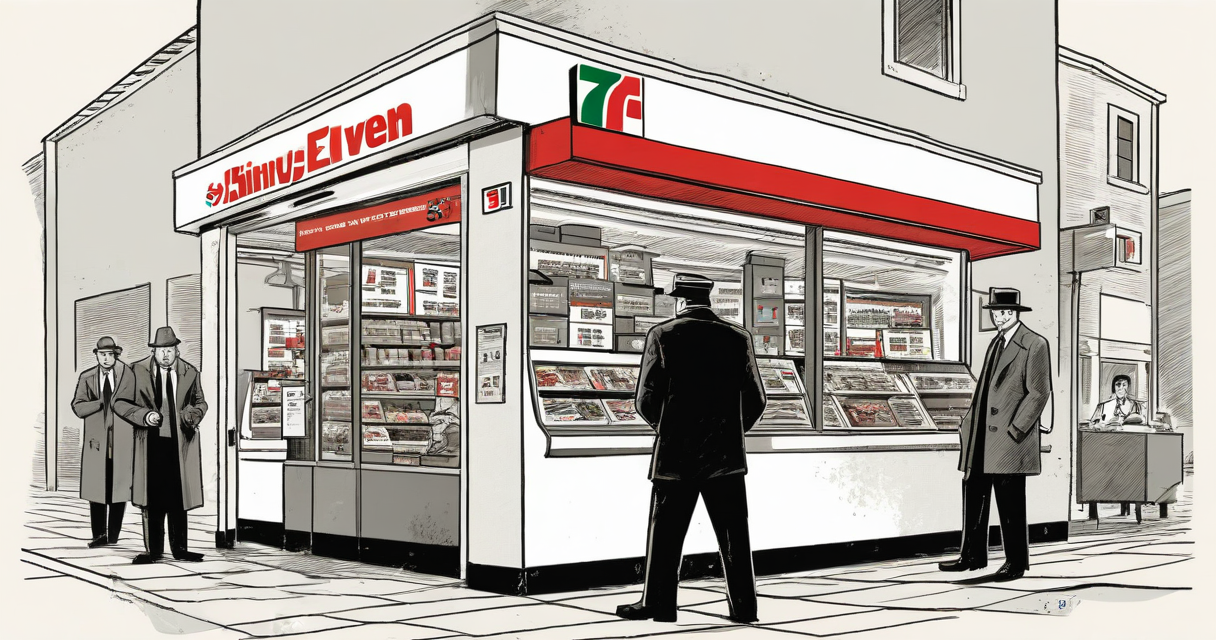
ShinyHunters published 94GB of data tied to 7-Eleven franchisee systems after the extortion demand was refused. The leak is the second half of a standard double-extortion play. Exfiltration first, encryption optional, public dump on refusal. The volume points to a database-tier compromise rather than endpoint collection. The franchisee scope - not corporate - is the operational detail that matters.
ShinyHunters is not a ransomware crew in the classic sense. The group operates as a data theft and extortion brokerage. Historical activity ties to Tokopedia, Wattpad, AT&T, Santander, Ticketmaster, and the broader cluster of Snowflake-tenant compromises catalogued in 2024 under UNC5537 by Mandiant. The pattern is consistent. Identify a credential-reachable data store. Pull the full table set. Stage on bulletproof infrastructure. Approach the victim with proof. Demand payment. Publish on BreachForums or its successor on refusal. Encryption is not part of the chain. There is no ransomware binary. There is no recovery negotiation. The leverage is the data itself.
The technical pattern behind the bulk of ShinyHunters-attributed 2024-2025 intrusions is credential reuse against SaaS tenants and cloud-hosted databases. The Snowflake cluster was the canonical example - info-stealer logs harvested from contractor endpoints surfaced single-factor Snowflake credentials. The attacker authenticated directly to the tenant, ran SELECT against high-value tables, and exfiltrated through the documented query interface. No exploit. No malware deployed on victim infrastructure. The activity blends into normal data analyst traffic from the perspective of the tenant. Mapping the TTPs - T1078 valid accounts, T1530 data from cloud storage, T1567.002 exfiltration to cloud storage. The intrusion does not require a CVE. It requires a credential and a permissive tenant.
The 7-Eleven franchisee posture is where the retail vertical specifics start to matter. A franchisee is not the corporate parent. The franchise model fragments IT ownership across hundreds or thousands of independently operated entities. Each franchisee may run its own point-of-sale stack, its own back-office reporting, its own payroll system. Corporate publishes minimum standards. Enforcement is contractual, not technical. The franchisee buys hardware, signs SaaS contracts, hires the local MSP that installs the systems. The result is a federation of small businesses operating under a brand, each with the security maturity of a small business. The corporate SOC has no visibility into most of it. The franchisee has no SOC.
A 94GB dataset from franchisee systems is consistent with an aggregated back-office or reporting database. The likely candidates are franchisee management portals - payroll, scheduling, inventory, financial reporting, employee onboarding. These systems sit above individual stores and consolidate operational data across the franchise network. They hold employee PII, tax identifiers, banking details for direct deposit, government identification scans for onboarding, supplier invoices, and in many implementations partial cardholder data despite PCI scoping intent. They are SaaS in most modern deployments. They authenticate franchisee operators with username and password, sometimes MFA, often not enforced at the per-tenant level.
The exploitation path that produces 94GB of structured franchisee data without a discovered CVE in the public chain is credential access into one of these portals. The credentials are sourced from info-stealer logs - Redline, Lumma, Vidar, StealC families collecting browser-stored credentials from infected operator endpoints. The logs are sold on Russian Market and adjacent marketplaces in packages priced per record. ShinyHunters and adjacent brokers buy in bulk, filter for high-value tenants by domain pattern, and test access. A franchisee finance manager’s laptop, infected at home through a cracked software bundle, surfaces a credential to the franchise management portal. The credential works. MFA is either not enforced for the tenant, satisfied through SMS that the attacker can bypass via session theft, or absent entirely for the role that holds bulk read.
From there the data movement is unremarkable. Authenticated session against the portal. Use the export functionality the application provides. Download CSV, XLSX, or JSON dumps of every table the role can read. Transfer to attacker-controlled S3, MEGA, or anonfiles. The bytes move over TLS to a SaaS endpoint the victim’s network treats as legitimate. There is no beacon. There is no Cobalt Strike. There is no encrypted C2 channel. The exfiltration looks identical to a finance manager running quarterly reports.
The extortion refusal as a publication trigger is the part defenders need to internalise. ShinyHunters’ business model depends on credible follow-through. A group that does not publish after refusal loses leverage against future victims. The 94GB dump is partly punishment for this victim and partly marketing for the next negotiation. The decision to refuse is a defensible position - paying does not guarantee deletion, and the data is assumed already sold or shared regardless. But the operational consequence is full public release. Detection engineering and IR planning need to account for the publication phase as a distinct event from the intrusion itself. The intrusion may have completed months earlier. The publication is when affected individuals, regulators, and downstream attackers receive the dataset.
Telemetry reality on this class of intrusion is where most retail franchisee networks are blind. The endpoint that was infected with the info-stealer is a franchisee laptop. The franchisee does not run an EDR with central visibility. If they run anything, it is consumer antivirus that did not flag the cracked installer that delivered the stealer. The authentication event into the SaaS portal occurs on the SaaS provider’s side. The provider sees a login from a residential IP or a commercial VPN exit - Mullvad, NordVPN, IPRoyal residential proxy. If the provider runs impossible-travel detection, it may fire. If the provider exposes audit logs to the tenant, the franchisee almost certainly does not consume them. The bulk export is logged at the application layer as a user action. No SIEM is reading it. The corporate parent’s SOC, if one exists, has no integration with franchisee-tier SaaS tenants.
What would have fired in a mature posture. Conditional access policies on the SaaS portal blocking login from non-corporate IP ranges. Phishing-resistant MFA - FIDO2, not SMS, not TOTP that can be relayed. Audit log ingestion into a SIEM with a rule for bulk export events outside business hours or from new geographies. Browser session token theft detection via access not constrained at runtime evaluation where the SaaS provider supports it. UEBA on the user account for deviation from baseline query volume. Info-stealer telemetry from the endpoint, which requires an EDR the franchisee was never going to deploy. The control gap is structural, not technical.
The threat intelligence read on ShinyHunters’ current operation. The group has moved from one-off breaches to a pipeline. Info-stealer log acquisition feeds credential testing against high-value tenants. SaaS-tenant compromise produces structured datasets that are easy to monetise. Extortion is the preferred monetisation path because it produces faster payment than dark-market resale. Refusal is met with publication, which damages the victim and recruits future compliance. The model scales. It is the dominant pattern in non-encryption extortion through 2025 and into 2026.
The retail franchisee implication is broader than 7-Eleven. The same architecture exists at every major QSR, convenience store, and retail franchise brand. Franchise management portals consolidate sensitive data across thousands of independent operators. Per-tenant security controls are uneven. Corporate visibility into franchisee tenants is partial or absent. The credentials that reach these portals live on laptops the parent company does not manage. The next 94GB dump is already staged on a credential someone bought last week.
Residual exposure after this incident is structural. The data is published. It will be mirrored, indexed, and folded into combolists for credential stuffing against unrelated services where franchisees and their employees reuse passwords. The PII in the dump enables targeted phishing against named individuals with verified employment details - high success rate for invoice fraud, payroll diversion, and W-2 style tax fraud where applicable. Regulatory exposure under the Australian Privacy Act notifiable data breach scheme applies if Australian franchisee data is in scope, which the 7-Eleven Australia footprint suggests is likely. SOCI obligations do not apply to convenience retail directly but the supply chain logic - fuel distribution, payment processing dependencies - pulls adjacent entities into scope of regulator attention.
The technical reality post-publication. No patch closes this. There is no CVE. The vulnerability is the trust architecture of franchise IT. Until franchise management portals enforce phishing-resistant MFA at the tenant level by default, audit log ingestion is mandatory not optional, and info-stealer telemetry from operator endpoints reaches a SOC with authority to act, the next dump is a credential away.
Keep Reading
 shinyhunters
Franchises leak because franchises federate
ShinyHunters leaked 94GB from a 7-Eleven franchisee after extortion refusal. The structural reasons franchise retail keeps ending up in leak listings.
 vulnerability-research
XBOW topped HackerOne in 2025 and fixed nothing
Vulnerability research rewards finding, not fixing. Exploitation tracks disclosure, not the flaw. Why attackers react to reported CVEs, and where telemetry goes blind.
 vulnerability-management
The copy runs past the allocation, again
Recurring dystopian tech vulnerabilities persist because defenders patch the CVE instance and never hunt the underlying mechanism. The inaction is the vuln.
Stay in the loop
New writing delivered when it's ready. No schedule, no spam.