Resignations are signals, not scandals
How to read a high-profile resignation from an AI safety lab like Anthropic - what it signals, what to ignore, and what to watch in the months after.
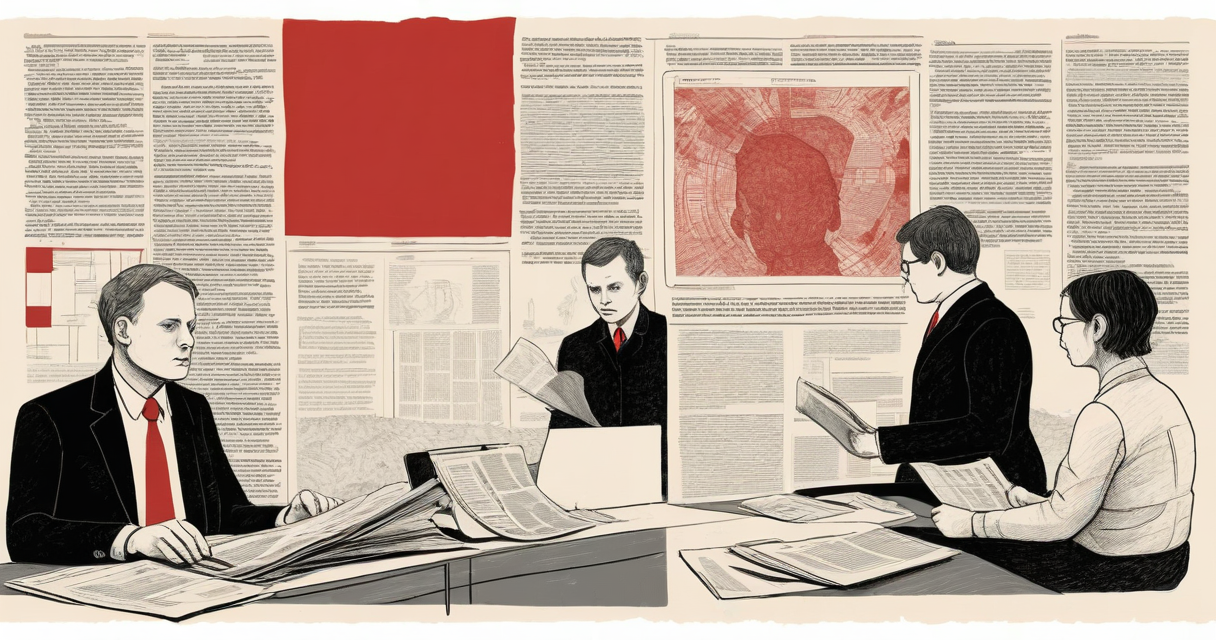
Anthropic exists because of a resignation. In 2021, a cluster of senior OpenAI people - including the siblings who now run Anthropic - left over disagreements about safety and direction, and stood up a competitor. So when someone resigns from Anthropic and uses the word “safety” on the way out, the event isn’t new. It’s the field’s founding mechanism running again, one layer down.
Most coverage treats each of these departures as a scandal or a betrayal. It’s neither. A resignation from a frontier AI lab is a signal about incentives, and you can read it the way you’d read any signal: check the source, strip the drama, separate what actually changed from what didn’t.
The genre itself is worth naming. “I resigned from [lab] today” has become a recognizable post format with its own conventions: gratitude to colleagues, a vague gesture at values, a line that stays carefully ambiguous about whether anything went wrong. The format exists because it works. It signals integrity, protects the writer legally, and gets shared. None of that tells you whether the underlying concern is real. A good format carries a real warning and an ordinary career move equally well, which is exactly why you have to read past it.
A resignation is a claim, not a verdict
When a researcher quits and posts about it, they’re making one testable claim: the gap between what this organization says and what it does got wide enough that I’d rather leave than stay. That’s it. They aren’t telling you the company is doomed, the models are dangerous today, or that staying would have been immoral. Those are inferences readers add.
The useful question isn’t whether the resignation was justified. It’s what this person had visibility into, and what they traded away to speak. A policy staffer and an interpretability researcher who both resign are reporting on completely different parts of the machine. Weight them accordingly. Jan Leike, who co-led OpenAI’s superalignment team, resigned in May 2024 saying safety culture and processes had “taken a backseat to shiny products.” That carried weight not because it was dramatic but because Leike ran the exact function he was describing. He then joined Anthropic, which tells you he was choosing between labs, not rejecting the industry.
Read the exit paperwork, not the exit post
The resignation letter is marketing. The off-boarding agreement is the data.
In 2024, reporting showed OpenAI’s standard departure paperwork included a non-disparagement clause backed by the threat of clawing back vested equity - criticize us after you leave and lose money you’d already earned. Daniel Kokotajlo left and publicly refused to sign, giving up equity to keep the right to speak. OpenAI walked the policy back only after it became public. That one detail told you more about the internal power balance than a dozen think-pieces, because it revealed the price the company was willing to charge for silence.
So when a high-profile resignation lands, look for the boring documents. Did the person sign an NDA. Are they still holding equity, which gives them a reason to stay quiet even after leaving. Did they say something specific or something vague. “I’m proud of the team and excited for my next chapter” is a legal position. “We shipped past a red line I helped define” is a claim you can check. The vaguer the language from a senior person, the more likely there’s paperwork shaping it.
Three readings, and how to tell them apart
A single resignation supports three very different stories, and the honest answer is usually that you can’t tell them apart from one data point.
First reading: the person was right, and the organization is drifting from its stated mission under commercial pressure. This is the story everyone reaches for, because it’s the most dramatic and it fits the founding-of-Anthropic template.
Second reading: the person lost an internal argument about pace or method, and reframed a normal disagreement as a moral stand on the way out. This happens constantly and looks identical from the outside. Smart people disagree about whether to slow down, and the side that loses sometimes leaves.
Third reading: nothing systemic at all - a specific manager, a comp dispute, burnout, a better offer - wearing safety language because that framing travels further online than “I was tired.”
You separate them with base rates and follow-through. One resignation is noise. A cluster inside sixty days from the same team is signal - that’s what made the 2024 OpenAI superalignment departures legible, when Leike and Ilya Sutskever left within days of each other and the team was effectively dissolved. Then watch what the person does next. Someone who starts a competing safety lab - Sutskever’s Safe Superintelligence - or refuses equity to keep speaking is behaving consistently with their stated reason. Someone who resigns loudly and takes a higher-paying seat at a lab with weaker commitments just told you the safety framing was packaging.
The gravity that no resignation changes
Every frontier lab, including the safety-branded ones, runs on the same physics: training a frontier model costs hundreds of millions of dollars per run, and that money comes from cloud providers and investors who expect a return. Anthropic has taken billions from Amazon and Google. OpenAI is fused to Microsoft. Compute is the leash, and whoever owns the data centers owns a vote on the roadmap. That capital doesn’t make the safety work fake, but it sets the direction of the current everyone is swimming against.
A resignation is one person deciding to stop swimming. It changes the roster. It doesn’t change the current. This is why the “was the resigner right” debate misses the point - even if they were completely right, the structural pressure that produced the conflict is still funded, still staffed, and still shipping. The next person in that seat faces the identical trade-off. For a departure to matter, it has to change an incentive, not just vacate a chair. Most don’t.
What it does to the safety field
Here’s the structural problem a high-profile safety resignation exposes, whoever turns out to be right in the specific case: the people most qualified to audit frontier AI almost all work for the handful of companies building it.
There’s no large, well-funded, independent bench. Government evaluators are understaffed and behind on tooling. Academia can’t afford the compute. Public bodies like the UK’s AI Safety Institute exist, but they’re small next to the labs and depend on those labs for model access. So the field’s safety knowledge lives inside three or four companies, protected by NDAs, and the main way any of it reaches the public is when someone gets angry enough to quit and careful enough to say something without getting sued. That’s a terrible information architecture. It means the public learns about internal safety disputes through the least reliable channel available - a departing employee, constrained by paperwork, at their most emotional.
Every departure also concentrates the field further. When a safety researcher leaves Lab A, they usually land at Lab B, start their own lab, or join a nonprofit that depends on the labs for access and funding. The talent doesn’t leave the ecosystem; it circulates inside it. Resignations that feel like accountability often just reshuffle the same few hundred people across the same few buildings. The incentives that produced the disagreement stay put. Only the person moved.
This is why external oversight keeps getting proposed and never quite arrives. You can’t build an independent auditor out of people who all need the labs to hire them next. Every credible safety expert is either currently inside, recently inside, or hoping to get back inside. A resignation briefly breaks that dependence - for a few weeks the person owes nobody anything - which is exactly why the honest ones tend to say the most in the first month and go quiet after, once the next role and its paperwork arrive.
What to actually watch
If you want to know whether a resignation matters, ignore the post and track five things over the months after it.
Whether the specific safety function survives. When Leike left, the real question wasn’t his feelings - it was whether OpenAI’s superalignment work continued or got absorbed and quietly shrunk. It got dissolved. That was the outcome that mattered.
Whether others follow within a quarter. Clusters are signal. Solos are usually just life.
Whether the company changes any policy the person named, or only its messaging. Watch for concrete moves - a published evaluation, a governance change, a board seat - against a blog post reaffirming values.
Whether the departing person keeps both their equity and their silence, or trades one for the other. That tells you how much they actually believe what they said.
And whether anything the resignation revealed becomes independently verifiable. A claim about model capabilities or a broken commitment either gets corroborated by documents and other insiders, or it stays one person’s word. Both are worth noting. Only one is worth acting on.
A resignation from a leading AI lab is worth attention for one reason: it’s a rare moment when the inside of an otherwise closed system becomes briefly visible. Use the visibility. Read the paperwork, count the follow-ons, check what structurally changed. Then go back to watching the thing that actually decides outcomes, which was never the resignation - it’s whether anyone outside these companies is ever allowed to check their work.
Contains a referral link.
Keep Reading
 cybersecurity
A helpful AI agent cannot be a private one
Meta's Muse personal AI agent is only useful because it reads your messages, contacts, and habits. What that access costs your privacy and safety.
 AI safety
Open problems are running out
Terence Tao calls open math problems a non-renewable resource. Why AI mining them threatens encryption, AI safety benchmarks, and how to respond.
 AI safety
You can't reset your genome
AlphaGenome Atlas makes genomic prediction cheap and fast, but a genome can't be rotated like a password - reshaping AI safety and data ethics.
Stay in the loop
New writing delivered when it's ready. No schedule, no spam.