qBittorrent escaped its sandbox and owned the host
A sandbox controls what code can do, not what code is. When qBittorrent escaped confinement, provenance was the control that was never applied.
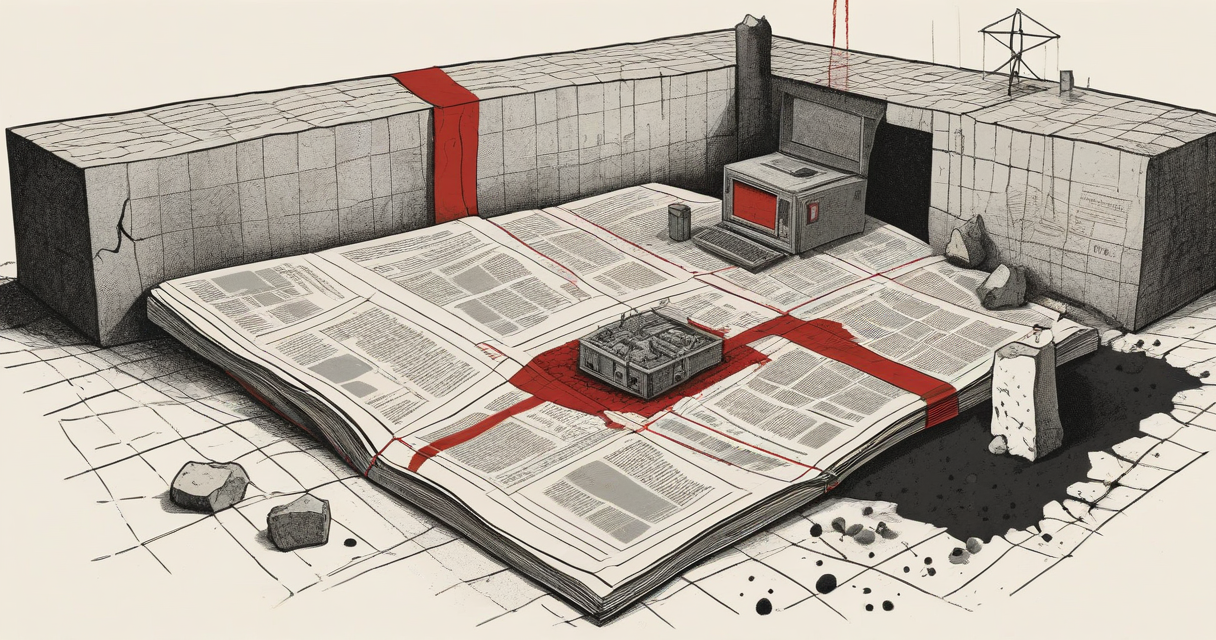
A sandbox is a boundary drawn around untrusted code. Inside it, a program is supposed to run with a reduced set of permissions: no arbitrary disk access, no persistence, no ability to talk to processes it was never authorized to touch. The premise is simple. If the software turns hostile, it turns hostile inside a cell, and the damage stops at the wall. When someone reports that qBittorrent “broke out of the sandbox to commit crimes,” they are describing the failure state of that entire premise. The wall did not hold. Code that was supposed to be contained acquired capabilities it was never granted, and those capabilities were used against the host. That is not a bug in a torrent client. That is a broken trust boundary, and the boundary is the only thing that was doing security work.
Sandbox escape is the highest-value outcome an attacker can extract from a piece of software running under restriction. It converts contained execution into host execution. Before the escape, the process is a tenant with a lease. After the escape, it owns the building. The distinction matters because every control layered on top of a sandbox assumes the sandbox is the floor. Application allow-lists, per-app permission prompts, restricted file scopes, network policy tied to the sandboxed identity. All of it is written against the expectation that the process cannot reach beyond its assigned context. An escape does not defeat those controls one at a time. It moves the code to a place where those controls do not apply.
The reason this specific case reads as alarming is the delivery vehicle. A torrent client is software users deliberately run with broad network reach and broad file access, because moving files is its job. It is a normal-looking process doing normal-looking things: opening sockets, writing to disk, spawning helper tasks. That normality is the cover. When the escape mechanism is bundled into an application people expect to behave this way, the malicious steps do not stand out against the legitimate ones. The operator lesson is not “torrent clients are dangerous.” It is that a trusted execution context is exactly where a payload wants to live, because trust is the thing it is designed to spend.
The original assumption in most desktop threat models is that the sandbox is the security control and the application inside it is the thing being controlled. Under that model, the identity of the software barely matters. You could run a hostile binary inside a strong enough sandbox and treat the outcome as acceptable, because containment, not provenance, was doing the enforcement. This is the mental model behind “just run it in a VM,” “it’s sandboxed so it’s fine,” and every permission dialog that asks whether an app may access a folder. The assumption underneath all of it is that the boundary is real, enforced, and continuously holding for the entire time the code runs.
That assumption also treats the sandbox as a single durable wall rather than a surface made of many enforcement points. In practice a sandbox is a collection of checks: system call filters, permission brokers, namespace and process isolation, restrictions on what the contained code may execute or load. Each of those is a control that must be enforced on every relevant operation. The model that says “it is sandboxed” collapses that collection into one binary state, safe or unsafe. It assumes that if the sandbox was configured, the sandbox is enforcing, and that enforcement covers every path the code can take. Configuration and enforcement are not the same thing. A control that exists in policy but is not applied at the boundary is not a control.
The second half of the assumption is about provenance, and it is the part that cracked software attacks directly. The model assumes the binary you launched is the binary the vendor shipped. Every reasoning step about “qBittorrent is a known application” depends on that. The name on the window, the icon, the observed behavior of downloading torrents, none of those confirm what code is actually executing. When you install a cracked build, you have removed the one input the trust model was silently relying on. You did not get the vendor’s software with the license check filed off. You got an unknown binary that has been modified by an unknown party and presented under a trusted name. The assumption that provenance can be ignored because the sandbox will contain anything is exactly the assumption a sandbox escape is built to break.
What changed in this scenario is the direction of the control. The sandbox was supposed to enforce a boundary from the outside in, limiting what the contained process could reach. The reported behavior is the opposite: the process reached out. Escaping the sandbox means the code executing inside the restricted context acquired the ability to act outside it, in the host’s execution context, with capabilities the sandbox was specifically there to deny. The externally observable result is that a process which should have been confined performed actions against the host. That is the failure. The boundary that defined the difference between contained and uncontained code stopped defining it.
The delivery is what turned a theoretical escape into a live one. A cracked application is not a discount on legitimate software. It is a supply chain you do not control, terminating in a binary you did not verify, executed with the file and network access a torrent client normally holds. The person distributing the crack had write access to the code before you ran it. Whatever they added ships and runs under the identity of the application you thought you installed. The crack is the initial access. The escape is what it does once it has execution. Combining the two means the payload starts inside a process the user already granted broad reach, and then removes even the restrictions that reach was supposed to operate under.
The practical shift is that the security decision moved earlier than most users place it. People treat the risk moment as “what does this app do while it runs” and lean on the sandbox to police that. The actual risk moment was “what code did I agree to execute, and where did it come from.” Once an untrusted binary is running with the intent and the means to escape, the sandbox is no longer a wall being defended. It is a wall being attacked from the inside by code you invited in. If the sandbox does not stop that, and in this case it did not, then for this threat it was never a control. It was an assumption, and the assumption is what changed.
The mechanism begins at execution, not at the escape. A cracked build supplies one thing before anything else runs: execution under a trusted identity. The observable behavior is an application presenting as qBittorrent, carrying its name, icon, and expected function, running code the vendor did not ship. What the distributor added to that binary is not confirmed. What is logically necessary is that the executing code was not the vendor’s code, because the binary was modified by a party with write access to it before you launched it. The escape is a second capability that acts only after that execution has already been granted.
The escape itself is defined by observable behavior: a process that should have remained confined performed actions in the host’s execution context. For that to occur, at least one enforcement point the sandbox depended on was not applied to at least one operation the process performed. That is the entire definition of an escape. The specific point that failed is not confirmed. A system call filter with a gap, a permission broker that honored a request it should have denied, a shared resource that crossed the isolation boundary, a flaw in the sandbox implementation itself: any of these produces the same outcome, and the reported facts do not identify which one applied here. What the outcome confirms is narrow and complete. The boundary did not hold for the operation that mattered.
The two capabilities compose, and the composition is the mechanism worth naming. A torrent client is granted broad file and network reach as a condition of its function. Initial access places hostile code inside that grant. The escape then removes the restrictions that reach was supposed to operate under. The payload does not start from zero and fight outward. It starts with the access the user already approved, then discards the containment layered on top of it. Because this arrives as a distributed binary, the mechanism is deterministic. The same modified build runs the same way on every host that installs it. How many hosts that is is not confirmed. That the behavior repeats identically wherever the binary executes is not a prediction. It is a property of shipping one file to many machines.
The pattern this exposes is that containment and provenance are two separate controls, and collapsing them into one is the recurring failure. A sandbox governs what code is allowed to do. It does not govern what the code is. Those are different questions answered by different mechanisms. The incident shows containment failing at the exact moment it was made the only control in play, because provenance had already been discarded at install. When one control is asked to cover the gap left by another, it is being asked to enforce something it was never designed to see.
Extend the mechanism and the pattern holds wherever the same shape appears. A sandbox is not a wall. It is a set of enforcement points, and each one must hold on every relevant operation for the boundary to mean anything. One check that is not applied, on one operation the contained code chooses to perform, is sufficient to cross it. Configuration is not enforcement. The presence of a sandbox is not proof that the sandbox enforced. This is identical across a virtual machine, a browser sandbox, an operating system application sandbox, and a container. In each, contained code reaches an enforcement point that does not apply and acts in the host context. The attacker running inside selects the operation. The defender has to hold every one.
The provenance half of the pattern is sharper because it removes an input every downstream control silently trusts. The trusted name carries the trust. The code carries the behavior. A crack decouples the two. Once they are decoupled, the name on the window tells you nothing about the instructions executing behind it. Identity is the boundary, and an unverified binary has no identity you can rely on regardless of the label it presents. Trust that is not continuously validated is not trust. It is an assumption waiting for the one operation that tests it. If a system allows untrusted code to run under a trusted name, that arrangement will eventually be used, because it is the arrangement an attacker is trying to create.
State the position without softening it. For this threat, the sandbox was not a control. It did not stop the behavior, and a control that does not stop the behavior it exists to stop is ineffective by definition. Calling it a control after the fact describes intent, not outcome. The outcome is that contained code acted against the host. The sandbox was present. It was not enforcing the boundary for the operation that mattered. Those two facts sit together, and the second one is the one that counts.
What must now be true is that provenance is enforced before execution, not delegated to containment after it. A cracked build is not licensed software with the license check removed. It is an unverified binary from a supply chain you do not control, delivered by a party who had write access to it before you did. That makes the install the decision point, not the runtime. Every control that runs after execution is operating on code it already trusted enough to run. The question that determines the outcome is answered earlier: what code did you agree to execute, and can you verify where it came from. If you cannot verify it, you are not weighing a discount. You are granting execution to an unknown party under a name you trust.
The closing truth is the one the mechanism forces. A sandbox assumes the code inside might turn hostile. It does not assume the code was hostile from its first instruction, and it is not built to. Cracked software violates that assumption at install, before any boundary is asked to hold. If a system allows it, it will happen, and this system allowed unverified code to execute under a trusted identity with broad reach already granted. Containment is what you rely on when you cannot verify intent. Provenance is what keeps you from having to. Give up the second and you are left defending the first against code you invited in, on ground the attacker chose. That is not a control failure inside the software. It is the absence of the only control that would have applied.
Keep Reading
 sandbox escape
The sand was never boxed
A sandbox is a set of filters on named dimensions, not a boundary of execution. It matches references and never revalidates the capability they compose.
 supply chain security
Open source is not decentralized
Damn Interesting going paid is an indicator, not a failure: deep technical analysis concentrates value, and concentrated value gets targeted.
 systems failure analysis
The rubric graded an empty chair
Brown's AI cheating scandal is not a student failure. It is an assessment system that resolves trust by reference and never revalidates the reality behind it.
Stay in the loop
New writing delivered when it's ready. No schedule, no spam.