OpenCV 5.0 made adversarial perturbations transferable
OpenCV 5's bit-exact numerics and expanded encoder control shrink the attacker's modelling error against deepfake detectors. The exposure is structural.
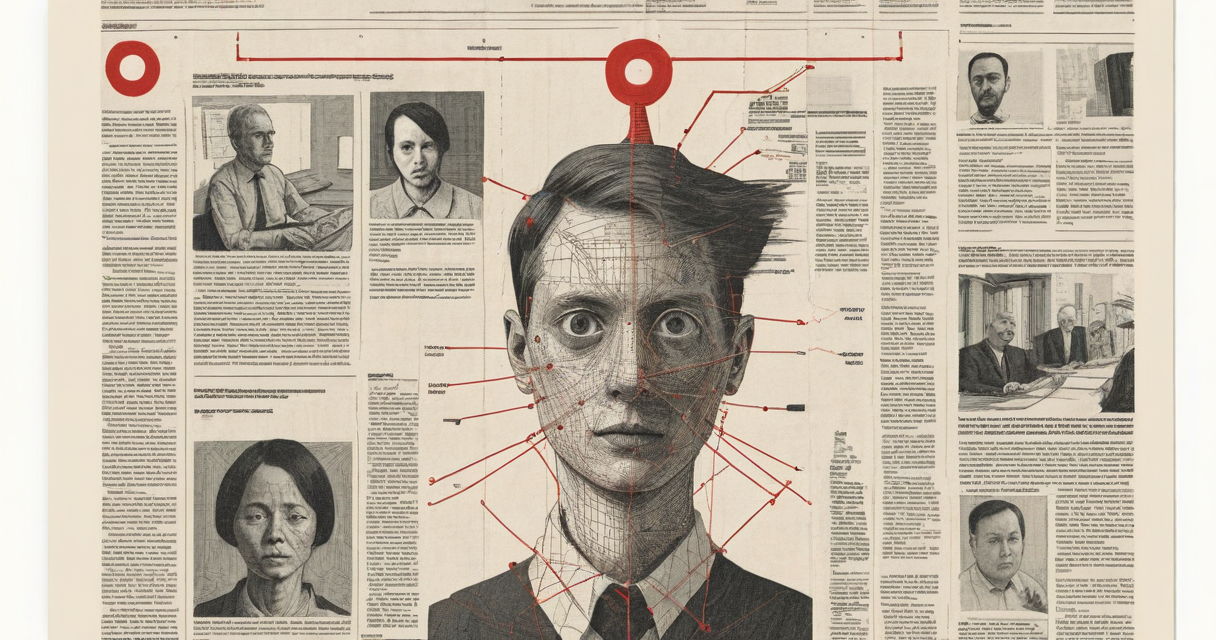
OpenCV 5.0 shipped. New image processing pipeline. Expanded DNN module. GAPI graph backend reworked. SIMD acceleration on AVX-512 and ARM SVE. The release notes read as a performance upgrade. The threat model reads differently. The same precision that improves inference improves the gradient signal an attacker needs to craft adversarial inputs that survive the preprocessing pipeline. MITRE ATLAS AML.T0043, craft adversarial data, becomes cheaper. Detection systems built on OpenCV 3.x assumptions will not catch what OpenCV 5.x makes practical.
The relevant change is not one CVE. It is the surface. OpenCV 5 expands the supported colour space conversions, adds higher-precision floating point paths through resize and warp, and tightens the bit-exact behaviour of cv::resize across backends. Bit-exact resize matters because adversarial perturbations are sensitive to resampling. A perturbation generated against a bilinear downsample at fp32 used to die when the production pipeline ran a different OpenCV build that rounded differently. With bit-exact behaviour standardised, the perturbation now transfers. The attacker no longer has to model the defender’s exact build. The library does that work for them.
The bug class here is not memory corruption. It is the integrity assumption built into static image analysis. CWE-1039, automated recognition mechanism with inadequate detection or handling of adversarial input perturbations. CWE-345, insufficient verification of data authenticity. Neither has a CVSS score because neither is a single CVE. They are properties of how the pipeline is composed. The OpenCV change does not introduce the weakness. It lowers the cost of reaching it.
The attack primitive is gradient-aligned perturbation against the preprocessing pipeline. The defender’s deepfake detector ingests an image, runs cv::imdecode, normalises through cv::resize and cv::cvtColor, hands a tensor to a CNN, and returns a score. The attacker enumerates that chain, replicates it locally against OpenCV 5.0 with the same flags, and runs projected gradient descent against the composite function. Each step is bit-identical to what the defender will execute. The perturbation lands inside the L_inf ball the detector tolerates, the resampling preserves it, and the classifier flips. The attacker did not need to compromise the detector. They needed to model it. OpenCV 5 made the model exact.
Metadata-based detection collapses earlier. Detectors that flag synthetic media on EXIF inconsistency, JPEG quantisation table fingerprints, or PRNU residuals were already brittle. OpenCV 5’s expanded imwrite control surface includes finer-grained JPEG and WebP encoder parameters, alignment with libjpeg-turbo 3.x quantisation matrices, and explicit chroma subsampling control. An attacker rendering a synthetic frame can now match the quantisation signature of a target camera model byte-for-byte through OpenCV’s encoder, then re-encode through the same pipeline a phone would have used. The forensic tell that used to live in mismatched quant tables disappears. MITRE ATT&CK T1027, obfuscated files or information. The obfuscation is the file looking native.
Deepfake detectors that rely on frequency-domain artefacts face a parallel problem. The DFT and DCT paths in OpenCV 5 are higher precision and exposed through the GAPI graph. An attacker building a counter-forensic post-processing chain can now reproduce the defender’s exact spectral analysis pipeline as a differentiable graph and optimise the generated frame against it. The output is a synthetic image whose mid-frequency residuals match a real camera’s noise distribution because the attacker minimised the divergence directly. This is not novel research. Goodfellow’s transferability work is a decade old. What is new is that the production library that defenders and attackers both pull from now agrees on numerics down to the last ULP.
The DNN module change matters separately. OpenCV 5’s DNN backend integrates more tightly with ONNX Runtime and exposes additional quantised inference paths. Defenders running int8 quantised detectors inherit known quantisation-aware attack literature. Quantised models have wider decision boundaries at the quantisation grid points. Perturbations aligned to those grid points cross the boundary with smaller L_inf budgets. A defender who upgrades a fp32 detector to an int8 OpenCV DNN pipeline for inference speed has, without instrumentation, expanded the attacker’s feasible perturbation set. AML.T0015, evade ML model.
The exploit path against a deployed detection system follows a predictable shape. The attacker pulls the defender’s public model card or scrapes a SaaS endpoint to enumerate the preprocessing contract. Resize dimensions, interpolation flag, colour space, normalisation constants. They reconstruct the pipeline with cv::dnn::blobFromImage or the GAPI equivalent. They run a transfer attack from a surrogate model trained on the same architecture family. They iterate with momentum iterative FGSM or AutoAttack against the surrogate, then validate against the live endpoint with a budget of queries that stays below the rate limit. The perturbation that survives goes into production. The whole chain costs less than a day of GPU time. T1190 is not the right mapping. There is no vulnerability exploited in the CVE sense. There is a model boundary crossed by design.
Real-world precedent is established. Researchers at the University of Chicago demonstrated Fawkes-style perturbations transferring across MTCNN preprocessing variants in 2020. Microsoft’s deepfake detector was shown to be evadable by Carlini and Farid in 2020 using gradient methods against the preprocessing pipeline. Meta’s own SimSwap detection work documented the transferability problem in the public literature. None of these required novel cryptographic breaks. They required modelling the pipeline. OpenCV 5 reduces the modelling error.
Telemetry on this attack class is sparse to non-existent. EDR does not see it. The malicious artefact is an image file. It does not execute. It does not touch LOLBins. Sysmon Event ID 1 does not fire because no process spawns. Event ID 3 records the network transfer of the image if the destination is monitored, but the payload is a valid JPEG. SIEM correlation rules built on file hashes are blind because every adversarial image is unique. WAF inspection of image uploads inspects MIME type and file structure. The file is structurally valid. The L_inf-bounded perturbation is below human perceptual threshold and below most automated quality gates.
Detection that does work lives at the model layer. Input transformation defences - randomised resize, JPEG re-compression at random quality, bit-depth reduction - break perturbations that were optimised against a bit-exact pipeline. The cost is detector accuracy on benign inputs. Logit-based out-of-distribution scoring flags inputs whose softmax distribution is anomalously confident or anomalously flat, which captures a subset of adversarial cases. Query-pattern analysis at the API boundary flags clients whose submissions show gradient-walk characteristics - small L_p-bounded variations around a base image, sequential queries with monotonically improving confidence scores. None of these are standard SOC telemetry. They live in ML platform observability that most security teams do not own.
The network layer sees nothing useful. TLS terminates at the inference endpoint. The payload is an image. Zeek file extraction logs the transfer but cannot adjudicate adversarial intent. JA3 fingerprints identify the client library, which an attacker spoofs trivially. The detection gap is structural. The attack lives inside a tensor and the tensor is delivered as a normal upload.
The post-upgrade reality for defenders running OpenCV 5 in detection pipelines is this. Bit-exact numerics increase attack transferability. Expanded encoder control surfaces shrink the metadata forensics signal. Higher-precision spectral paths give attackers a differentiable model of the defender’s frequency analysis. Quantised DNN inference paths expand the feasible perturbation set. None of this is a CVE. None of it appears in vulnerability scanners. The patch boundary does not apply. There is no version to roll forward to that closes it. The exposure is the design of the pipeline, and the design assumes the input is honest.
Residual exposure post-upgrade is concentrated in any production detector whose preprocessing contract is public, whose model architecture is known or surrogated from a public family, and whose API tolerates query volumes sufficient for iterative attack. That covers most deployed deepfake detection in 2026. The work to close it is not a library upgrade. It is randomised preprocessing, query budgeting, adversarial training against gradient attacks bounded to the defender’s actual transformation set, and model-layer telemetry that SOC teams will need to start ingesting. The OpenCV release is not the threat. It is the acceleration of one. The detectors built on the assumption that the pipeline numerics were a defender’s secret no longer have that secret.
Keep Reading
 adversarial-ml
MITRE already filed your detection bypass as AML.T0015
ML malware detection is a deterministic classifier with a mappable decision boundary. Attackers exploit its learned bias. That demands more engineering.
 credential-exposure
One grep, full repo access
A security camera shipped a full-scope GitHub PAT in its login page bundle. The credential exposure, supply-chain exploit path, GitHub audit-log telemetry, and why rotation - not removal - is the only fix.
 denial-of-service
Your image parser is a remote kill switch
Codex Micro's unvalidated image upload endpoint decodes attacker-controlled rasters in-band with a check-then-act race, enabling CWE-400/CWE-770 resource exhaustion.
Stay in the loop
New writing delivered when it's ready. No schedule, no spam.