One million passports now sit in the open
One million passport records exposed online: a board-level view of identity-layer risk, control failure, and the conditions leadership must now enforce.
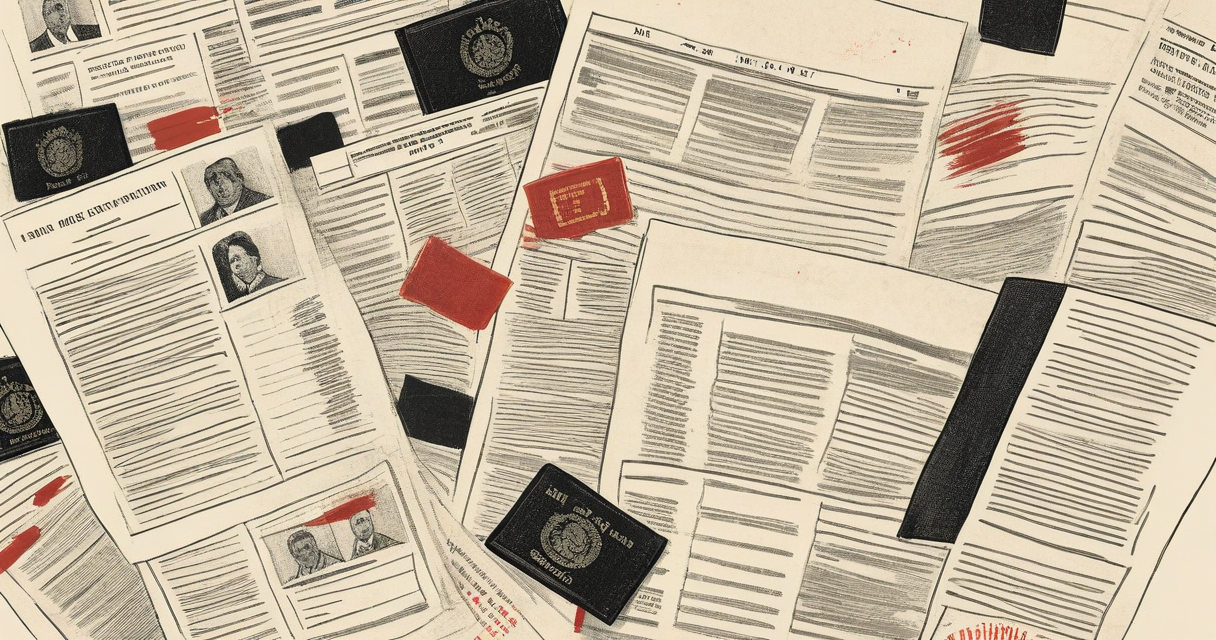
Approximately one million passport records have been exposed online. That single fact is the entire basis of this brief, and it is sufficient. A passport is not an ordinary data element. It is a state-issued anchor of identity, the document against which border control, financial onboarding, and a range of identity verification systems resolve the question of who a person is. When one million of these records surface in an uncontrolled online setting, the exposure does not sit within one system. It sits at the layer the organization and its counterparties rely on to establish trust.
The Board should treat this as an identity-layer event, not a routine data incident. The value of a passport record is durable. Unlike a password, it cannot be rotated, and unlike a payment card, it cannot be reissued at scale on demand without significant cost and disruption to the individuals involved. The outcome indicates that a set of these records is now outside the boundary that was meant to contain them. What that means for national security, for border control protocols, and for the reliability of downstream identity checks is the substance of what leadership must now assess.
Why it matters at this table is straightforward. The exposure creates business risk in three forms the Board is accountable for: liability tied to compromised travel documents, reputational consequence if the organization is connected to the records or the systems that relied on them, and operational risk to any process that treats a passport as sufficient proof of identity. None of these require further technical detail to be understood. They require a decision on how the organization measures and constrains its exposure from this point forward.
The operating assumption behind most identity verification is that a valid passport record, presented and matched, is a trustworthy signal. Border control protocols, account onboarding, and a wide set of verification systems are built on the premise that possession and correct presentation of these details indicate a legitimate holder. That assumption is convenient because it allows verification to be fast and largely automated. It is also the assumption this event places under direct pressure.
The organization has operated, as most do, on the understanding that the confidentiality of passport data was being enforced somewhere along the chain of custody, and that the boundary around those records was holding. That understanding was not tested at runtime until now. The outcome indicates the boundary did not hold for the exposed set. Access to those records was not constrained to the parties that were supposed to hold them. No evidence of enforcement preventing that exposure has been identified from the available information.
It is important to state the limit of that claim precisely, because the Board will be right to challenge anything beyond it. The event tells us what the system allowed, not why it allowed it. What was not prevented at runtime is that one million passport records became accessible online. The internal cause, the point of custody at which the boundary was crossed, and the ownership of that boundary cannot be determined from the available information. This brief does not assert them, and the Board should be cautious of any account that does before the assessment is complete.
What was exposed is defined by the access achieved: passport data, at a stated scale of approximately one million records. The assets involved are the identity records themselves and, by extension, the verification and border control systems that treat those records as authoritative. The potential consequence is that these records can be used to impersonate holders, to satisfy identity checks that rely on passport data, and to undermine the assurance that verification systems are designed to provide. Access defines exposure, and the access here is to identity itself.
What remains unknown is substantial, and stating it plainly is part of maintaining credibility with this Board. Whether the exposed records were copied, retained, or acted upon beyond their appearance online is not confirmed. The duration for which the data was accessible remains unconfirmed. How many parties accessed it cannot be determined from the available information. Attacker intent, follow-on use, and any specific downstream consequence to individuals or to the organization are not established by the facts in hand. The presence of one million records in an uncontrolled setting is confirmed; the extent of harm arising from it is not.
Absence of evidence on those points is not evidence that no harm occurred. The Board should hold both statements at once: the exposure is confirmed and serious, and the full scope of its consequence cannot yet be measured. Planning that assumes the data is contained, or that assumes the worst as established fact, would each be wrong for the same reason. The disciplined position is to treat the exposed records as compromised for the purpose of decision-making, while acknowledging that the duration, the reach, and the downstream impact remain unconfirmed pending assessment.
The mechanism by which a passport functions as proof of identity is confidentiality paired with issuance authority. A verification system trusts the record because the state issued it and because the details were assumed to be held only by legitimate parties. For the exposed set, access was not constrained to those parties. When that confidentiality is removed at scale, the basis on which verification systems derive trust from the record is undermined. What was not prevented at runtime is not the failure of a single system’s boundary alone; it is the collapse of the assumption that possession of passport data indicates a legitimate holder.
The consequence follows from access, not from any assumed attacker action. Any process that accepts passport data as sufficient proof will now accept it from any party holding the exposed records, and cannot distinguish the legitimate holder from a party in possession of the same details. The outcome indicates that the discriminating power of these checks - their ability to separate genuine presentation from fraudulent presentation - is reduced for the affected records. This is a property of what the exposed data now permits. It holds whether or not any specific misuse has occurred.
The limits of that statement must be preserved, because this Board will be right to test them. Whether the exposed records have been used against any verification system is not confirmed. No evidence of specific downstream fraud has been identified from the available information. The reduction in assurance is a change in exposure, not a confirmed loss. The Board should understand the mechanism as a standing condition created by the access achieved - measurable now, and distinct from any incident of misuse that may or may not follow.
This event reveals a pattern larger than the exposed records. A wide set of identity verification systems, across borders and across industries, treats state-issued document data as authoritative on the assumption that it remains confidential. That assumption is shared, rarely tested at runtime, and now demonstrated to be conditional. The exposure of approximately one million records is the visible instance. The reliance on non-revocable identity data as a trust anchor is the underlying condition, and it extends well beyond the records confirmed here.
The organization’s exposure is therefore not limited to whether it held or handled the exposed records. It extends to every internal process that resolves identity against passport data and treats a match as sufficient. Wherever that pattern exists in the environment, the same reduction in assurance applies. The Board should assume the pattern is present in more than one place until an assessment establishes where passport data is treated as authoritative and what depends on that treatment. The scope of internal reliance cannot be determined from the available information. It must be established, not assumed.
The durability of the data compounds the pattern. Passport records cannot be rotated and are costly to reissue, so the reduction in assurance does not resolve on its own timeline. It persists for as long as the exposed records remain valid and for as long as verification systems continue to treat the data as confidential proof. Governance here is measured by enforcement, not by the existence of a policy stating that this data is protected. The pattern the Board should carry out of this event is that identity built on static, non-revocable data carries risk that outlasts any single incident.
Certain conditions must hold from this point, and they are stated as requirements the Board can enforce. Passport data must be treated as no longer confidential for the affected records, and for planning purposes as potentially exposed wherever the organization relies on it. Verification systems within the organization’s control must no longer treat possession of passport data as sufficient proof of identity. Where a process depends on that data alone, the dependency itself is now the exposure, and it must be identified and constrained.
The organization must establish where passport data is treated as authoritative across its own systems and its counterparties, because exposure cannot be measured against a boundary that has not been mapped. Ownership of that boundary must be named. The duration and extent of the original exposure remain unconfirmed, and the assessment must be structured to resolve what can be resolved and to state plainly what cannot. Absence of evidence of misuse must not be recorded as evidence that none occurred. The two are not the same, and the Board’s decisions should not rest on the confusion between them.
The controlling fact is unchanged from where this brief began. Approximately one million passport records are outside the boundary meant to contain them, and identity data of this kind cannot be recalled. The exposure is confirmed; the full consequence is not, and may never be fully established. That combination is the risk the Board now owns. What must be true going forward is that the organization stops deriving trust from data it can no longer keep confidential, and measures its position by what its controls enforce at runtime rather than by what its policies assert. Everything else in this matter remains unconfirmed. This does not.
Keep Reading
 github security
Nobody has to break into GitHub
GitHub incidents are feature abuse under valid credentials. The break is at the execution boundary, and standing scope is the real exposure.
 access-control
Nobody had to hack your meetings.
Over 180,000 tl;dv meetings were left open because access to recorded content was not conditioned on validated identity. What that failure exposes.
 DNS security
The record is the authority
A for-sale DNS record sells naming authority itself, and every control above DNS keeps validating the name for whoever now holds the record.
Stay in the loop
New writing delivered when it's ready. No schedule, no spam.