Microsoft ships emergency ASP.NET patch
Microsoft's emergency ASP.NET patch exposes framework-level trust inheritance. Verify by version check, not deployment logs, to close the window.
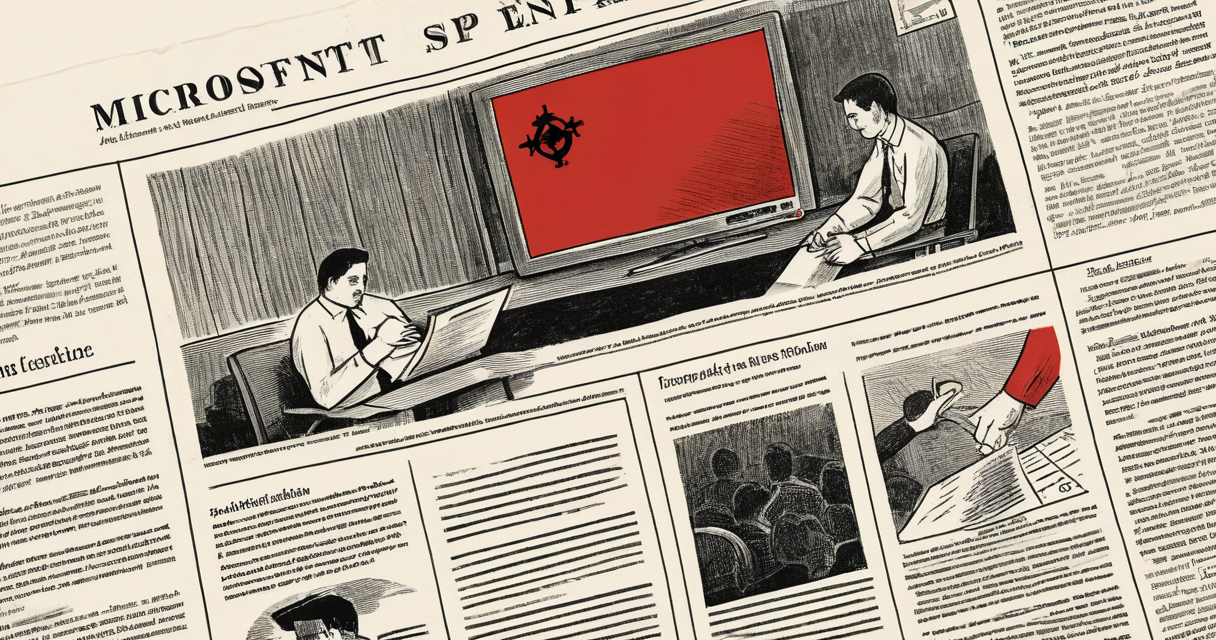
Microsoft released emergency patches for a critical ASP.NET flaw. The release classification is the position. Emergency means the standard patch cycle was bypassed. Standard cycle bypass is not a marketing decision. It is an internal acknowledgement that the exposure window cannot be tolerated until the next scheduled release.
The specific CVE identifier, severity score, attack vector classification, and exploitation status in the wild are not confirmed in the available statement. Treat each as an open variable. The only confirmed facts are: Microsoft is the issuer, the patch is emergency-tier, the affected technology is ASP.NET, and the flaw is described as critical. Everything else requires the published advisory to load before it becomes a fact.
What this means operationally is narrow and clear. Any system running ASP.NET in your environment is now in a known-vulnerable state until the patch is verified as applied. The clock started when Microsoft published. It did not start when you read the advisory. The window between disclosure and patch application is the window in which the flaw is most weaponizable, because the patch itself is now a reverse-engineering target for anyone with the skill to diff binaries.
The assumption embedded in most ASP.NET deployments is that the runtime, the framework primitives, and the request pipeline are trustworthy components. They are treated as platform. Platform is not threat-modelled per release. Platform is patched on schedule. Platform is assumed to have already absorbed the security review burden upstream. That assumption is the default operating posture across the majority of .NET workloads.
That posture creates a specific control gap. The application code is reviewed. The dependencies are scanned. The infrastructure is hardened. The framework itself sits inside the trust boundary and is not continuously evaluated as an attack surface. When a critical flaw lands inside the framework, every application built on top inherits the exposure without any change to the application code, the configuration, or the deployment. The vulnerability arrives pre-installed.
The second assumption is that perimeter controls - WAF rules, request filtering, authentication middleware - provide compensating coverage when a framework flaw is disclosed. This holds only when the flaw can be expressed as a recognisable request signature. Flaws that operate inside the request pipeline, after authentication, or below the layer the WAF inspects do not generate signatures the perimeter can match. Whether this specific flaw falls into that category is not confirmed. Until the advisory is read in detail, the assumption that the perimeter will hold is unsupported.
The patch release changes the control state in three discrete ways. First, the existence of the patch confirms the existence of the flaw. Threat actors who track Microsoft releases now know there is something worth extracting from the patched binaries. Patch diffing is a mature discipline. Public proof-of-concept code typically follows emergency releases on a measurable timeline. The exact timeline for this specific flaw is not confirmed, but the pattern is consistent enough to plan against.
Second, the patch shifts the responsibility for exposure from the vendor to the operator. Before the patch, an unpatched system was vulnerable but not negligent. After the patch, an unpatched system is a deliberate decision. That decision is now auditable. Insurance carriers, regulators, and incident response teams treat pre-patch and post-patch exposure as different categories of failure. The clock on that distinction started at release.
Third, the patch creates a new set of operational requirements that did not exist twenty-four hours ago. Inventory: every ASP.NET version in the estate must be enumerated, including embedded instances inside vendor appliances and internal tools that no one has touched in years. Verification: patch application must be confirmed by version check, not by deployment log. Rollback readiness: emergency patches occasionally introduce regressions, and the rollback plan must exist before deployment, not after a production incident. None of these requirements are optional. The patch release made them mandatory.
The mechanism is trust inheritance at the framework boundary. ASP.NET is not an isolated library called by application code. It is the execution container. Request parsing, session handling, serialization, authentication primitives, and response generation all run inside the framework’s code path before application logic sees a single byte. A flaw in that code path is a flaw in every request, for every application, on every host running the affected version. Application-level review does not reach it. Configuration review does not reach it. The flaw executes in the same process space as the authenticated session it is meant to protect.
The specific technical character of this flaw is not confirmed. What is confirmed is the layer at which it lives. A critical flaw at framework level operates in one of a small set of execution paths: request parsing accepting content it should reject, deserialization executing code it should refuse, authentication middleware allowing identities it should fail, or output encoding dropping context it should preserve. Each of these failure modes shares a property. They run below the layer where application controls are applied. Whatever the application logic intends, the framework has already decided what the request becomes before application code receives it.
This is the drift. Over the lifecycle of a platform, application teams build increasingly sophisticated controls on top of a layer they do not own and do not audit. The application logic hardens. The framework remains trusted by default. Control effectiveness is measured against the threats the application team can see. Threats operating inside the framework are not in that measurement set. When a framework flaw is disclosed, the gap between perceived coverage and actual coverage is exposed in a single release note. Emergency patches convert that gap from a theoretical condition into a dated event with an audit trail.
The pattern is not specific to ASP.NET. Any component that executes below application logic and inside the application’s trust boundary carries the same property. TLS libraries. Serialization libraries. Authentication providers. Web server processes. Container runtimes. When the flaw sits in a layer the application depends on and does not verify, exploitation does not require application cooperation. The application becomes the delivery vehicle, not the gatekeeper. Every deployment of the vulnerable component is a deployment of the vulnerability.
The operational consequence repeats across every instance. The control perimeter defined by application teams does not include components managed as platform. Platform components are patched by a different team, on a different cadence, with a different risk model. When an emergency patch arrives, the ownership boundary becomes the response boundary. If the team responsible for the framework is not the team responsible for the applications running on it, patch velocity drops. If the framework is embedded inside third-party appliances, patch velocity drops further. If the framework version is not tracked in an asset inventory, patch velocity approaches zero until someone manually enumerates hosts.
The pattern produces a predictable failure distribution. Disclosure occurs. Large, well-instrumented environments patch within hours. Medium environments patch within days. Embedded, legacy, and forgotten instances do not patch at all. Threat actors concentrate effort on the population that does not patch, because that population is where the flaw remains exploitable at scale. The long tail of unpatched instances becomes the actual attack surface, and it remains open for months or years after the emergency release date. The emergency patch closes the window for the organizations that respond. It defines the window for the organizations that do not.
Emergency release means the vulnerability is not theoretical to Microsoft. Treat it the same way. The patch is mandatory. Version verification is mandatory. Asset inventory of every ASP.NET instance, including embedded and vendor-bundled deployments, is mandatory. Deployment log confirmation is not verification. Version check from the running process is verification. Anything less leaves the flaw in place and transfers the residual risk from the vendor to the operator.
The trust model for framework-level components must change to match their actual exposure. A component that sits inside the request pipeline and executes with application privileges is not platform. It is an attack surface with a vendor attached. The patch cycle for that surface must match the patch cycle for any other production-critical dependency. That means monitored release feeds, a defined patch window, a rehearsed rollback, and an audit trail that distinguishes applied from deployed. If that capability does not exist today, the current response is the point at which it gets built.
Controls that do not cover the framework layer are not covering the application. If the WAF does not inspect the request after the framework has parsed it, the WAF is not protecting against framework-level flaws. If logging does not capture framework-level execution events, detection will not see exploitation. If the incident response playbook does not treat framework version as a primary artifact, containment will miss affected hosts. The emergency patch does not close those gaps. It reveals them. What must now be true is that framework components are held to the same control rigor as the code built on top of them. Controls that are not enforced at that layer are not controls.
Keep Reading
 microsoft
Microsoft is sending the spam itself
Spam links sent from an internal Microsoft identity expose the limits of sender-based trust and outbound abuse controls on provider perimeters.
 passkeys
SMS 2FA was never authentication
Microsoft is replacing SMS one-time codes with passkeys. M. Hale defines what failed, why it failed, and where the boundary still leaks.
 bitlocker
BitLocker isn't protecting what you think
A systems-level look at what a BitLocker backdoor claim actually means for enterprise security, and how to respond without panic or dismissal.
Stay in the loop
New writing delivered when it's ready. No schedule, no spam.