International Children's Book Day 2026 - What Makes a Story Stick in a Child's Mind
Exploring how illustration-first turns, read-aloud rhythm, and emotional truth shape lasting engagement in children's picture books, based on observed reading behaviors across multiple sessions.
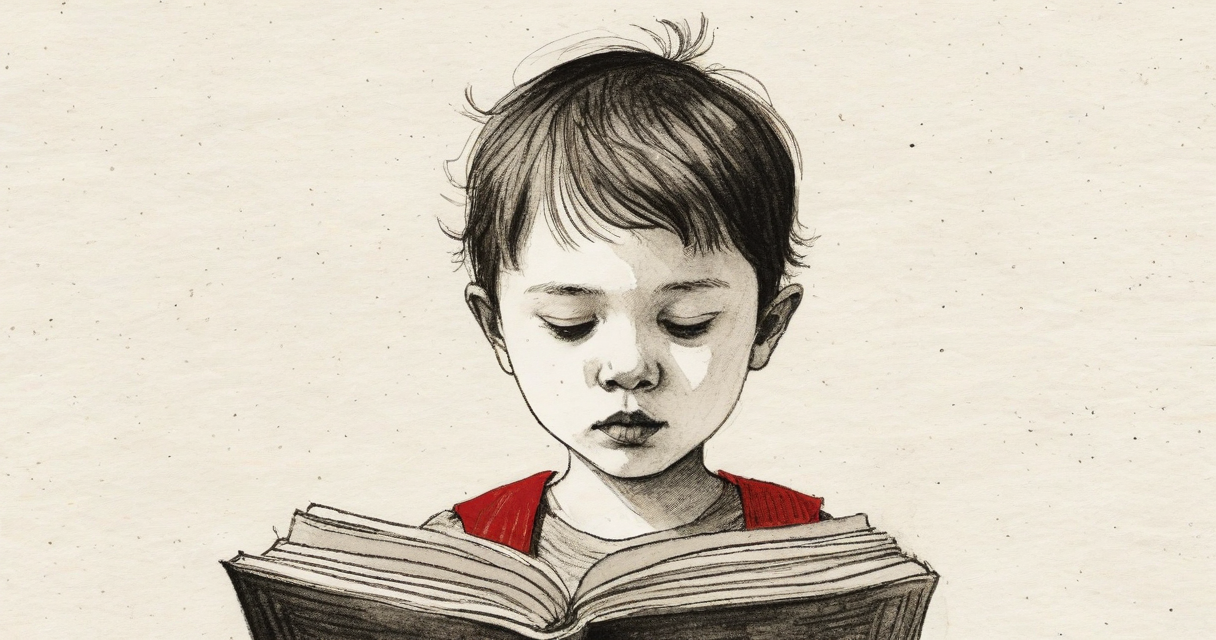
International Children’s Book Day 2026 - Why Some Books Live on the Nightstand Forever
Happy International Children’s Book Day, friends!
I’ve been thinking about this a lot lately - why do some picture books get read once, shelved politely, and slowly forgotten? While others get pulled out night after night until the spine gives up entirely?
It’s not always the plot. It’s not the fanciest illustrations or the cleverest concept. After years of writing for children, I’ve come to trust three quiet things that separate the sure, fine books from the ones a child begs to hear again at 8:47 PM when they were supposed to be asleep twenty minutes ago.
The Page Turn Is a Promise
Here’s something magical that not every writer stops to think about: the page turn is not just a mechanical act. It’s a little cliff-edge. A held breath. A child’s hand poised to reveal what comes next.
The books that stick understand this. They don’t describe the image on the other side - they earn it.
Think about the difference between: “She stepped into the forest.” [turn] Here is the forest she stepped into.
Versus: “She stepped-” [turn] …and the trees leaned in like they’d been waiting. The dog’s ears pulled back, one paw lifted mid-step.
One describes. One delivers. The illustration-first page turn trusts the image to carry the moment. When the visual lands at the exact beat the reader’s voice does - or just a breath ahead of it - something clicks. Children lean forward rather than drifting. The book earns the next page.
Sentences That Want to Be Read Aloud
Every picture book is, at its heart, a performance. And some sentences are simply easier to perform than others.
Compare: “She looked at the door. It was closed. She opened it. There was a bird inside.”
That’s four sentences, four full stops, four equal beats. Reading it feels like walking on flat pavement - fine, but nobody’s skipping.
Now try: “The door creaked-just once-and the bird blinked.”
Three beats. Sound, silence, surprise. You can feel exactly where to pause, where to quicken, where to land - like a footfall on uneven wood. Parents reading this aloud will naturally do something interesting with their voice. And when that happens, children feel it.
The best read-aloud books aren’t just written. They’re composed. They have rhythm the way songs have rhythm - and children, even very small ones, know when the music is right.
The Emotional Truth Nobody Says Out Loud
This is the one that took me the longest to understand, and honestly the one I love most.
The picture books that children carry in their hearts forever almost always have a moment - usually one, sometimes two - where the emotion isn’t explained. It’s just there, in the picture, quietly waiting to be felt.
A child sitting on the edge of a bed, knees drawn up, clutching a crumpled sock - his favorite one, not the missing toy. The light from the hallway stretches a long shadow across the floor. No words. No “he felt very sad.” Just a small boy and a sock and a shadow, and everything that means.
A child looking at that image will understand something true. Maybe something they’ve felt themselves but couldn’t name. That recognition - wordless, private, real - is what makes a reader want to come back.
Plot can be forgotten. Characters can blur together. But the feeling of being quietly understood by a picture book? That lingers for decades. Sometimes forever.
What Makes a Story Stick
I’m not suggesting every book needs to be engineered around these three things. Stories should come from the heart first, always. But as a writer who has watched a lot of children turn pages, I’ve come to trust these patterns deeply.
When the image arrives on the beat of the sentence, children lean in. When the rhythm wants to be spoken aloud, parents perform it gladly. When one emotional truth is embedded in the illustration - not explained, just there - children come back for it.
The best children’s books are a collaboration between writer, illustrator, and the child reading - and all three of them are listening for the same thing: a story that feels true.
Happy International Children’s Book Day. May your shelves be full of the books that never quite make it back to the shelf.
Keep Reading
 IoT security
The camera on your shelf handed out your GPS
A TP-Link Kasa camera returned home GPS over unauthenticated UDP for six years. The mechanism, the pattern it exposes, and what must now be true.
 SQLite
Rust solved the compatibility trap with editions
SQLite's backward-compatibility promise freezes its worst defaults. Rust-style editions could ship strict typing and enforced constraints without breaking old files.
 public key infrastructure
The padlock only proves someone holds the key
X.509 certificates authenticate a source, not the truth of its content, and trust resolved once at issuance is inherited unchanged until it expires.
Stay in the loop
New writing delivered when it's ready. No schedule, no spam.