Forge guardrails took an 8B model from 53% to 99%
A Show HN post says Forge guardrails took an 8B model from 53% to 99% on agentic tasks. Here's what that means for security and reliability.
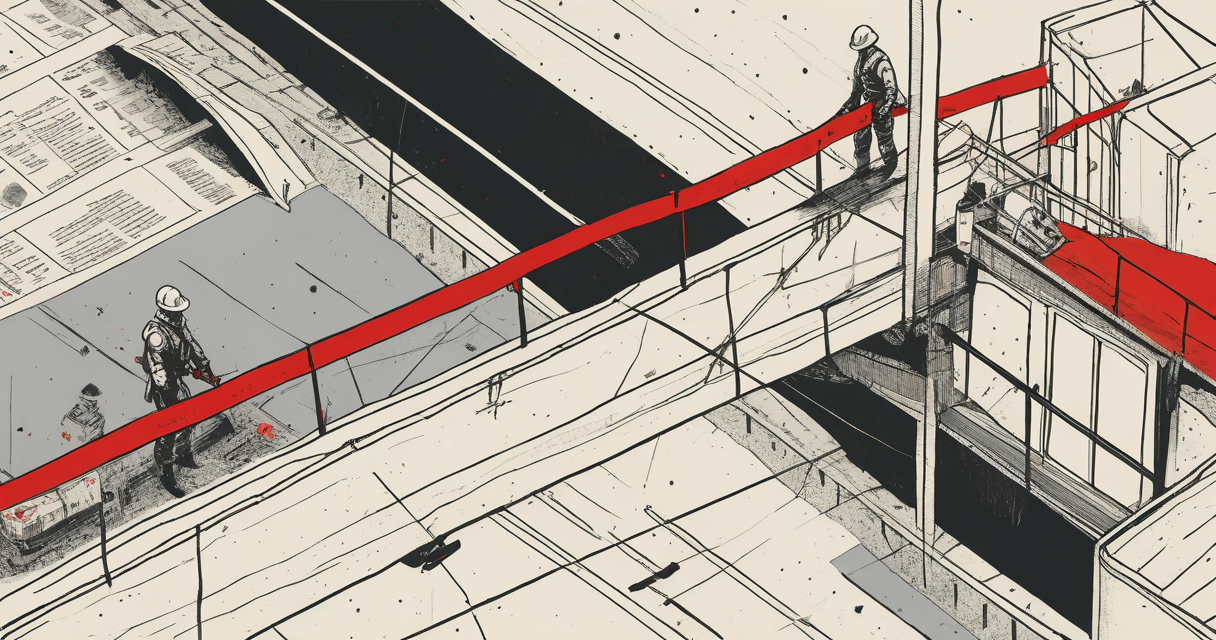
A Show HN post claimed an 8B model went from 53% to 99% on agentic tasks after Forge guardrails were added
The number is the headline. The mechanism is the story. A small open-weights model, the kind that runs on a single consumer GPU, almost doubled its measured pass rate on agentic benchmarks when wrapped in a constrained execution layer. The model didn’t get smarter. The harness around it got stricter. That distinction is the whole point of this post, and it has direct consequences for anyone deploying language models inside production systems.
For context, an agentic task is one where the model has to plan, call tools, observe results, and decide what to do next. Booking a flight, refactoring a repo, running a SQL query against a warehouse, filing a support ticket. The 53% baseline means roughly half the runs failed silently or loudly - wrong tool, malformed argument, infinite loop, hallucinated function name. The 99% number means the harness caught and corrected almost all of those failure modes before they reached the outside world.
That is a security story as much as it is a capability story. Most of the things that make an agent fail are also the things that make an agent dangerous.
What guardrails actually do at runtime
The word guardrail gets used loosely. In Forge’s case, and in similar projects like Outlines, Guidance, LMQL, and Instructor, the harness does some combination of the following:
- Constrains the model’s output to a grammar. The token sampler is masked so that only tokens consistent with a valid JSON schema, function signature, or regex are allowed. The model cannot emit a malformed tool call because the malformed tokens are mathematically unreachable.
- Validates arguments before execution. A
delete_file(path)call gets checked against an allow-list before the filesystem ever sees it. If the path is/etc/passwdand the allow-list says/workspace/*, the call returns an error to the model instead of running. - Replays failed turns. When a tool call errors out, the harness reframes the error as a structured observation and asks the model to try again, often with a bounded retry budget.
- Enforces step budgets and timeouts. An agent that loops more than N times gets terminated. An individual tool call that runs longer than T seconds gets killed.
- Logs everything. Every prompt, every sampled token sequence, every tool invocation, every result is written to an append-only store.
None of these are new ideas. They are the same defensive patterns that production systems have used for decades around untrusted input: parse, don’t validate; allow-list, don’t deny-list; fail closed; log first. What’s new is that the untrusted input is now coming from a model the operator nominally controls.
Why the 8B model jumped so far
Larger models hide their failure modes better. A 70B or 400B model that gets confused will often still produce syntactically valid output that looks plausible. An 8B model that gets confused tends to emit garbage that breaks the parser. The harness catches the 8B garbage trivially because the garbage is loud.
That is part of why the lift looks so dramatic. The same harness applied to a frontier model might move the score from 92% to 98%, which is a real improvement but a less marketable one. The 8B model benefits more in absolute terms because it had more catchable mistakes to catch.
The operational implication is the one worth holding onto. A constrained 8B model that hits 99% on a defined task surface is in many deployment contexts more useful than an unconstrained 70B model that hits 96%. The small model is cheaper to run, faster to respond, easier to host on isolated infrastructure, and easier to reason about because its action space has been narrowed by the harness. For a regulated environment - a hospital, a credit union, a utility - those are the properties that matter.
The security implications, stated plainly
Guardrails are not a security boundary. They are an operational boundary that has security side effects. The distinction matters because confusing the two leads to bad architecture.
A grammar-constrained output cannot produce a malformed tool call. It can still produce a valid tool call that does the wrong thing. If the model is allowed to call send_email(to, body) and an attacker convinces it via prompt injection to email customer records to an external address, the grammar will happily emit a perfectly-formed call that exfiltrates data. The harness blocked the syntax problem. It did not block the semantic problem.
Real security comes from the layer underneath the harness: the allow-list of recipients, the data classification on the records, the egress controls on the network, the audit log that flags unusual destinations. Guardrails make those other controls more effective by reducing the surface area of weird inputs they have to handle, but they don’t replace them.
The useful mental model is the one used for compilers and operating systems. The compiler enforces type safety. The operating system enforces process isolation. Neither one trusts the other. Both are needed. A guardrail layer plus a properly scoped tool layer plus a network-level egress policy is three layers. Removing any one of them removes a category of defense.
What this means for reliability
The 99% number is a benchmark number. Benchmarks are designed problems with known-good answers. Production traffic is not.
A harness that scores 99% on a curated agentic benchmark will score lower in production because production includes inputs the benchmark authors did not anticipate. Users will ask the agent to do things outside the tool surface. Upstream systems will return malformed data. Network timeouts will create partial state. The harness will handle most of these by returning structured errors, which is the correct behavior, but each structured error is a task the user wanted done that didn’t get done.
The reliability lift is real, but the right way to read it is: the floor moved up, not the ceiling. The 8B model is no longer failing in ways that confuse the harness. It is now failing in ways that the harness reports cleanly. A clean failure is easier to handle than a silent one, and that alone is worth the engineering investment, but it does not mean the agent works 99% of the time on your traffic.
What to actually do with this
If you are evaluating an agent stack - your own or a vendor’s - five questions are worth asking.
- What is the tool surface? List every function the model can invoke. If the answer is more than twenty functions or includes anything called
execute_arbitrary_code, the surface is too large. - What validates the arguments? For each tool, where is the allow-list, and who maintains it. If the validation lives inside the prompt as natural-language instructions, it is not validation.
- What is the failure budget? After how many failed tool calls or how many seconds does the agent stop and escalate to a human. If the answer is “it doesn’t,” you have an infinite-loop and an infinite-cost problem.
- Where do the logs go, and who reads them? An audit log nobody reviews is storage, not security. Sample 1% of agent transcripts and have a human read them weekly. Patterns will appear.
- What happens during a prompt injection? Pick a realistic scenario - a customer pastes attacker-controlled text into a support form the agent processes - and trace what the agent could do with that input. If the worst case is uncomfortable, the tool surface is wrong, not the model.
Those five questions are answerable in a meeting. If they aren’t, the team running the agent doesn’t have a model of its own system, and the 99% benchmark number is decorative.
The broader pattern
The Forge result is one data point in a trend that’s been visible for about eighteen months. Capability is migrating out of model weights and into the scaffolding around them. Retrieval, tool use, grammar constraints, multi-turn planning loops, verifier models - these are all ways of doing more with less raw model. The cost curve favors this. An 8B model under good scaffolding is an order of magnitude cheaper to operate than a frontier model called naively, and for many tasks the gap in observable quality is small or zero.
For security teams the practical consequence is that the threat model is moving. The interesting attack surface is no longer just the prompt. It is the tool layer, the retrieval index, the schema definitions, the verifier prompts, the orchestration logic. Each of those is a place where a small mistake - a missing allow-list, an over-permissive regex, a tool that returns more data than it should - turns the entire system into something other than what was designed.
The 53-to-99 jump is impressive engineering. It is also a reminder that the model is now the easy part of the system to reason about. Everything around it is where the work is.
Keep Reading
 AI safety
What distillation leaves behind
Distilling frontier AI models copies capability cheaply but leaves safety training behind. What Garry Tan's push means for cybersecurity and AI safety.
 AI safety
A warning is not a wall
An AI sandbox escape is the wrong thing to fear. The real AI safety risk is a system acting on a flattened, ungrounded model of a sensitive region.
 cybersecurity
A helpful AI agent cannot be a private one
Meta's Muse personal AI agent is only useful because it reads your messages, contacts, and habits. What that access costs your privacy and safety.
Latest on the Wire
Full wire →- Android 17 Ships New APIs Without AOSP Source — a First Since HoneycombHacker News
- Bolivia's tilcayo is the first wholly new cat species named in a centuryHacker News
- Claude Code adds AGENTS.md fallback, aligning with the cross-tool config standardHacker News
- Cloudflare reclaims 100TB of RAM by rethinking consistent-hashing mathHacker News
New signal daily · RSS
Stay in the loop
New writing delivered when it's ready. No schedule, no spam.