Every new feature makes iOS 27 less safe
iOS 27, iPadOS 27, and macOS 27 concentrate risk at one point: whether a capability re-checks identity at execution, not at the moment consent was captured.
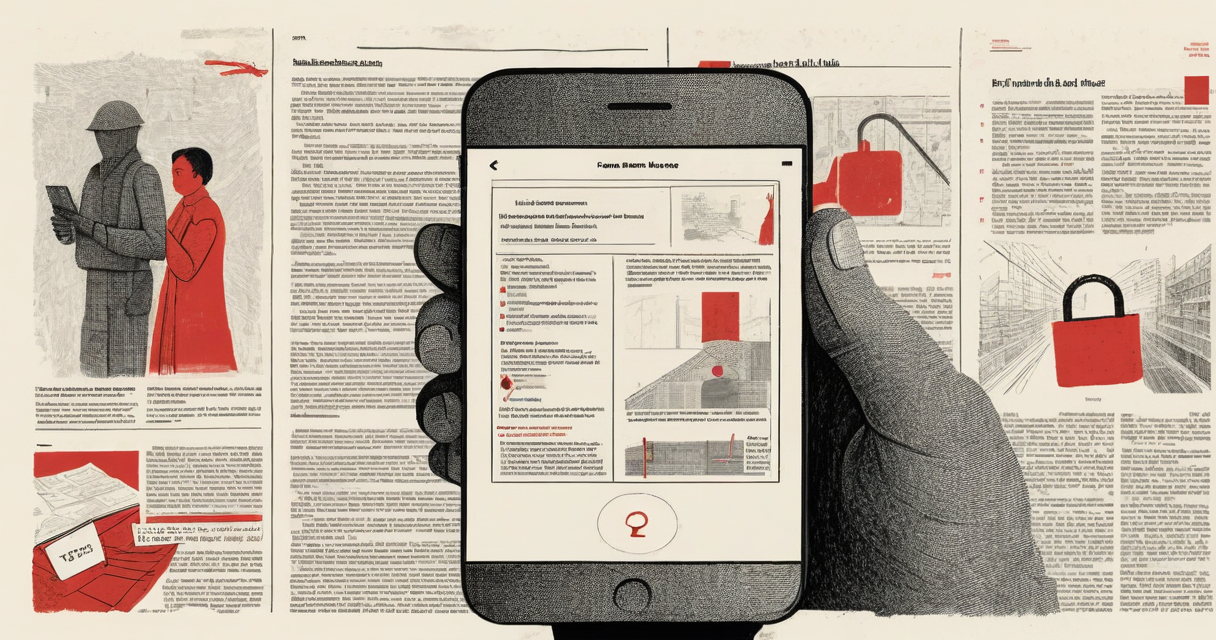
Apple ships a major OS version every autumn, and iOS 27, iPadOS 27, and macOS 27 continue that cycle. The specific feature set of each release is not confirmed in this briefing. What is confirmed is the structure of the cycle itself. Every version adds capability, and every added capability is a new place where code runs, data moves, or trust is extended to a party that did not hold it before. That surface is what I am accountable for, not the release notes.
The security question for a platform update is not what a feature does for the user. It is what the feature is permitted to do without a second check. Identity is the boundary. If a new capability can act on your data, reach another device you own, or grant a third party access, the only control that matters is whether that action is validated at the point it happens, every time, against the identity that is supposed to authorize it. A feature is evaluated on that basis here and no other.
Because the exact features of iOS 27, iPadOS 27, and macOS 27 are not confirmed in the provided facts, I will not assign risk to a named feature I cannot verify. I will not estimate what those features are, and I will not generalise from prior releases to state what this one contains. Absence of confirmed detail is a condition, not a gap to fill with assumption. What can be stated is logically necessary from the release existing at all. A larger feature set is a larger set of trust boundaries, and each boundary is either enforced at the moment of action or it is not. The rest of this briefing works at that level and does not descend below it.
The standing assumption on Apple platforms, held by users and by a large share of the operators who defend them, is that the environment is closed, curated, and sandboxed, and is therefore safe by default. Applications are isolated from each other. Code is signed. Permissions are requested at the surface where the user can see them. The account and its device are treated as a trusted unit. That model is the reason most people never think about what an update grants. They assume the platform already decided.
That assumption is weak on observable grounds before any new feature is added. Sandboxing constrains third party applications. It does not constrain the platform’s own new capabilities, which run with the system’s trust, not an app’s. A permission prompt does not enforce a control. It moves the decision to the user and records the answer, and a granted permission is a standing trust relationship that persists until it is manually revoked. The same account identity spans phone, tablet, and desktop, which means one compromised credential is not one device of exposure, it is three. None of this is an incident. It is the observable property of how the trust is structured.
The failure in the assumption is that safe by default treats trust as a one time grant. A control that is checked once at the point of consent and never re-validated at the point of action is not a control at the moment it is needed. If a system authorizes a behaviour once, it will permit that behaviour again under the same token, in a different context, without asking again. Trust that is not continuously validated is not trust management. It is a record of a decision made earlier, applied to conditions that were not present when the decision was made.
What a new OS release changes is where those grants sit and how far they reach. Platform capability grows in a predictable set of directions. It adds on-device processing that executes against your own content. It adds continuity that extends one authenticated device’s trust to another device or session. It adds background execution that runs when no user is present to observe it. It adds grant surfaces where a third party service or an automated agent receives access that a human previously mediated. Whether any specific feature of iOS 27, iPadOS 27, or macOS 27 falls into one of these categories is not confirmed. That these categories are where operating system capability expands is structural, not speculative.
Each of those directions moves the decision point away from the moment of action, and that is why the default assumption stops holding. A permission granted at setup authorizes behaviour that executes later, unattended, under conditions the user never reviewed. Continuity extends the trust of a device you authenticated to a session you are not watching. Background execution acts with no person in the loop to notice the act. Automation scales the intended function and the failure of that function at the same machine speed, so a control that is wrong is wrong everywhere at once. The enforcement question is whether identity is validated at execution time, and a consent captured earlier is not enforcement at execution time.
The consequence for privacy and vulnerability exposure on these releases is therefore not determined by what any feature intends to do. It is determined by where each new capability places its enforcement point and whether that point validates identity continuously or defers to a decision made before the action existed. Any capability that acts on user data without a check at the moment of the act is, by the standard applied here, an ineffective control, regardless of how it is described. The specific features are not confirmed. The condition that governs them is.
The mechanism is displacement of the enforcement point. A consent-based permission produces a durable authorization. The system records that the user answered yes at one moment, and it treats that record as sufficient for the actions the capability takes afterward. The action that carries risk is not the grant. It is the execution. When execution runs, the observable behaviour is that the capability proceeds against the stored answer. The identity that authorized the grant is not presented with the current context and asked again. The check occurred once, against conditions that no longer describe what the capability is now doing. That gap between the moment of consent and the moment of action is the mechanism, and it is present by definition wherever a grant outlives the act it authorizes.
This is readable from the structure Phase 1 established, not inferred from a named feature. A permission persists until it is manually revoked. Persistence is the exact property that separates the grant from the act. If the two occurred together, revocation would be irrelevant, because each action would carry its own check at the point it happened. They do not occur together. The interval between consent and execution is where no check is applied. Whether iOS 27, iPadOS 27, or macOS 27 widen that interval is not confirmed. That the interval exists whenever an authorization is stored and reused is logically necessary from the fact that the grant is durable.
Background execution and continuity remove the last external signal that a check was ever exercised. A grant evaluated at consent at least had a user present at consent. Background execution runs the authorized action with no user in the loop to observe the act. Continuity applies one authenticated device’s trust to a session on another device the user is not watching. In both conditions the only thing between the capability and the data is the earlier answer. There is no second identity validation at the point the data is touched, because the design treats the first answer as the boundary. A boundary that is evaluated once and then applied to later conditions is not enforced at the moment it is crossed. Whether the release adds capability of this kind is not confirmed. That the mechanism governs any such capability that does exist is not a prediction. It is a property.
The pattern this exposes follows directly from that mechanism and from nothing else. A system that authorizes by stored answer rather than by check-at-execution will permit actions the authorizer never evaluated. Privacy exposure on these platforms is therefore not a leak event to be detected after the fact. It is the standing condition that a capability holds authorization broader than any single decision the user actually made. Vulnerability exposure follows the same line. A compromise of the stored grant, or of the single account identity that spans phone, tablet, and desktop, does not have to defeat a check at execution, because the mechanism places no check at execution. The attacker inherits the authorization instead of having to defeat it.
The same mechanism appears at the level of the data itself, not only the account. Consider on-device processing granted access to a content type. At the moment of consent, the content was whatever existed then. The grant authorizes the capability against the category, not against the specific items reviewed. New content of the same type falls under the same authorization with no new decision. The user consented to a set that has since changed, and the capability acts on the changed set under the original answer. This is not a similar concept borrowed to strengthen the point. It is the identical displacement: authorization captured against a category, execution performed against instances that were not present when authorization was given. Whether any specific iOS 27, iPadOS 27, or macOS 27 feature works this way is not confirmed. The pattern is defined by the mechanism, not by the feature.
Scale is where the pattern stops being a single-device concern. One account identity reaches three device classes. A stored grant plus a single identity does not add exposure, it multiplies it, and automation runs the authorized action at machine speed across everywhere that identity reaches. If the enforcement point is the stored answer, then every device and every future action inherits the correctness or the incorrectness of that one answer. A grant that is wrong is wrong across the full reach of the identity, continuously, until it is revoked by hand. The failure is not local and it is not one-time. That is the shape the mechanism forces, independent of which capability triggers it.
My position as the operator responsible for these systems does not move with the feature list. I evaluate a release by where enforcement sits, and by one test only: does a capability that acts on user data validate the authorizing identity at the moment of the act, against the current context, each time it acts. If it does, it is a control. If it defers to an answer captured earlier, it is a record of a past decision presented as a control, and it is ineffective by this standard regardless of how the capability is described in the release notes. The specific features of iOS 27, iPadOS 27, and macOS 27 are not confirmed. The test does not require them to be.
What must now be true is stated plainly. The correct assumption is not that the platform already decided safely because it is closed and signed and sandboxed. Sandboxing constrains third-party applications and does not constrain the platform’s own capabilities, which run with system trust. The correct assumption is that any standing grant is exposure until it is revoked, and that a permission prompt records a decision rather than enforcing one. An account identity that spans three devices is a single point whose compromise is three devices of exposure, and it must be defended as the boundary it actually is, not as a convenience.
Controls that are not enforced are not controls. Identity is the boundary, and a boundary checked once and reused is not a boundary at the moment it is crossed. Trust that is not re-validated at execution is not trust management, it is a decision made earlier and applied to conditions that were not present when it was made. If a system permits a behaviour under a stored token, it will permit that behaviour again, in a context the user never reviewed, without asking. The features are not confirmed. The condition that governs them is, and it does not depend on their names.
Keep Reading
 web scraping
You depended on access you never owned.
Google's anti-scraping update changed a control scrapers never owned, exposing the structural risk of building on an interface you cannot see or govern.
 privacy
Chrome exempts Google's domains from user site-data controls
Chrome does not enforce user site data settings against Google-owned domains. What the exempt scope means and how to treat the control.
 flock surveillance
The system ran one veteran 100 times
One person was queried 100+ times in a Flock tracking system. When identity is the only enforced gate, abuse completes exactly like legitimate use.
Stay in the loop
New writing delivered when it's ready. No schedule, no spam.