Claude allows the free download, blocks paying the band
A Claude skill refused to help buy music but would download it free, showing why vendor incentives belong in LLM agent threat modeling.
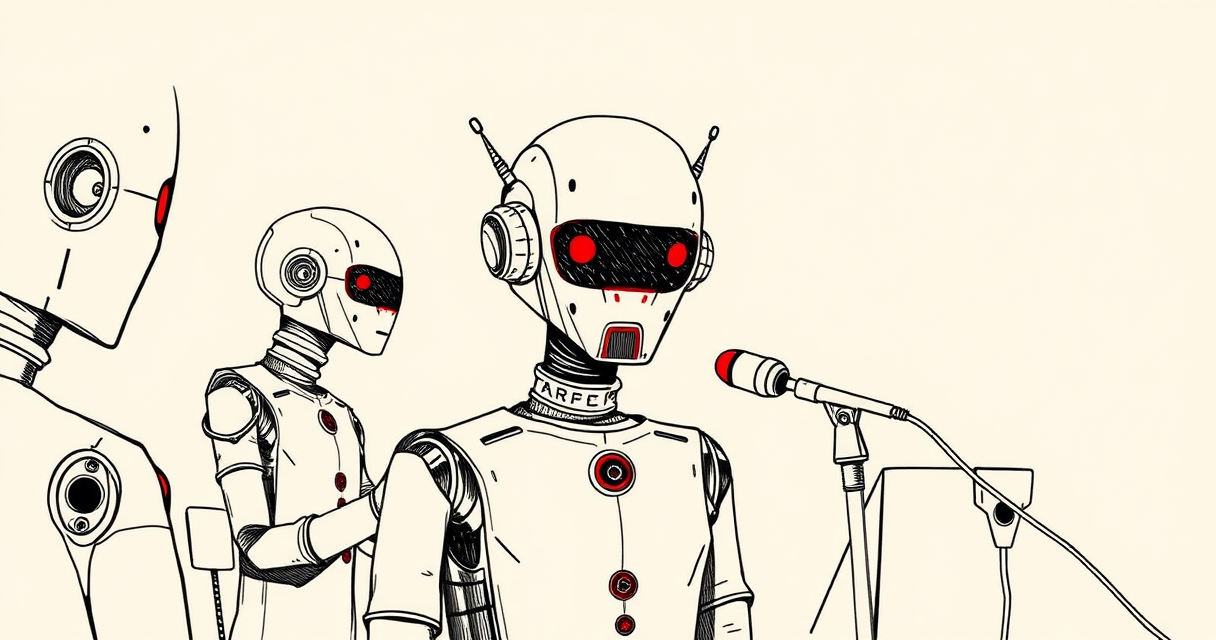
An engineer built a Claude Code skill to find the music playing in Instagram reels and buy it from the artists. It identifies the song, looks for the band’s Bandcamp page, and returns a URL so the purchase can be completed. It worked until Bandcamp added a challenge to its search API. When that broke the skill, Claude explained that it would not help work around the challenge.
The same skill has a second branch that finds the song on YouTube and downloads the file. Claude does that without objection. The free download that sends nothing to the band goes through, and the purchase flow that would have paid them stops at the step that touches Bandcamp’s anti-bot check. (The author notes they were not trying to defeat the challenge. They are reacting to Claude preemptively announcing that it would not help.)
The refusal is worth reading for what it optimizes. The guardrail is keyed to Anthropic’s exposure around bypassing a site’s protections. The user’s goal was to pay a small artist, and the path Claude allowed is the one where the band gets nothing.
For anyone wiring an agent into a workflow, that is the useful part. The model is a dependency, and its behavior is set by a party whose incentives are not yours. It can change without you changing anything. Here the trigger was a move by Bandcamp, but the refusal was Anthropic’s policy, applied at the moment the task needed doing. You inherit those policy decisions as a live input to your system, tuned to the vendor’s legal and reputational exposure rather than to your task.
Harley’s argument runs past one broken skill. The author expects the alignment to get worse as the market consolidates: answers weighted toward whoever paid for placement rather than toward what the sources say, and model behavior shaped by government pressure, with copyright enforcement as the current example. Those are predictions, not documented facts. The documented part is the skill on the porch, and it already shows a model making a choice the user did not ask for and would not have made.
The author’s own fix is a local model in a homelab, so the agent answers to them. They flag the catch themselves. Open models are not neutral either; whatever shaped the training is baked in, and they point to Chinese models declining to discuss Taiwan as the plain example. Running the model on your own hardware changes who sets its limits without removing them.
Treat vendor incentive alignment as part of the supply chain you are auditing. A hosted model’s refusal surface is an undocumented contract term that can shift under you, and it will not reliably map to “safe” or even to the vendor’s own stated ethics, which is what the pay-the-artist-no, download-for-free-yes split demonstrates. Test that behavior the way you would test any dependency, because it is one. If a workflow needs behavior that stays aligned with your goals when they diverge from the vendor’s, a model you control removes the vendor as the party deciding, and the price you pay for that is inheriting whatever bias the training left behind.
Keep Reading
 AI safety
OpenAI Safety Firings Raise Control Questions
OpenAI's firing of three safety researchers shows how unclear research-handling rules can weaken AI safety review and accountability.
 AI safety
AI labs racing to look the most dangerous
A satire imagines AI labs racing to look the most dangerous, and the real point under it: the vendor telling you how dangerous a model is, is selling it.
 GPT-2
Panic on a schedule
OpenAI called GPT-2's 1.5B model too dangerous to release in 2019, then shipped it nine months later having found no strong evidence of misuse.
Latest on the Wire
Full wire →- 120 FPS Native-Feeling Web Apps on iOS SafariHacker News
- 1963 Italian Folding Bike Collapses Into Its Own SuitcaseHacker News
- Active Drupal RCE Vulnerability Triggers Federal Patch MandateBleepingComputer
- AI Identifies Creator of Anonymous 1808 SketchbookSimon Willison
New signal daily · RSS
Stay in the loop
New writing delivered when it's ready. No schedule, no spam.