California registers 3D printers it can't instrument
California's 3D printer registry concentrates reconnaissance data on a fleet of uninstrumented endpoints. The real gap is telemetry and data governance.
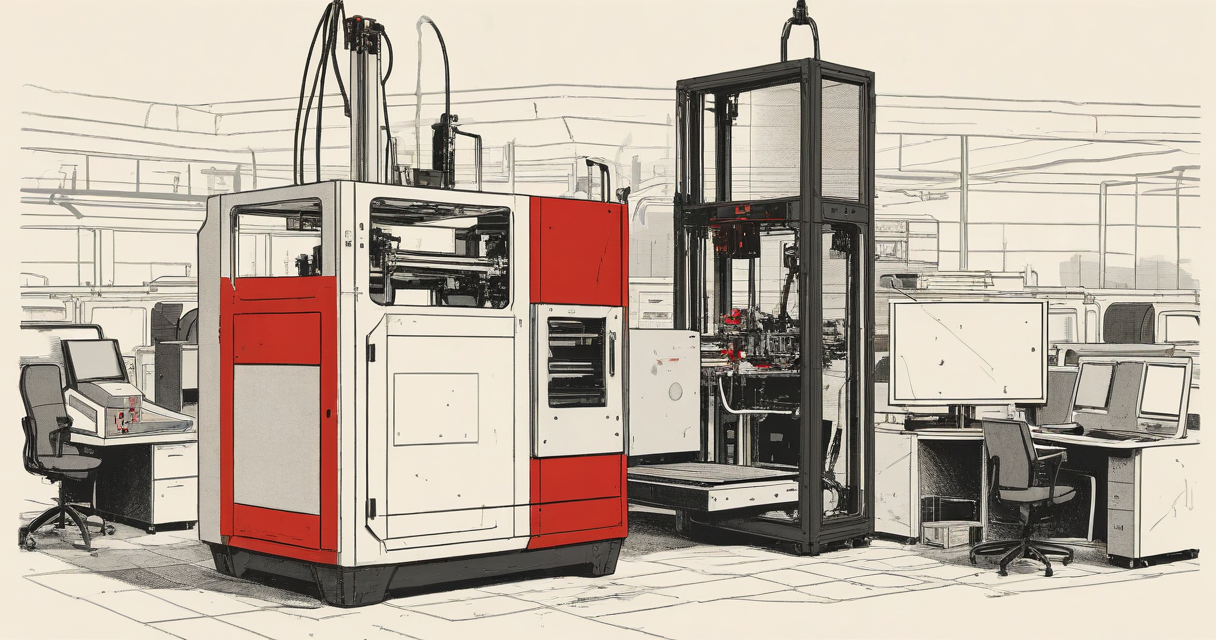
California’s draft framework registers and monitors consumer additive-manufacturing hardware. The stated intent is tracing untraceable firearms. The security-relevant fact is orthogonal. The state proposes to surveil a class of endpoints it holds zero telemetry on. The distance between “watched” and “instrumented” is the exposure, and the scheme widens it.
A networked 3D printer is not an appliance. It is an embedded Linux host running a web stack, a REST API, a WebSocket channel, and a serial link to a real-time microcontroller. OctoPrint runs a Tornado server on TCP 5000. Klipper deployments stack Moonraker on 7125 behind a Fluidd or Mainsail UI on 80. Marlin or Klipper firmware drives the control board over USB serial. Every one of these is an attack surface with an authentication model that defaults to permissive. OctoPrint ships an access-control layer that operators disable to make the webcam and controls reachable. Moonraker gates its API on a trusted_clients allow-list keyed to LAN ranges, so anything routed onto that subnet inherits control-plane access.
The bug class here is not a single memory-corruption primitive. It is a trust-boundary collapse across an unmanaged fleet. OctoPrint plugins install as pip packages, frequently from a URL, and execute in the host process with full privilege. That is arbitrary code execution by design, not a defect. Moonraker’s update_manager pulls from git and can be configured to invoke shell commands. Klipper gcode_macro definitions can trigger host actions, which means a G-code file, nominally inert print data, can carry instructions that reach beyond the toolhead. None of this requires a CVE. The exploit primitive is the intended feature set operating without integrity verification at execution time.
Where CVEs do apply, the pattern holds. OctoPrint at or below 1.9.2 carried a cluster patched in 1.9.3, including CVE-2023-41047, an authenticated stored XSS that pivots to code execution through the terminal command interface, CVSS v3 in the high band. The affected-version boundary matters less than the deployment reality: these hosts are rarely on a patch cadence. A print controller flashed in 2022 and left running is a 2022 software bill of materials exposed on whatever network it was plugged into. Shodan indexes thousands of internet-facing OctoPrint instances, a meaningful fraction with access control switched off. The project added an interstitial warning specifically because operators kept exposing them.
The reconnaissance path is the part California’s proposal makes worse. An unauthenticated or LAN-trusted query to /api/version returns the software revision. /api/printerprofiles enumerates the hardware, the bed dimensions, extruder count, and firmware flavor. The webcam endpoint streams the physical work area. For a hobbyist that is trivia. For a defense-adjacent or industrial print farm producing components under contract, that is targeted probing for sensitive infrastructure details: what is being manufactured, on what equipment, at what tolerances. Map it to MITRE and it is T1595.002 active scanning against the exposed services, T1592 gathering host information from the API responses, and T1590 gathering network information from the fleet topology those responses reveal. The device answers the questions an operator would never answer voluntarily, because nobody configured it to withhold them.
A state registry inverts the effort. Instead of scanning IP blocks for exposed controllers, an actor queries one dataset that correlates device, owner, physical address, and, depending on how the mandate is written, usage. That is T1213-class access to an information repository, and its compromise hands over reconnaissance already assembled and validated. The registry is the pre-built target package. The governance failure is that surveillance mandates specify collection and almost never specify the controls that make collection survivable: retention limits, access segmentation, query auditing, minimization of the fields held. Under the Privacy Act, and for anything intersecting critical infrastructure under SOCI obligations, a dataset of this shape is regulated data carrying custody duties the proposal does not address. The state would create a high-value corpus and secure it to the standard of a licensing database.
The controller sits on a boundary most asset inventories miss. It bridges an IP network to physical actuation over serial, which makes the print host a pivot candidate into anything else on its subnet. A beacon landed on an adjacent engineering workstation reaches the printer’s web stack with no additional credential because Moonraker already trusts the LAN range. From there the lateral path is ordinary - T1021 against whatever else answers on the segment - and the printer’s own logs, being nonexistent, record none of the traffic transiting it. The device is both a target and a waypoint, and it is invisible in each role.
Real-world exploitation of this class is commodity, not theoretical. Exposed OctoPrint instances have been mass-scanned and indexed on Shodan and Censys for years, with public reporting documenting thousands reachable without authentication and printer webcams streaming to open internet. The tooling is not bespoke. A commodity scanner enumerates the fingerprints, a Metasploit-style auxiliary module or a short script queries the documented API, and a standard C2 framework handles the pivot once a foothold on the segment exists. The barrier to reconnaissance against these endpoints is close to zero, which is why the absence of any detection on them matters more than the presence of any specific bug.
The telemetry reality is where the argument lands. These endpoints emit nothing a defender can see. No EDR agent runs on a Raspberry Pi print host. Sysmon event IDs do not apply because Sysmon is Windows and the controller is Raspbian. auditd is typically absent. syslog is not forwarded anywhere. The control VLAN, where one exists, has no span port or tap. NetFlow off that segment is not collected, and if collected, not retained. So the full reconnaissance sequence - port sweeps against 5000, 7125, and 80, API enumeration, webcam access - generates zero events in any SIEM. There is no correlation rule to write because there is no log source to correlate. The detection surface is empty by construction.
What would catch it is network-layer visibility the environments in question rarely deploy on that segment. Zeek conn.log and http.log would record the connection metadata and the API paths. Suricata with rules fingerprinting OctoPrint and Moonraker response signatures would fire on the enumeration. A tap on the manufacturing subnet would render the traffic. Most operations running these devices treat the print network as a peripheral, flat and unmonitored, adjacent to engineering workstations. The blind spot is structural, not accidental. The reconnaissance succeeds because the segment was never instrumented, and a registration mandate places no sensor there.
The network IOCs that would matter are narrow and go uncollected. In Zeek http.log the enumeration shows as a sequence of GET requests to /api/version, /api/printerprofiles, /api/connection, and /webcam paths from a single source in rapid succession. Suricata rules keyed to OctoPrint and Moonraker Server response headers would flag the fingerprinting. Where the UI is served over TLS, JA3 hashes and SNI would at least mark the client. None of this fires without a sensor on the segment, and DHCP-assigned printer hosts frequently never make it into the asset inventory that would prompt someone to place one. The device is not merely unmonitored. It is unknown.
The supply-chain dimension compounds it. The OctoPrint plugin ecosystem, pip installs from arbitrary sources, Moonraker pulling updates from git, slicer post-processing scripts, and firmware binaries flashed without signature attestation together form an unverified execution chain. Map it to T1195.001, compromise of software dependencies and development tools. A poisoned plugin or a hijacked update channel runs with the host process’s privilege and its network reach into the rest of the environment. The integrity of what executes on the controller is not checked at load time. A print farm is a cluster of identical unmanaged hosts pulling code from the same handful of upstream sources, which is the exact condition that turns one upstream compromise into fleet-wide execution.
The mechanism, then, is not exotic. Exposed services with permissive defaults, an API that volunteers infrastructure detail, an unverified code-delivery chain, and no log source pointed at any of it. An actor performing reconnaissance against this fleet operates entirely inside the detection gap. The California scheme’s contribution is to concentrate the reconnaissance data the endpoints already leak into a single governed dataset, without funding, mandating, or even naming the telemetry that would detect an actor probing either the fleet or the registry.
The fix boundary is specific. OctoPrint to 1.9.3 or later closes the disclosed cluster. Moonraker with access control enforced and the trusted_clients list scoped tightly removes the LAN-trust shortcut. Plugin and firmware provenance verified against known-good hashes breaks the unverified-execution condition. The print VLAN segmented from engineering and instrumented with a network sensor - Zeek or Suricata with a tap - creates the log source that currently does not exist. Those controls address the endpoint exposure. None of them address the registry, which remains a centralized dataset whose compromise is mass reconnaissance regardless of how well the individual printers are hardened.
Residual exposure after all of it: the endpoints stay dark to host-based detection because there is no agent to run on them, and the state-held corpus remains a single point of aggregation. Surveillance is not telemetry. Watching a device that cannot be instrumented produces a registry entry, not visibility. The scheme records that a printer exists and where it sits. It does not record when someone queries it, enumerates it, or reaches through it. That is the difference between a database and a sensor, and the proposal builds the database.
Active probing against a specific fleet or a live registry is an incident-response matter, not a policy debate. Escalate to the team that owns the segment and the dataset.
Keep Reading
 supply chain security
Alibaba bans Claude Code across its engineering org
Alibaba's reported ban on Claude Code is a trust decision, not a CVE. Why an agentic coding tool's sanctioned egress is also its exfiltration path.
 data exposure
Sanctioned keylogger, unlocked back end
Meta's exposed employee keystroke telemetry is not an AI story. It is a third-party data-handling failure: T1056.001 collection, an unauthenticated store, T1530 read.
 vulnerability research
Sixty-three days to patch a forked parser
Technical breakdown of the FrontierOS RCE: a forked XML parser, an unpatched two-year-old CVE, and the fork-tracking failure that shipped it.
Latest on the Wire
Full wire →- 12 Zigbee Sensors Put to the Accuracy TestHacker News
- ChatGPT mimics signatures of New Yorker cartoonists without permissionHacker News
- ClickFix Attack Exploits Browser Cache to Evasion Windows Run LimitsThe Hacker News
- Common Lisp Shines in the Age of AI Code GenerationHacker News
New signal daily · RSS
Stay in the loop
New writing delivered when it's ready. No schedule, no spam.