Antibody catalogs are unsanitized user input
Thermo Fisher antibody metadata manipulation is a supply chain attack against bioinformatics pipelines - not a data integrity issue. Here is the mechanism.
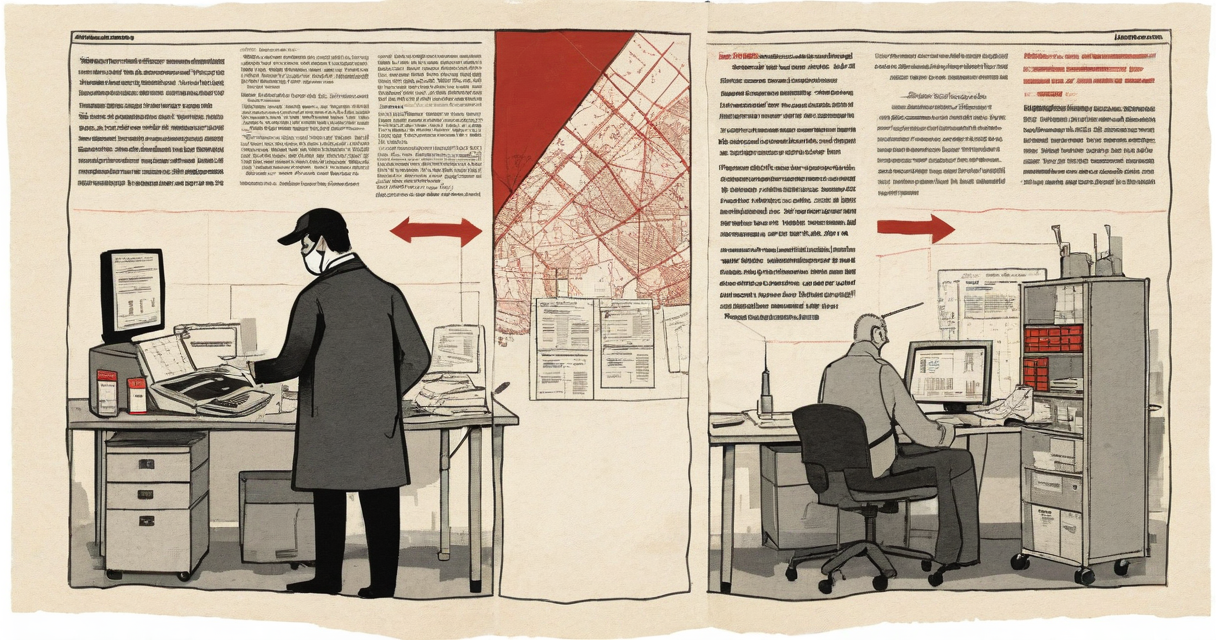
Reports of manipulation in Thermo Fisher antibody validation data have circulated through research integrity channels for months. The framing has been reproducibility. The operative threat model is supply chain. Antibody metadata - catalog numbers, clone IDs, host species, isotype, validated applications, citation links - is consumed by bioinformatics pipelines as structured input. When that input is altered upstream, the downstream surface is not a wet lab. It is a pipeline running Python, R, and shell with credentials to internal LIMS, ELN, and object storage.
The bug class here is not memory corruption. It is trust boundary violation across a federated data layer the security organisation does not own. Vendor antibody catalogs are queried by automated pipelines via REST endpoints, CSV exports, and SDK clients. Tools like Snakemake, Nextflow, and Galaxy parse the responses into config dictionaries that drive downstream analysis steps. Pandas reads them. PyYAML loads them. R’s data.table fread ingests them. Any field in that metadata is now an input to code that runs with the privilege of the analyst’s workstation, the institutional cluster, or the cloud batch job.
The exploit primitive starts with controlled metadata fields. A clone ID field that should match a regex like [A-Z0-9-]+ instead carries a payload. A validated-applications string that should enumerate WB,IHC,IF,FC contains a CSV injection sequence beginning =cmd|... or a unicode normalisation trick that survives shallow sanitisation. A citation URL field carries a javascript: scheme that a Jupyter notebook later renders as live HTML. None of these require a CVE. They require a vendor whose metadata pipeline accepts altered content without input validation, and a downstream consumer who deserialises that content into executable context.
The textbook case is YAML. Snakemake and Nextflow pipelines commonly ingest sample sheets and reagent manifests as YAML. PyYAML’s yaml.load without SafeLoader deserialises arbitrary Python objects. CWE-502, deserialisation of untrusted data. If an antibody metadata field flows into a YAML manifest that is later parsed unsafely, the field contents reach __reduce__ and arbitrary code execution lands in the pipeline process. MITRE T1059.006, Python. From there, the pipeline holds AWS credentials for S3 buckets containing raw sequencing data, NFS mounts to shared cluster storage, and frequently SSH keys to job submission heads. The blast radius is the entire R&D compute footprint.
The pandas path is similar. read_csv with default parameters, then a downstream df.eval() or df.query() call, exposes expression injection. Any string field passed to those evaluators executes Python. CWE-94, code injection. Researchers writing pipelines rarely treat reagent catalog data as untrusted input. The mental model is that vendor data is canonical reference material. That model is the vulnerability.
Beyond direct injection, the secondary vector is package and environment compromise. Antibody analysis tooling depends on a long tail of bioinformatics packages - Biopython, scanpy, scikit-learn, custom lab forks of public tools - installed via conda or pip into research environments that rarely enforce signature verification. A vendor with write access to a curated reagent database can also influence which analysis modules are recommended for which experiments. A poisoned recommendation drives an analyst to pip install a typosquatted or backdoored package. T1195.002, compromise software supply chain. The package executes with the analyst’s privileges on the cluster login node.
Attribution for the data manipulation activity itself is not the operative question. Whether the source is a state actor positioning for long-term R&D intelligence collection, a research integrity actor falsifying results for academic gain, or opportunistic poisoning by an unrelated supply chain actor, the security consequence is the same. The metadata pipeline becomes an attacker-controlled input channel into the most sensitive compute environment most organisations operate - pharmaceutical R&D, genomics, vaccine development. This is the exact threat model SOCI obligations in Australia treat as critical when applied to the science and research sector.
What this produces in telemetry is the second-order problem. Research compute is the blindest segment of most enterprise SIEM coverage. Bioinformatics clusters frequently sit on segregated VLANs with intentional outbound reach to public reference databases - NCBI, EBI, UniProt, vendor APIs. Outbound HTTPS to a vendor antibody catalog domain looks identical whether the response is canonical metadata or a poisoned manifest carrying an exploitation payload. EDR coverage on shared HPC head nodes and SLURM execution hosts is inconsistent. Sysmon Event ID 1 fires on the python interpreter, but the interpreter executing user-submitted analysis code is the expected baseline. The malicious child process - a curl exfiltration, a reverse shell, a credential harvester - is statistically indistinguishable from the population of legitimate analyst workflows running on the same hardware.
Where detection has a chance is the structured anomaly. A python process spawning a shell that connects outbound to a non-research domain is detectable if EDR is present and tuned. Sysmon Event ID 3 with destinations outside a curated allow-list of reference databases is a signal. Event ID 10, process access to credential stores from a bioinformatics worker process, is high-confidence malicious. The detection gap is not the rule. The gap is that most research environments do not forward these events to a SOC that knows what a legitimate Nextflow execution looks like. The triage path does not exist.
The other observable is the metadata diff itself. Vendor antibody catalog entries are versioned. Lot numbers are unique. Clone identifiers are deterministic. A change to a clone’s validated-applications field that does not align with a corresponding lot revision is anomalous. A citation URL that was previously a doi.org link and is now a redirect through an unfamiliar domain is anomalous. Research integrity workflows already perform this comparison for scientific validity. The same diffing applied with security context becomes a supply chain integrity control. No vendor in this space currently provides cryptographic attestation over individual metadata records. The integrity boundary is operationally undefined.
The Cloudflare Okta-token incident and the broader pattern of identity-provider compromise demonstrated that the supply chain attack does not need a memory corruption primitive. It needs an unverified input that crosses a privilege boundary. The Thermo Fisher antibody data question is the same model applied to a sector that does not yet treat its reference data as code. The reagent metadata is code. It drives pipeline execution. It selects analysis tooling. It populates configuration dictionaries that other code reads.
Patch boundary on this class of risk is not a CVE fix. The vendor side requires input validation on metadata submission, cryptographic signing of catalog records, and tamper-evident publication of revision history. The consumer side requires explicit untrusted-input treatment of vendor data - yaml.safe_load, parameterised queries, schema validation against expected types before downstream use, and segregation of pipeline execution from credential material that exceeds the pipeline’s functional requirement. The principle is identical to the CI/CD lesson learned at the cost of source code repositories. The scanner does not need cluster admin. The pipeline does not need full S3 write.
Residual exposure after these controls is the historical data already ingested. Pipelines that ran six months ago against catalog data that has since been quietly altered may have produced research outputs, downstream datasets, and ML training corpora that carry the consequence of the original manipulation. The forensic question is whether intermediate artifacts in research data lakes need integrity revalidation against current vendor records, and whether any executed pipeline retained logs sufficient to detect injected payloads at the time of execution. Most did not.
The position is that R&D environments are now in the same category as CI/CD environments were five years ago - high-privilege automation consuming external data with insufficient verification, monitored by security organisations that do not understand the workflow well enough to triage anomalies. The Thermo Fisher antibody data question is the canary. The structural exposure is every reference database that feeds an automated pipeline. The answer is treating reagent metadata as untrusted input and instrumenting research compute with the same telemetry rigour applied to production systems. Until both sides hold, the supply chain primitive remains live, and the question of how much data has been manipulated is the wrong metric. The right metric is how many pipelines executed against it with privilege they did not need.
Keep Reading
 IoT security
Mirai's hardcoded logins still answer on 554
Open webcams indexed by Shodan and Censys are not a privacy footnote - they map insecure OEM firmware, exposed services, and supply chain risk.
 residential proxies
The device is the inventory
Smart TV apps embed residential proxy SDKs that turn devices into exit nodes. The trust failure lives in the build pipeline, not the hardware.
 residential proxies
Half of LG TV apps are exit nodes
Residential proxy SDKs sit in nearly half of LG webOS apps, turning smart TVs into rentable exit nodes LG neither blocks nor detects. The mechanism and telemetry gap.
Stay in the loop
New writing delivered when it's ready. No schedule, no spam.