An avatar walked through Face ID
A Face ID bypass using an avatar reduces the assurance of every business process that treats biometric success as proof of human presence.
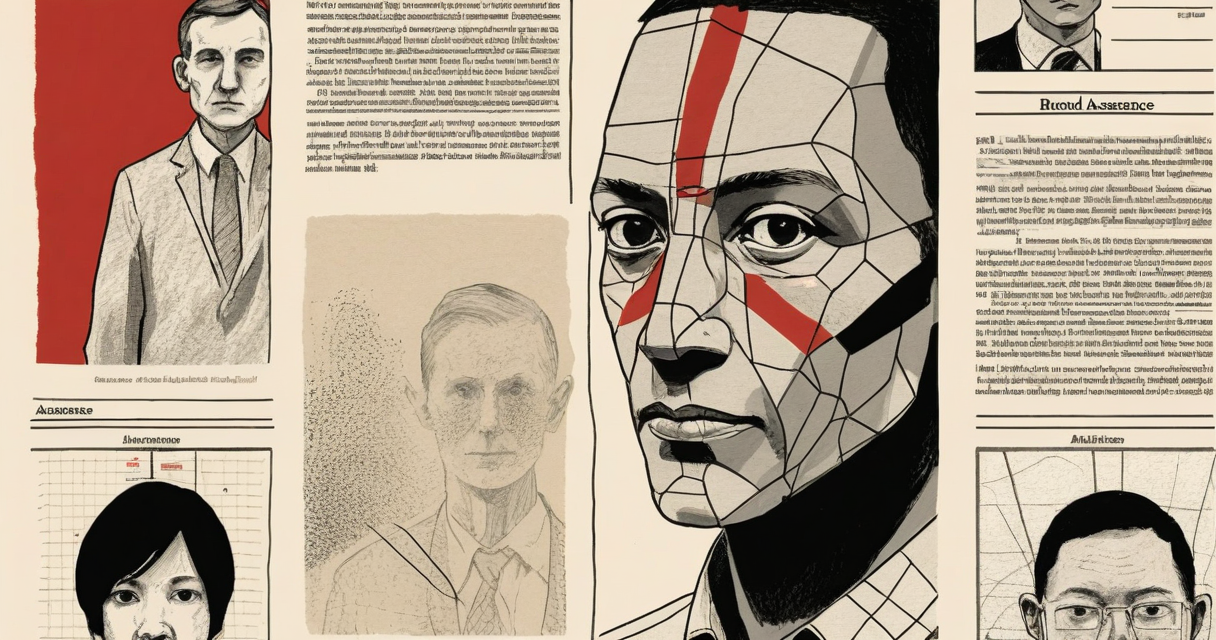
A reported bypass of Face ID using an avatar has surfaced, in which a generated likeness was presented to the authentication surface and access was granted. The specific deployment, vendor configuration, and conditions under which the bypass was demonstrated are not confirmed in the available facts. What is relevant at the board level is not the mechanism but the outcome: a biometric control intended to bind a person to an action accepted a representation of that person and produced the same result. The integrity of the authentication decision was not preserved against a non-living input.
The significance is not technical. Biometric authentication has been positioned across consumer and enterprise environments as a higher-assurance factor, often used to gate sensitive actions, approve transactions, release credentials, and confirm identity in workflows where a password alone is considered insufficient. When the binding between the biometric signal and a real, present human is not enforced at runtime, the assurance level of every downstream decision that relied on that binding is reduced. The control still exists in policy. It does not necessarily exist in practice.
For directors, the exposure is not located in a single product. It is located in every business process that has been designed on the assumption that a successful biometric check is equivalent to verified human presence. Approval flows, access to regulated data, recovery of accounts, authorisation of payments, and step-up authentication for privileged actions are commonly built on that assumption. The outcome indicates that the assumption requires re-examination wherever it has been embedded.
The original assumption underpinning facial biometric authentication, as it has been communicated to boards and risk committees, is that the factor verifies a specific, living person at the moment of authentication. The factor has been treated as resistant to remote impersonation because it requires the physical subject to be present. On that basis, biometric authentication has been used to reduce friction while increasing assurance, and has often replaced or supplemented controls that would otherwise require manual verification, secondary approval, or out-of-band confirmation.
That assumption has carried weight in risk decisions. It has been used to justify lowering compensating controls, expanding the scope of self-service actions, and accepting biometric approval as evidence of intent for audit and dispute purposes. In regulated environments, it has been cited as a basis for strong customer authentication, fraud reduction, and identity assurance. The legal and reputational posture of several customer-facing functions has been shaped by the belief that the factor cannot be presented by anyone other than the authorised individual in person.
The assumption also extended to liability. Where a biometric factor was used to approve an action, the resulting record has frequently been treated as a defensible artefact of the user’s own decision. Disputes, chargebacks, and internal investigations have been resolved on the basis that the biometric signal could only have come from the account holder. That posture is only credible for as long as the factor cannot be satisfied by a representation rather than a person.
What changed is narrow but consequential. A scenario has been demonstrated in which an avatar - a constructed likeness rather than the live subject - was sufficient to satisfy a Face ID authentication step. The conditions, the scope of affected configurations, and whether the behaviour generalises across deployments are not confirmed from the available information. The duration of any exposure and whether it has been observed in real-world misuse cannot be determined from what has been disclosed.
What has changed at the level of board-relevant risk is the status of the assumption itself. The factor can no longer be treated, without qualification, as proof that a specific living person was present at the point of authentication. The outcome indicates that the binding between signal and subject is not absolute under all input conditions. Whether the gap is wide or narrow is a secondary question; the primary question is that a gap has been shown to exist where the prior posture assumed none.
This shift also raises the relevance of social engineering as an adjacent risk. If a likeness can be constructed and presented, then the attack surface is no longer limited to the technical authentication path. It extends to any process where an adversary can obtain or generate imagery of a target, combine it with a request for action, and route that request through a channel that accepts the biometric as sufficient proof. The exposure created by the bypass is therefore not only the authentication event itself, but every business decision that has been delegated to it. What remains unconfirmed is the scale of affected systems and the extent of any misuse to date.
Phase 1 review for advisory drift: no operational or engineering recommendations were issued. The text remained at the level of assumption, exposure, and unknowns. No instructions to remediate, configure, or deploy were embedded. Phase 2 continues on the same footing.
The mechanism that did not hold at runtime is the binding between the biometric signal and a live, present human subject. The control was designed to accept input only when that input originated from the authorised person in physical proximity to the sensor. The outcome indicates that this binding was not enforced in the demonstrated scenario: a constructed likeness was accepted and treated as equivalent to the subject. The system permitted an authentication decision in the absence of the condition that gave the factor its assurance value. Whether the same behaviour occurs across other deployments, configurations, or sensor generations is not confirmed from the available information.
The drift is not in the policy layer. Policy continues to describe biometric authentication as a high-assurance factor and continues to permit its use in gating sensitive actions. The drift is in the distance between that description and what the control actually enforces at the point of decision. A factor that can be satisfied by a representation is operating at a different assurance level than the one assigned to it in the risk register, in customer disclosures, and in the design of downstream workflows. The label has not changed. The behaviour has. No evidence of detection, alerting, or downstream challenge in response to a non-living input has been identified in the available facts.
This is the pattern that matters to directors. Controls are routinely assigned an assurance rating at the time of adoption and then inherited by every process built on top of them. The rating is rarely re-tested against the conditions the control is actually exposed to in production. When a demonstration of bypass surfaces, the appropriate board response is not to ask whether the specific demonstration applies to the organisation’s exact configuration. It is to ask which decisions, approvals, and liabilities currently rest on the assurance rating that has now been called into question, and whether those decisions remain defensible if that rating is reduced. The duration over which they have rested on it is, in many cases, years.
The parallel pattern extends beyond facial biometrics. The same structural issue applies to any authentication or verification factor whose assurance depends on a condition that is asserted at design time but not continuously verified at runtime. Voice authentication relies on the assumption that the speaker is the live subject. Document verification relies on the assumption that an image of an identity document corresponds to a real, present holder. Liveness checks across modalities rely on the assumption that the signal cannot be synthesised or replayed. Each of these has been positioned as a step up from password-based authentication, and each has been used to justify reducing other controls in the path. The Face ID bypass scenario is one instance of a broader category: factors whose stated assurance has not kept pace with the cost and accessibility of generating convincing representations.
The adjacent exposure is social engineering. Where a likeness, a voice, or a document image can be constructed, the attacker is no longer constrained to compromise the authentication endpoint directly. The attacker can target the human and procedural surfaces that route requests into authenticated channels: help desks, recovery flows, callback procedures, approval requests routed through chat or video, and any process where a person on the other end of a channel is asked to confirm an action on the basis of what they see or hear. The biometric bypass is one node in a larger problem in which the artefacts used to establish identity at a distance are increasingly producible without the subject’s participation. The scale at which this is occurring in real-world misuse against any specific organisation is not confirmed from the available facts, but the conditions that enable it are not in dispute.
For the board, the relevant view is portfolio-level. The organisation’s exposure is the sum of every workflow that has accepted a representational artefact - a face, a voice, an image of a document, a video call - as sufficient evidence of the subject’s identity or intent. Each of those workflows carries the assurance level of its weakest verification step, not the level assigned in policy. The Face ID matter is significant not because it stands alone, but because it is consistent with a trajectory in which the cost of producing a convincing representation continues to fall while the controls that distinguish representation from presence have not been correspondingly strengthened. The extent to which this trajectory has already been exploited against the organisation cannot be determined from current visibility alone.
The hard closing position is this. A biometric factor that can be satisfied by a representation is not, on its own, evidence of human presence. Until the binding between signal and live subject is enforced and independently verified at the point of decision, any business process that has treated a successful biometric check as proof of presence is operating at a lower assurance level than its design assumed. The control may still have value as one signal among several. It does not have the value that has been assigned to it in isolation.
What must be true going forward is that the assurance rating of each authentication factor reflects what the factor actually enforces at runtime, not what it was intended to enforce at adoption. Every workflow that currently relies on a biometric check as a sole or primary determinant of identity, intent, or authorisation must be identified, and the consequence of that check being satisfied by a representation rather than a person must be made explicit. Where the consequence is material - financial authorisation, access to regulated data, account recovery, release of credentials, approval of privileged actions - the factor cannot remain the sole determinant. The condition for continued reliance is the presence of a second, independent control that does not share the same failure mode.
What must also be true is that the legal and reputational posture built on the prior assumption is revisited. Records produced by a biometric approval can no longer be treated, without qualification, as defensible evidence that the account holder personally authorised an action. Dispute resolution, fraud investigation, and audit positions that have relied on that treatment require review. The organisation’s disclosures to customers, regulators, and counterparties regarding the strength of biometric authentication must be consistent with what the control actually enforces. The gap between the prior position and the current reality is itself a source of exposure, separate from the technical bypass. The duration and extent of that exposure remain unconfirmed, and that uncertainty is itself the condition the board is being asked to accept or address.
Keep Reading
 board risk
Exposure you cannot see
A board-level assessment of why unverified detection against a public vulnerability campaign leaves exposure unconfirmed and control unproven.
 ransomware
Ransomware spreading through trusted accounts
A novel ransomware variant spread through compromised accounts, exposing identity - not the perimeter - as the boundary that must be enforced at runtime.
 europol
Europol's second database ran unwatched for years
A board-level analysis of Europol's unsafeguarded secondary database and the European Commission oversight gap that did not constrain it for years.
Stay in the loop
New writing delivered when it's ready. No schedule, no spam.