A worm force-pushed malware into 7,609 GitHub repos
North Korea's PolinRider worm has poisoned 7,609 GitHub repos, mostly real developer accounts, using force-pushed loaders and blockchain-based C2.
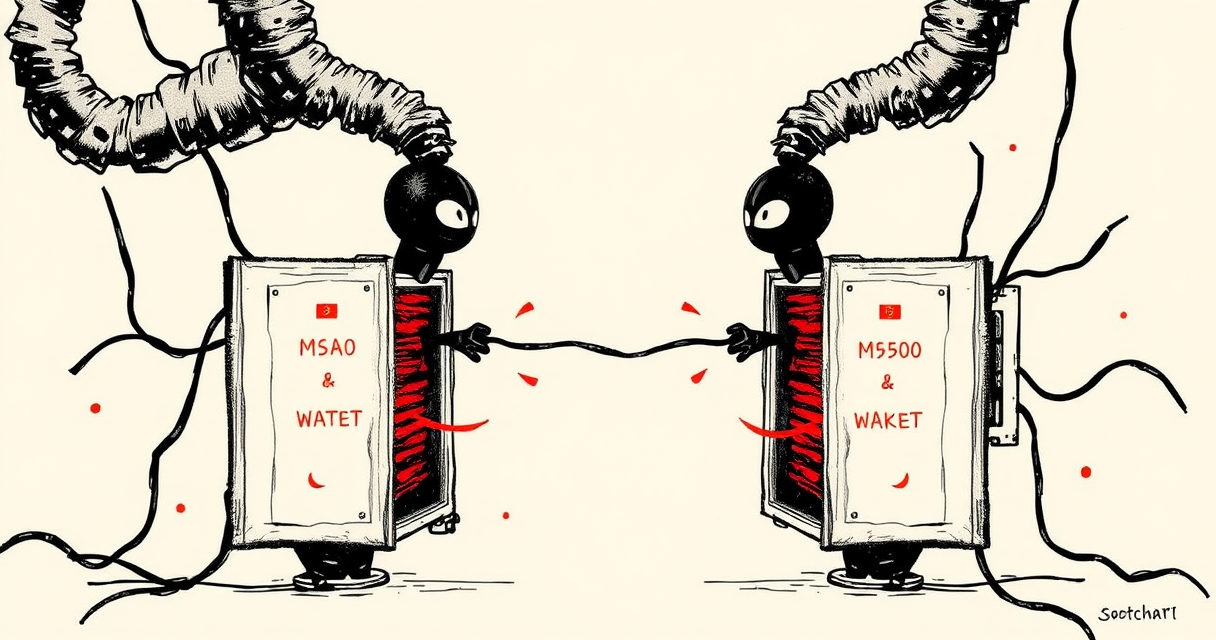
Apiiro counts the PolinRider campaign in 7,609 GitHub repositories across 2,330 accounts, and the detail worth sitting with is that the accounts are real. 6,541 of the repos, 86 percent, belong to personal accounts more than a year old with five or more repos and genuine activity. Only 16 owners look like throwaways. A North Korea-linked worm is riding the credentials of working developers, and their own commit history is the camouflage.
The operators get onto a developer’s machine first. The entry point is the Contagious Interview playbook: fake hiring portals like BlockNovas, AccuraSoftHire and HuntRole hand out take-home assessments laced with malware, and some decoy sites add ClickFix lures or a Chrome extension sideload behind “Developer mode.” Once a machine is compromised, the loader steals the victim’s GitHub token and force-pushes into any repository they can write to.
The force-push is the clever part. “The worm uses stolen GitHub access to rewrite commits the developer already made, keeping the author, message and date,” Apiiro’s Shmulik Cohen said. The loader goes into a build config, hidden after hundreds of spaces so the visible diff looks clean. An AsyncAPI Generator maintainer described the same pattern from the Eternity0207 account, which opened over 200 pull requests against projects including AsyncAPI Generator, CircuitVerse and Open Food Facts: the payload sat on the branch for 30 to 40 minutes, then got force-pushed away, so the final diff looked clean. GitHub has since suspended the account.
Building the project runs the loader. For AsyncAPI Generator it fires on npm run build; for Open Food Facts on loading the test config; for CircuitVerse, opening the folder in VS Code is enough. On the Python side the loader hides in a small utils package or in conftest.py, which pytest imports automatically. SafeDep found that 58-line Python variant in 375 public repos across 260 accounts. There is no evidence it reached PyPI or npm, though the same wallet has shipped compromised npm packages like @adminide-stack/* and server-hemera-mongo.
The wallet-driven C2
The loader reads the newest transaction an Ethereum wallet sent to itself and decodes that transaction’s input data as JavaScript, which it runs under Node.js. The JavaScript reads a second wallet to find the C2 server. The address trick, which SafeDep calls NullReceiver, is that the made-up destination wallet address carries the C2 IP in its first eight bytes and the ASCII string helloipbot!! in the last twelve. Rotating the server is one on-chain transaction. “Taking a server down changes nothing: one transaction moves every loader to the next,” Cohen said. Observed C2 IPs so far: 166.88.134.75, 103.179.142.155, 103.179.143.219, 23.27.13.72, 95.135.181.151, 95.135.181.84.
The loader pulls two scripts over port 443, /0x/cls and /0x/ls. /0x/cls runs twice, once with eval() in the build process and once as a hidden background process; /0x/ls runs only as a hidden background process, so it survives after the build finishes. No live copies of the current scripts were captured, but Cohen assesses /0x/cls is a remote-access tool: it skips CI machines, runs the operator’s JavaScript and shell commands, reads the clipboard, uploads files, and plants itself in VS Code, Cursor, Discord and GitHub Desktop so it restarts with them. Earlier waves installed a stealer for environment secrets, browser passwords, cookies and wallet data.
The loader was pushed to 2,040 repositories between October 27 and November 6, 2026, so this is active. The roots run deeper. OpenSourceMalware traced a PolinRider attack to May 2025 that used a hijacked maintainer account to poison nine itsa-* npm packages inside 90 minutes, using EtherHiding, the precursor to NullReceiver, to pull a downloader called JADESNOW, which delivered InvisibleFerret, a Socket.IO RAT and a Python stealer. Blockchain records put attacker activity back to February 2025.
What to check
Treat force-pushes to your repositories as suspicious even when author, message and date match. The tell is a history rewrite you did not initiate, plus a build config with long runs of whitespace hiding code past the fold.
Grep build configs and conftest.py or small utility modules for long whitespace runs and for node -i, eval, or any code that reads an Ethereum wallet. Scope GitHub tokens tightly and rotate anything that lived on a machine exposed to a recruiter-supplied project or a “take-home assessment.” Blocking the C2 IPs above buys little against the wallet-driven rotation, but it is cheap.
The persistence detail is the one to hold onto: the 2026 pushes ran from the same maintainer’s machine that was compromised in 2025. The infection sat on that laptop, used the developer’s own credentials to roll the clock back, fold the payload into the tip commit, and force-push. Cleaning the repositories does not help while the machine that pushes to them is still owned.
Keep Reading
 wordpress
Identity Continuity Failure in WordPress Plugin Supply Chain Compromise
A buyer acquired the 30-plugin Essential Plugin catalogue on Flippa, then shipped a PHP deserialization backdoor to WordPress sites months later.
 1password
Stolen GitHub login hit 1Password's backend
An attacker used a 1Password employee's GitHub account to push malicious code to backend services and exfiltrate customer account metadata and source code.
 supply-chain-attack
On 16 November, Optimizely served malicious JavaScript to 178 sites
On 16 November 2026, attackers injected malware into 178 brands' sites through Optimizely Web, swapping crypto addresses, skimming cards and hitting iOS.
Latest on the Wire
Full wire →- 2026 Kindle Paperwhite: Page-Turn Buttons Return, At Extra CostArs Technica
- 9/UX: Macintosh-Inspired Spatial Desktop for 9frontHacker News
- AI-Powered Attack Breaches College Board's Financial Aid SystemsBleepingComputer
- Audible Removes Direct Downloads for US UsersHacker News
New signal daily · RSS
Stay in the loop
New writing delivered when it's ready. No schedule, no spam.