A robot dog moves on command inside your network
The Creepy Crawlies robot dog is a networked device that moves on command. Its control channel and actuator define the risk, not its label.
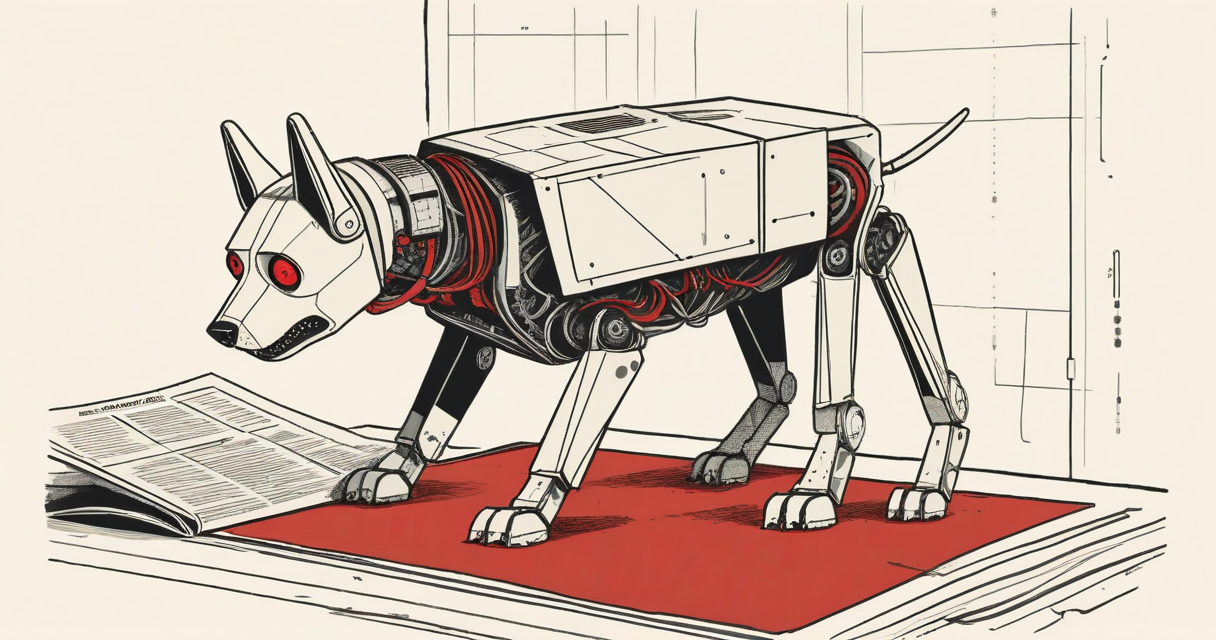
A robot dog that connects to a network is a computer with motors. The Creepy Crawlies unit is described as an IoT device. That classification is the entire security statement. The moment a device joins a network, its risk is no longer defined by what it is sold as. It is defined by what it can reach and what can reach it.
The confirmed facts are narrow. Creepy Crawlies is a robot dog. It is an IoT device. Beyond that, product specifics are not confirmed. Whether it carries a camera, a microphone, GPS, persistent cloud connectivity, or a companion application is not confirmed. Treat that absence as a condition. It is not evidence of safety. It is missing data, and missing data is handled as risk, not as reassurance.
Identity is the boundary. A device that operates inside a home network sits inside the same trust zone as the phones, laptops, and accounts on that network. This analysis is not about whether a robot dog is unsettling. It is about exposure and control. Whatever the device can touch, an actor who controls the device can touch through it.
What is externally observable about a device in this class is limited and sufficient. It holds a network connection. It accepts input that changes its physical state. It moves on command. Movement on command is direct evidence of a control path reaching the device from somewhere. That control path is the asset. Everything else in the threat model hangs off it.
The structural failure is trust placement. Consumer devices join flat home networks by default. Whether the Creepy Crawlies device isolates itself on a separate segment is not confirmed, and where segmentation is not confirmed it is treated as absent. On a flat network, the robot dog shares a trust zone with every other device on it. A device that shares a trust zone is a foothold. Compromise of the weakest device on the segment is compromise of the position, not of one toy. Whether this specific unit has been compromised is not confirmed. The exposure does not require it to have happened. It requires only that it can.
Physical actuation is a separate failure class from a static sensor. A stationary camera sees one room. A device that moves carries whatever it is built with into new positions on command. Whatever sensor payload the unit holds is not confirmed, but the mechanism does not depend on the specific payload. A control path that produces movement produces presence. Presence in physical space, driven remotely, converts a network compromise into a mobile platform inside the home. The capability is defined by the actuation, not by the marketing.
The exposure exists because connectivity and control are the function, not a defect in it. You cannot strip the network path out of an IoT robot dog and still have the product. The attack surface is the feature. The device is run by firmware. Firmware is code. Code carries defects. Whether this firmware receives security updates is not confirmed, and unconfirmed update capability is treated as none until demonstrated. A device that cannot be patched holds every defect it shipped with for its entire service life.
The trust model breaks because identity is rarely enforced continuously on consumer hardware. Whether the Creepy Crawlies device authenticates its control channel, encrypts its traffic, or validates the endpoint it talks to is not confirmed. Where authentication and encryption are not confirmed, the correct operating assumption is that they are absent, and the design is built around that assumption. Controls that are not enforced are not controls. An unauthenticated control channel is an open one, and an open control channel on a device that moves is remote physical access.
Cloud dependency compounds the condition. Consumer IoT commonly routes command and telemetry through a vendor backend. Whether this device does is not confirmed. If it does, control and data depend on a third party whose security you cannot inspect, cannot audit, and cannot enforce. The trust relationship extends past your network to a vendor you have no visibility into. Trust must be continuously validated. Here it cannot be. A relationship that cannot be validated cannot be trusted, and what cannot be trusted must be contained.
The mechanism reduces to one observable chain. Input enters, physical state changes, the device moves. Movement on command is proof that a control channel terminates at the actuators. Whether that channel authenticates its source, encrypts its traffic, or validates its endpoint is not confirmed. Where enforcement is not confirmed it is treated as absent. A control channel with no confirmed enforcement is an open control channel, and an open control channel that produces motion is remote physical control by definition.
The boundary that fails is identity. Command authority on this device is not confirmed to be bound to any authenticated identity. The device is observed to move on command. The origin of that command is not confirmed to be checked. Under the operating assumption that unconfirmed controls are absent, command authority is available to any source that can reach the channel. That collapses the distinction between owner and attacker at the point of control. Identity is the boundary. Where identity is not enforced, there is no boundary, only reach.
The second half of the mechanism is placement. The device holds a position inside a flat trust zone. Whether it receives patches is not confirmed and is treated as none. Whether it segments itself is not confirmed and treated as absent. Combine an open control channel with a shared trust zone and a code base that cannot be confirmed to update, and the failure is not a single event. It is a standing condition. The device does not need to be attacked to be exposed. The exposure is the sum of controls that are not confirmed to exist. Absence of enforcement is the mechanism. Nothing else is required.
The pattern is that reach defines risk, not product category. This device is sold as a toy. Its risk is set by the control channel and the actuator, the same two elements present in any networked device that moves on command. Strip the robot dog framing and the mechanism is identical for any IoT unit with an actuator and an unconfirmed control channel. The label on the box does not change the mechanism. The mechanism is the channel plus the motion.
Actuation is what separates this class from a static sensor. A fixed sensor exposes what it can reach from one position. A device that moves on command carries whatever it holds into new positions on the same open channel. The mechanism converts a network foothold into a mobile one. Same control path, greater reach for each unit of compromise. Any device in this class, anything that both holds a network connection and changes physical state on command, exhibits the same conversion. The pattern is not specific to a dog shape. It is specific to actuation on an unenforced channel.
The pattern also exposes how missing data behaves. Every unconfirmed control in this analysis was treated as absent, not as neutral: authentication, encryption, segmentation, patching, cloud dependency. That is the discipline the mechanism forces. A control that cannot be confirmed cannot be counted, and a control that is not counted is not present in the threat model. The pattern generalizes. For any connected device, the security posture is the set of controls you can positively confirm are enforced. Everything else is exposure. The device’s category, price, or intended user does not move an unconfirmed control into the confirmed column.
What must now be true is narrow and enforceable. The device is handled as an untrusted networked host with an actuator. It does not share a trust zone with phones, laptops, or accounts. Its control channel is assumed open until authentication and encryption are demonstrated. Its firmware is assumed unpatchable until updates are demonstrated. None of this depends on confirming a camera, a microphone, or a cloud backend. The classification alone, networked device that moves on command, sets the requirement.
Containment is the only control that does not depend on facts you do not have. You cannot enforce authentication on a channel you do not control. You cannot patch firmware the vendor does not update. You can decide what the device is allowed to reach. Isolate it on a segment that reaches nothing of value. Assume its control channel is exposed and size the blast radius to match. Trust must be continuously validated. Where it cannot be validated, it must be contained. Containment converts an unknown control surface into a bounded one.
If a system allows a behavior, that behavior will occur. A control channel that can produce motion without confirmed identity will be driven by whoever reaches it. The absence of a confirmed attack is not the absence of exposure. The Creepy Crawlies unit is a computer with motors and a network connection, and it must be governed as one. Controls that are not enforced are not controls. Treat every unconfirmed control as absent, contain the device to the reach you are willing to lose, and stop rating the risk by what the product is called. The name is marketing. The channel and the actuator are the system.
Keep Reading
 zero-day
Patching would not have stopped this breach
A Metabase zero-day converted an analytics application's standing data access into attacker access, leaving reach and scope as the only controls in play.
 IoT security
The camera on your shelf handed out your GPS
A TP-Link Kasa camera returned home GPS over unauthenticated UDP for six years. The mechanism, the pattern it exposes, and what must now be true.
 github copilot
You're already running code you never chose
Kimi K2.7 code is generally available in GitHub Copilot. Its origin is not bound to the suggestion at emission, so the provenance boundary is unenforced.
Stay in the loop
New writing delivered when it's ready. No schedule, no spam.