2026's AI failures aren't model failures
AI deployments fail at orchestration, not capability. Building validated pipelines around the model - not completing the task - is the real job.
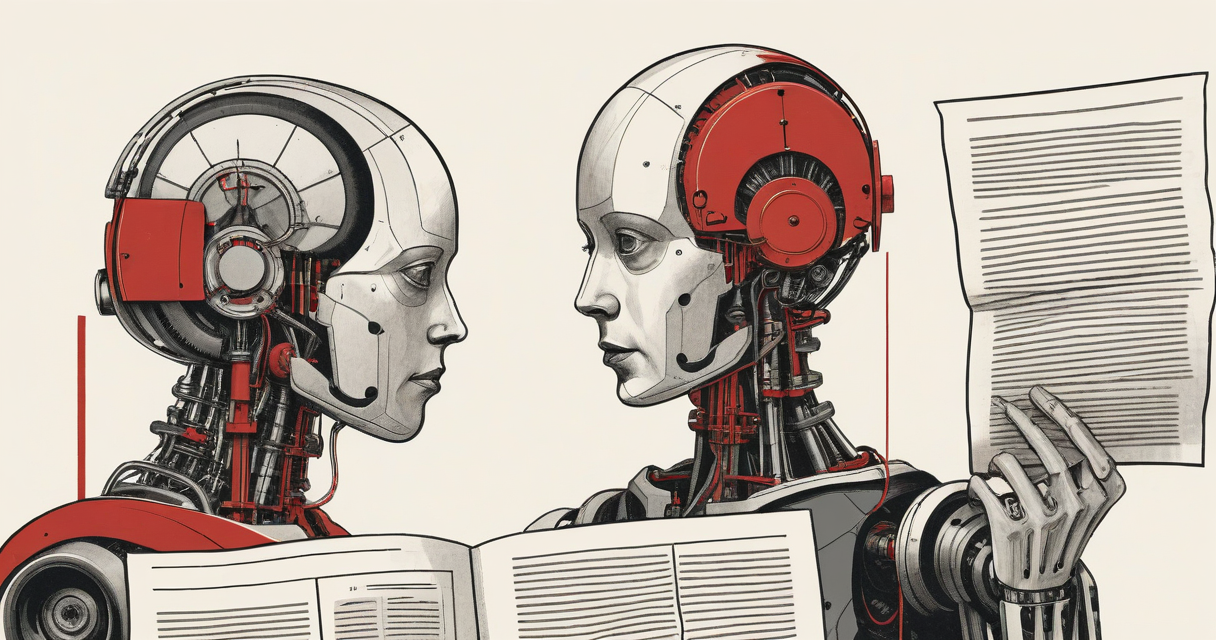
A developer ships a feature that calls an LLM, watches it produce a clean output in the demo, and marks the ticket done. Two weeks later the same call returns malformed JSON on roughly four percent of requests, a downstream service chokes, and nobody can say who owns the fix. “Hey n00b, we didn’t hire you to complete tasks” is the comment that lands on that pull request. It reads like an insult aimed at one person. It isn’t. It’s a diagnosis of how the work was framed in the first place.
The sentence matters because it names the actual failure: the job was never to make the model produce an answer once. The job was to make the system produce a correct answer every time, under load, with a defined behavior when the model is wrong. Completing the task - getting one good output - is the easy ten percent. The other ninety percent is the pipeline around the model: the contract on the input, the validation on the output, the fallback when validation fails, and the named owner who gets paged when it does. That work is invisible in a demo and unavoidable in production.
So the claim is blunt. Most AI deployments that fail in 2026 do not fail because the model wasn’t capable enough. They fail because a team treated a probabilistic component as if it were a deterministic one, wrapped no guardrails around it, and shipped the demo. The model did its job. The system around it didn’t exist. That is not a skill problem with a junior engineer. It is a design problem with how the organization decided to use AI, and it repeats across teams that have never spoken to each other because they all made the same starting assumption.
The assumption was that an LLM is a smarter API. You send a request, you get a response, you treat the response as data, you move on. That mental model is comfortable because it matches everything engineers already know. A REST endpoint returns the same shape for the same input. A database query is deterministic. A function with no side effects is testable. The entire discipline of software engineering is built on the premise that components behave predictably, and that predictability is what lets you compose them into larger systems without the whole thing collapsing.
LLMs break that premise quietly. The same prompt can return a different structure on two consecutive calls. A model that returned valid JSON for a thousand requests will, on the thousand-and-first, wrap it in an apology or add a trailing comment that breaks your parser. Temperature, context length, a silent model version bump from the provider - any of these shifts the output distribution without a single line of your code changing. The component looks like an API and behaves like a sampler. Teams that assumed the former built no defenses against the latter, because you don’t write validation for a function you believe is deterministic.
This is where the demo culture did real damage. A demo is a single happy-path execution in front of an audience. It rewards the exact thing that fails in production: one good output, captured once, with no measurement of the distribution behind it. Leadership sees the demo, concludes the capability is solved, and moves resources to the next feature. The engineer who built it knows it worked once and is told that’s enough. Nobody allocated time for the boring infrastructure - schema enforcement, retry logic, output validation, cost ceilings, ownership - because the assumption said that infrastructure was unnecessary. You don’t put a seatbelt in a car you’ve decided can’t crash. The original assumption wasn’t a lie anyone told on purpose. It was a category error baked in at the moment AI got classified as a tool you call rather than a system you design.
What changed is that enough of these systems reached real production volume for the failure pattern to become legible. When you run a model on ten requests a day, a four percent error rate is invisible - you might never see a bad output. Run it on two hundred thousand requests a day and that same rate is eight thousand failures, every day, hitting real users and real downstream services. The math didn’t change; the scale exposed it. Teams that shipped demos in 2023 and 2024 spent 2025 discovering that their AI features had been quietly degrading workflows the entire time, propped up by humans who manually corrected the bad outputs and never reported it as a defect.
The second thing that changed is that the cost of cleanup became measurable, and measurable things get attention. When a model output corrupts a database write, or a hallucinated value flows into a financial report, or a support agent’s AI-drafted reply goes out wrong at scale, the bill arrives in a form leadership understands. That is the moment the “smarter API” assumption dies inside an organization. Someone runs the postmortem, traces the failure back to an unvalidated model output with no owner, and realizes the problem was never the model. It was the absence of everything that should have surrounded the model. The fix is not a better prompt. It’s a pipeline.
So the work itself got redefined. The valuable engineer is no longer the one who can get a model to produce an impressive output - that’s a commodity skill now, available to anyone with API access and an afternoon. The valuable engineer is the one who builds the deterministic control around the probabilistic core: defines the input contract, enforces an output schema, validates before anything downstream consumes the result, sets a fallback for when validation fails, caps the cost, and puts their name on the dashboard. “We didn’t hire you to complete tasks” is the new baseline expectation stated badly. Completing the task is what the model does. Building the system that makes the model’s output safe to depend on is what the person is for. That shift - from prompting to orchestration, from output to system, from demo to operation - is the actual change, and it’s where the rest of this comes apart or holds together.
How The Drift Actually Happens
The failure is never a crash on day one. On day one the call returns valid output on 99 of 100 requests, the one bad response gets caught by a human who reshapes it without filing a ticket, and the feature is declared stable. That single quiet correction is the start of the problem, not the end of it. The defect now has a maintainer - a person - and because a person is absorbing it, no metric records that the system is wrong one percent of the time. You cannot fix a failure rate you are not measuring, and you are not measuring it because the cleanup is happening in someone’s head, off the dashboard, between the model and the thing that consumes its output.
Then the distribution moves, and it moves for reasons outside your repository. The provider ships a minor model update and the output style shifts half a degree. Someone adds three documents to the retrieval context and the prompt now runs four hundred tokens longer, nudging the model toward different phrasings. A product manager asks for one more field in the response and the schema everyone assumed was fixed grows a branch. None of these show up in code review because none of them are code. Your tests, if they exist, assert the happy path: given this input, the parser succeeds. They never assert the shape of the distribution behind that input, so the day the four percent becomes eight percent, every test stays green and the only signal is downstream - a queue backing up, a support ticket, a number that looks wrong in a report.
The compounding is what turns a small defect into an unowned mess. The first bad output gets a patch: a regex that strips the model’s apology before parsing. The second gets another: a retry with a slightly reworded prompt. Six months in, the prompt is a six-hundred-token wall of “do not include,” “respond only with,” and “under no circumstances,” and the parsing layer is a stack of string surgery that no one fully understands. Each fix is local, brittle, and invisible to the next person, because there is no schema boundary forcing the output into a known shape - there is only an ever-growing pile of corrections wrapped around a component that was never constrained in the first place. This is the mechanism. Not a dramatic break, but a slow accumulation of undeclared exceptions around a probabilistic core, propagating downstream because nobody drew the line where the model’s output becomes the system’s responsibility.
The Same Failure, One Level Up
Swap the single model call for an agent and the same mechanism runs faster and louder. An agent is not a fix for prompt fragility; it is prompt fragility chained to itself. A five-step agent loop is five probabilistic boundaries in series, and if each step is right ninety-six percent of the time, the whole chain is right about eighty-one percent of the time - a nineteen percent failure rate assembled out of components that each looked reliable in isolation. Teams reach for agents precisely when a prompt feels too brittle, which means they respond to an unconstrained probabilistic boundary by adding four more. The drift does not disappear. It multiplies, and now it routes through tool calls and intermediate state that are far harder to inspect than a single request and response.
The shape is not unique to AI. The same error has been shipping under different names for years. Screen-scraping automation that breaks the morning a vendor moves a button. ETL pipelines with no schema contract that silently load garbage the day an upstream team renames a column. Microservices wired together on implicit assumptions about each other’s responses, held up by the fact that nobody has changed anything recently. In every case the root is identical: an unstable or probabilistic boundary treated as if it were stable, with no validation at the seam and no owner watching the seam for movement. LLMs did not invent this failure mode. They made it cheap, fast, and easy to deploy at a scale where the cleanup cost arrives quickly enough to notice. Demo-driven development is the organizational version of the same mistake - optimizing for one good run in front of an audience and calling the distribution behind it someone else’s problem.
This is why the insult in the title generalizes past engineering. “We didn’t hire you to complete tasks” lands on the analyst who produces one correct dashboard that breaks the next quarter because no one defined what the inputs were allowed to be. It lands on the ops person who automates a process that runs clean until the one input it never handled shows up. The role being described - across engineering, data, operations - is the person who owns the boundary between something unpredictable and something that depends on it. That is the work that survived the arrival of capable models. Producing an output is now cheap enough that it stopped being the job. Guaranteeing the output is safe to depend on, and standing behind that guarantee when it fails, is what the job became.
What You Were Actually Hired To Do
The model is a commodity and the prompt is disposable. Anyone with an API key can produce an impressive output on a Tuesday afternoon, which is exactly why doing so is no longer the thing you are paid for. The durable work is the part the demo never shows: the contract on the input, the schema on the output, the validation that runs before anything downstream is allowed to consume a single token, the fallback that fires when validation fails, the cost ceiling that stops a runaway loop, and a name - a real person - attached to the dashboard that measures all of it. Strip those away and you do not have a system. You have a demo that happens to be running in production, waiting for the scale that exposes it.
None of this requires sophistication. It requires deciding, before you ship, that the model’s output is guilty until proven valid. Enforce a schema and reject anything that does not match. Measure the rejection rate and treat it as a first-class metric, not a footnote. Set the fallback behavior explicitly - return a safe default, escalate to a human, fail closed - so that “the model was wrong” has a defined answer instead of a quiet correction in someone’s head. Put your name on it. The teams that get this right are not smarter than the ones that don’t; they made one different decision at the start, which is that a probabilistic component gets deterministic guardrails or it does not get to touch anything that matters.
That is the whole of it. You were not hired to make a model produce an answer, because the model already does that and it does it for free. You were hired to build the system that makes the answer trustworthy when the model is having a bad day, when the provider ships an update you did not ask for, and when the request volume is two hundred thousand a day instead of ten. Completing the task is the easy ten percent that anyone can do. Owning the system around the task is the ninety percent that is actually the job, and the gap between those two numbers is the difference between a feature that holds under load and a pull request that earns the comment in the title.
Keep Reading
 LLM engineering
Claude optimizes what it measures
Claude only makes faster what you let it measure. Build the measure-change-verify loop, carry guardrail metrics, and verify every change against a baseline.
 decision models
Clef ships a decision model you can fine-tune
How open-weight decision models and RL fine-tuning let you own the routing, gating, and approval points in production AI pipelines.
 open-source decision models
Your decisioning problem isn't accuracy.
Run open-source decision models locally-pinned versions, validation, immutable logs-so every approval or denial stays reproducible and auditable.
Latest on the Wire
Full wire →- 12 Zigbee Sensors Put to the Accuracy TestHacker News
- ChatGPT mimics signatures of New Yorker cartoonists without permissionHacker News
- ClickFix Attack Exploits Browser Cache to Evasion Windows Run LimitsThe Hacker News
- Common Lisp Shines in the Age of AI Code GenerationHacker News
New signal daily · RSS
Stay in the loop
New writing delivered when it's ready. No schedule, no spam.