17 trillion records needed no attacker
A single cloud misconfiguration made 17 trillion Microsoft records reachable. Why static trust decisions fail and why validation must be continuous.
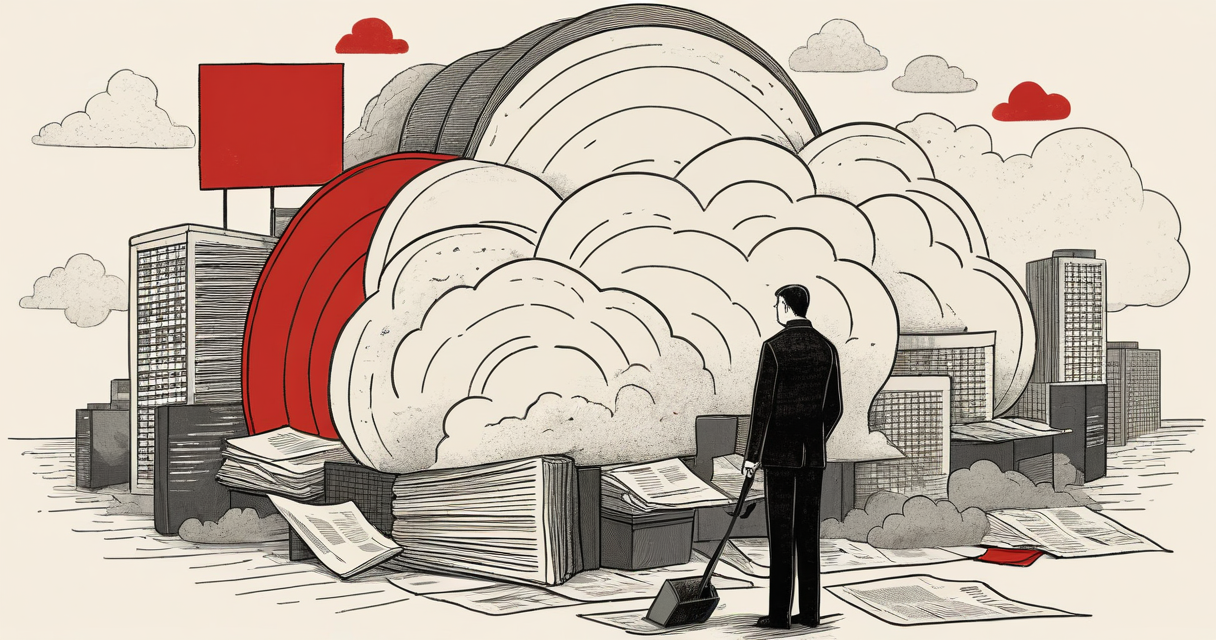
I could have read 17 trillion Microsoft records. Not through an exploit chain, not through a zero day, not through stolen credentials. A single misconfiguration in a cloud system put those records inside my reach. One setting was wrong, and 17 trillion records became reachable by a party that held no authorization to them.
Read this as a briefing, not a story. What is confirmed is narrow. Access to 17 trillion Microsoft records was possible. The enabling condition was a single misconfiguration in a cloud system. What sits outside that is not confirmed. Whether any other party reached the same records is not confirmed. Whether any records left the environment is not confirmed. How long the exposure existed is not confirmed. Who else held the same path is not confirmed. Absence of that data is a condition, not a reassurance, and I will not fill it with assumed attacker behaviour.
The number is not the finding. The number is the consequence. The finding is that 17 trillion records were governed by one configuration state, and that state was wrong. Scale of that size does not require a sophisticated actor. It requires one incorrect setting and someone who looks. I looked. The setting was incorrect. That is the entire distance between controlled and exposed.
The system returned access to records it should have withheld. That is the observable failure. A request that should have resolved to denied resolved to permitted. The records were Microsoft records. The count reachable through the single fault was 17 trillion. Those two facts define the blast radius. Everything held behind that one control was held behind nothing the moment the control was wrong.
The input describes the fault as a single misconfiguration in a cloud system. That is the term the facts provide. The specific control that failed is not confirmed. Whether the broken boundary was an identity permission, a network rule, a storage access policy, or a token scope is not confirmed. Where the enforcement point sat is not confirmed. I will not name a mechanism the facts do not name. What is confirmed is the effect. One configuration state was the sole gate on 17 trillion records, and it did not hold.
A single misconfiguration reaching 17 trillion records tells you how the boundary was built. The records were not segmented behind independent decisions. One trust decision governed the whole set. When one control gates that volume, it is not a control in any operational sense. It is a single point of total exposure. The system behaved exactly as it was configured to behave. That is the problem. It was configured to permit.
The access resolved to permit because the configuration state was treated as the final authority on who may read the records. A request arrived. It was evaluated against the configuration. The configuration was wrong. The records were returned. That is the mechanism the facts support. The fault was not in the request. The fault was that the answer to the request came from a setting that was incorrect and was still trusted.
Whether the trust relationship was re-validated at the point of access is not confirmed. If no validation ran, then access was decided once by configuration and never rechecked, and a single wrong value stood unchallenged against 17 trillion records. If validation ran and still returned permit, the validation was ineffective, because it did not stop access that should not have occurred. Both readings end at the same operator conclusion. A control that permits unauthorized reach of 17 trillion records is not enforcing the boundary it was placed to enforce.
This is a trust failure, not a volume failure. The 17 trillion is what sat behind the trust, not what caused the break. The break is that the system extended trust based on a static setting and did not bind that trust to a continuous check of whether it remained valid. A configuration is a claim about intent. It is not proof that the intent is being enforced. Here the claim and the enforcement diverged. The claim said restricted. The behaviour was open. When those two disagree, the behaviour is the truth, and the behaviour was that 17 trillion records were reachable.
A static configuration was the authority on access, and authority that is set once is authority that is never rechecked. The system consulted the setting, the setting resolved to permit, and the records were returned. There is no confirmed step where the trust granted by that setting was rebound to a fresh check at the moment of access. If that binding existed, it did not change the outcome. The mechanism is a decision made at configuration time and honored at access time with no confirmed point where the two were reconciled.
Scale is the second half of the mechanism. 17 trillion records reachable through one setting is only possible where automated systems serve reads against that setting at machine speed. The same automation that serves authorized reads serves unauthorized reads. The system does not distinguish intent. It enforces the configuration. When the configuration is wrong, automation does not slow the failure. It delivers the failure at the same scale it delivers the service. That is a logically necessary implication of one control gating that volume.
The failure is therefore not an event that happened to the system. It is the system operating correctly against an incorrect authority. Nothing malfunctioned. The request was evaluated. The answer was returned. Every component behaved as designed. The design was that a single configuration state, trusted without a confirmed continuous check, decided access for 17 trillion records. A system that trusts a static value as final will honor that value whether it is right or wrong. Here it was wrong, and the system honored it.
This exposes a pattern that does not depend on Microsoft, on 17 trillion records, or on cloud. The pattern is a trust decision made once and treated as permanent. Wherever a single configuration state gates a set of records, and that state is not continuously validated against whether it still reflects intent, the entire set inherits the correctness of one value. The volume behind the gate does not change the mechanism. It changes only the consequence. One wrong value at a gate protecting ten records and one wrong value at a gate protecting 17 trillion records are the same failure. The difference is blast radius, not cause.
The mechanism holds anywhere trust is granted at setup and not rebound at use. A configuration is a claim about who should have access. Continuous validation is the check that the claim still matches behavior. When the claim is trusted and the behavior is never measured against it, the gap between intended access and actual access stays invisible until someone reaches through it. The exposure is not created at the moment of access. It exists from the point the trust stops being validated. Access is only where it becomes observable.
This is why the count is the wrong thing to fixate on. 17 trillion is the measure of what sat behind the gate. It is not the measure of the weakness. The weakness is the single unvalidated trust decision. Placing that volume behind one control did not create the fault. It set the price of the fault. Any architecture that puts large sets behind single, statically trusted decisions is holding the same unpriced risk, and the price is only revealed when the decision is wrong and someone looks.
A configuration is a claim. Enforcement is a behavior. They are not the same thing, and the difference is where 17 trillion records were exposed. What must now be true is that trust is validated continuously, not granted once. A setting that decides access must be checked against actual access on a recurring basis, so the claim and the behavior cannot diverge without being seen. The control that failed here was not the setting. It was the absence of a confirmed process that measures whether the setting still holds. Not confirmed is not the same as safe. Every unknown in this briefing is an unknown because nothing was watching closely enough to answer it.
Controls that are not enforced are not controls. A configuration that grants access and is never rechecked is not a boundary. It is a claim that a boundary exists. Identity and access decisions have to be treated as continuous, because the state that is correct at configuration time is not guaranteed to be correct at access time. The moment a trust relationship is set and left, it stops being a control and becomes an assumption. This exposure was the cost of that assumption at scale.
The operator position is direct. If a system allows it, it will happen, and this system allowed 17 trillion records to be reached through one wrong setting. The requirement is not a better setting. It is continuous validation of every trust relationship that gates data, monitoring that measures configured access against actual access, and the working assumption that any static grant is wrong until proven otherwise. What is not confirmed here must be treated as exposed, because the same failure that permitted access also removed the ability to say it did not. Define the boundary as identity, validate it continuously, and accept that a control you do not watch is a control you do not have.
Keep Reading
The asterisk that grants everything
Cloud access engines evaluate effective policy, not stated intent. Over-permissive grants leave a declared denial that was never enforced and stays reachable.
 systems drift
In 2026 the memory discount quietly expired
Memory lifecycle plans keep resolving a price the market no longer charges. The gap is structural drift, not a failure of hardware or planning.
 identity security
Your access controls are labels, not boundaries
In 2020, elevated access aligned with identity inactivity, then exfiltration attempts. The root failure: access decisions never bound to identity state.
Latest on the Wire
Full wire →- AI Gives Attackers Early Edge in Cybersecurity Arms RaceBleepingComputer
- AI Needs $6T Revenue by 2031 to Justify Data Center BoomHacker News
- AI-Powered Tool Blurs Faces in Photos for PrivacySimon Willison
- Apple CoreGraphics PoC Reveals PDF Exploit PathThe Hacker News
New signal daily · RSS
Stay in the loop
New writing delivered when it's ready. No schedule, no spam.